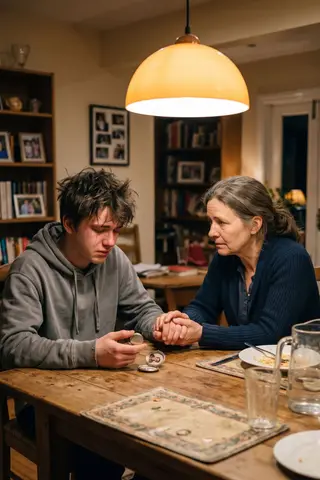
 Adopted The Boy 10 Families Abandoned
Chapter 5
The Bureaucratic Battle And A House Full Of Hope
The next three months turned our peaceful, predictable household into an absolute whirlwind of bureaucratic chaos, legal maneuvering, and domestic transformation. If the initial adoption process had been a marathon, the emergency guardianship petition for Maya felt like scaling Mount Everest in a blizzard.
State agencies, red tape, cautious social workers, and stringent medical evaluations stood in our path like a wall of barbed wire. Because Maya had specialized developmental delays and severe respiratory needs, the state foster care bureaucracy treated our sudden petition with intense skepticism. They looked at Luke’s past file—the ten failed placements, the disciplinary notes, the history of behavioral "sabotage"—and used it as ammunition against us.
“How can a home that just successfully integrated a historically troubled youth suddenly absorb a medically fragile child?” the caseworkers asked during our first review board meeting.
Luke stood up in that conference room, dressed in a borrowed suit that was slightly too large for him, and looked the regional director dead in the eye.
"She isn't a burden," Luke said, his voice ringing with a calm, absolute authority that silenced the entire room. "She's my sister. And I spent six years breaking every rule just so I wouldn't forget what it felt like to protect her. If you deny her coming here, you aren't punishing me—you're punishing a little girl who has nobody else left in the world."
I watched him with a swelling pride that felt too large for my chest. He wasn't the guarded, defensive boy I had met in the intake room months ago. He was a protector, a brother, and a son who had finally found fertile ground where his fierce loyalty could take root.
Behind the scenes, we turned the house upside down. The second spare bedroom upstairs—the one that had remained untouched since the tragic accident three years ago—was completely remodeled. Luke spent every spare hour after school painting the walls a soft, warm lavender, assembling a sturdy wooden toddler bed, and installing specialized air filtration units to keep dust and allergens away from Maya's sensitive lungs.
He measured twice, drilled carefully, and tested every single outlet. It wasn't just a bedroom renovation; it was an act of profound devotion. Every stroke of the paintbrush was a redemption of the promise he had made on the day they took his sister away.
My lawyer worked around the clock, subpoenaing medical records, gathering character references from teachers, and highlighting the undeniable stability Luke and I had established over the past six months. We proved that Luke’s past placements weren't failures of character, but tactical protests by a boy who refused to let go of his family.
By late winter, the tide finally turned.
The state review board relented, recognizing that keeping a sibling bond intact under a stable, legally permanent roof was infinitely better than scattering children across institutional facilities.
On a cold Friday afternoon in February, Brenda—the very same caseworker who had warned me months ago that Luke was "complicated"—stood in our living room with tears shining in her eyes. She held a thick manila folder containing Maya's official emergency guardianship and placement orders, pending final adoption proceedings.
She handed the folder to me, then turned her gaze to Luke, who was standing by the freshly painted doorway of the nursery upstairs.
"I misjudged you, Luke," Brenda said softly, her voice cracking slightly. "I'm sorry."
Luke gave her a small, forgiving nod. "It's okay. You didn't know."
The End









