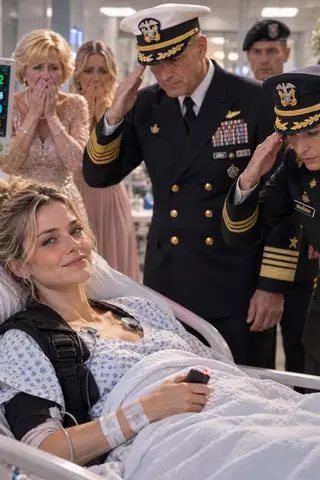
 THEY LEFT HER TO DIE FOR A WEDDING: Secret Operant Bleeds Out in ER
Chapter 3
The Resuscitation
The military medics didn't waste a single microsecond hesitating or arguing about hospital protocol. While civilian doctors would have spent precious minutes debating liability forms and insurance approvals, the two elite combat medics moved with the cold, synchronized efficiency of a pit crew at a championship race.
One medic ripped open a heavy-duty tactical field kit, extracting a specialized rapid-infusion pressure bag containing synthetic oxygen-carrying blood expanders designed for battlefield trauma. With practiced precision, he bypassed the slow-dripping IV line and hooked the high-pressure system directly into my arm, forcing vital fluids into my collapsing circulatory system to restore blood pressure before permanent organ failure set in.
The second medic slammed the charging pads of a portable, high-voltage military defibrillator against my chest. “Clear!” he shouted sharply.
A violent jolt tore through my limp body, my torso arching off the mattress as thousands of volts of electricity surged through my heart. For a second, the flatline tone persisted, mocking our efforts.
“Charge again! Up to two hundred joules!” Vance ordered from the foot of the bed, his arms crossed over his armored chest, his eyes fixed relentlessly on the monitor.
“Clearing!”
Zap.
Another powerful shock reverberated through the room. This time, the stubborn flatline stuttered. The electronic tone broke, replaced by a weak, jagged green spike on the screen. Then another. A slow, erratic, but undeniably present heartbeat began to echo through the small trauma bay.
Beep... beep... beep...
Nurse Claire let out a shaky, audible sob of relief, sliding her back down the wall until she hit the floor, completely overwhelmed by the sheer intensity of the scene. “Her heart... it's beating again.”
“She’s a fighter. She doesn't quit,” Vance said quietly, though his eyes remained hard as flint. He tapped his comms device. “Bird is inbound on the roof. Prep the transport gurney. We are moving her out of this civilian slaughterhouse immediately.”
The medics worked with ruthless speed, securing my arms, reinforcing the IV lines, and attaching a portable ventilator to ensure my brain received a steady stream of oxygen. They didn't care about hospital paperwork, billing codes, or administrative permission. They operated under a higher authority—one that superseded state lines, local police departments, and certainly the selfish whims of a wealthy suburban family hosting a society wedding thirty miles away.
As they lifted my gurney and wheeled me swiftly out of the trauma bay toward the private elevator reserved for emergency rooftop extractions, I felt a faint wave of warmth wash over my chilled limbs. The fog in my brain began to clear just enough for me to process my surroundings.
We passed the main waiting area, where several startled patients and nurses pressed themselves against the vending machines in utter shock. As the heavy doors of the private elevator closed, cutting off the fluorescent glare of the emergency room, I caught a glimpse of my reflection in the polished steel doors. My face was ghostly pale, stark against the dark tactical gear and blankets draped over me, but my eyes were open.
And I knew that the real reckoning hadn't even begun yet.
The End









