 The Saturday Sweeper
Chapter 3
Account 1460
Corinna did not ask anything. She looked at the scrap of vellum, then at her father, said, "Visiting hours end at six," although they ended at eight, and went to find the charge nurse.
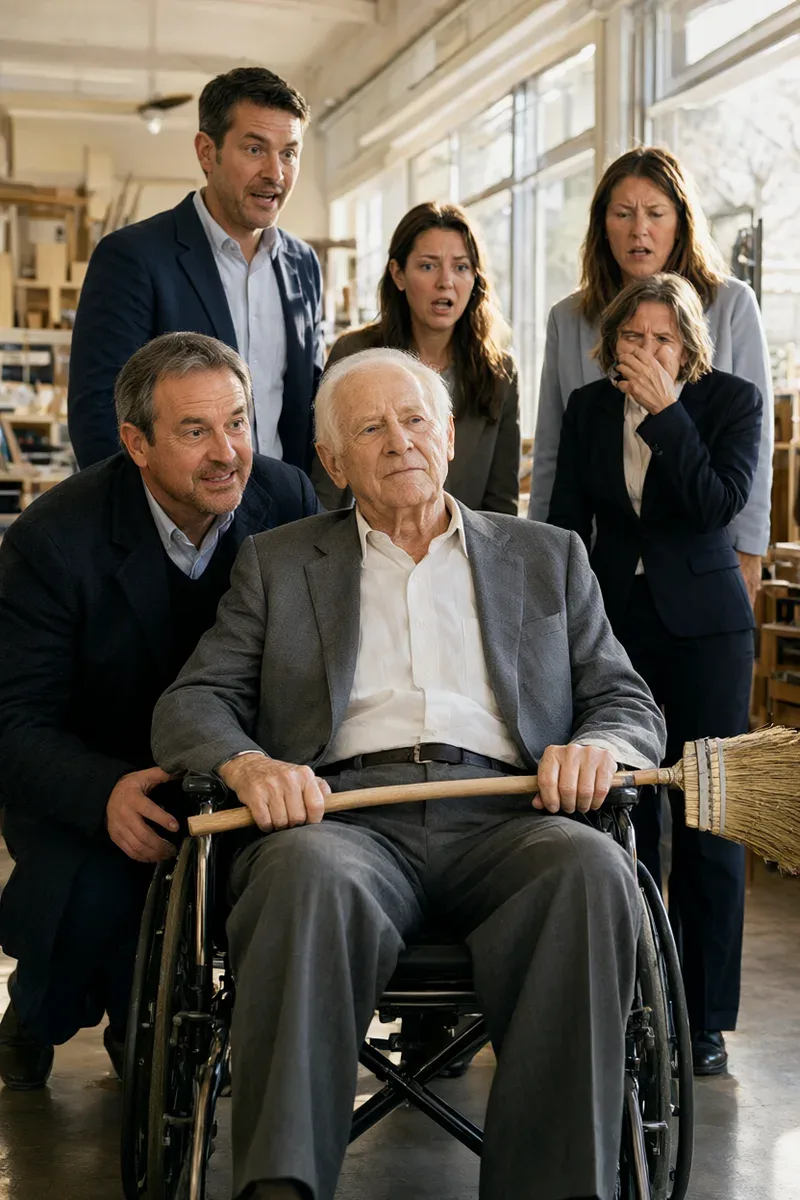
Augustin watched Tavish turn the scrap over. The boy had become a man with gray at his temples and the same habit of reading things twice before he spoke. "What's 1460?"
Talking was a toll road. Writing was cheaper. Augustin wrote: CHART OF ACCOUNTS. NOTE RECEIVABLE. OFFICER.
"A loan from the company to one of its officers. And it should be?"
Augustin wrote a zero, then: MARCH 31. I SIGNED THE QUARTER.
He had signed the first-quarter books eight days before the stroke, as he had signed every quarter since 1968. Account 1460 had been opened once, in 1979, when his first plant manager needed four thousand dollars for a down payment, and closed when the man paid it back. Nothing had been in it for forty-five years.
"You think there's something in it now. Mr. Merrin, I'm the bank. I only see what the seller gives me."
Augustin wrote: THEN ASK FOR IT.
Tavish laughed once, the same startled bark he had had at thirteen when Augustin first let him run the bandsaw. "Yeah. Okay."
The next morning Hedy Arkwright came in with her rolling cart of flash cards and her fluorescent orange reading glasses. She was the speech-language pathologist, forty or so, and the only person at Sallowmere who waited for him to finish a sentence.
"You have a visitor list now," she said, unpacking. "Your daughter had it changed last night. Family only. And a Mr. Mulgrew specifically not." She looked at him over the orange glasses. "Who's Mr. Mulgrew?"
He wrote: A FRIEND. THE ONLY ONE WHO WRITES.
Hedy pulled her chair closer. "Can I tell you something I probably shouldn't? In June, when they were doing the court paperwork, I wrote an evaluation. Dysarthria, severe. That's the slurring. It's the muscles, not the mind. Cognitive screen within normal limits, twenty-nine out of thirty. You lost one because you refused to draw a clock."
Augustin remembered. He had told her, in four agonizing syllables, that he did not draw clocks, he built them.
"I gave a copy to your daughter for the lawyer," Hedy said. "I assumed it went to the judge."
Augustin looked at the parking lot. A man was scraping frost off a blue pickup with a credit card.
As far as he knew, the judge had seen one document: a neurologist's note from the third day after the stroke, when Augustin had been in intensive care and unable to say his own name. Henrik had read him the petition. There had been nothing from June in it.
His hand shook when he picked up the pencil, which it did not do from age, only from anger. CAN A MAN IN A GUARDIANSHIP ASK THE COURT TO END IT.
"I'm not a lawyer," Hedy said. "But yes. I've seen it done. You'd need a lawyer of your own, an independent evaluation, and somebody to file it."
Augustin wrote one word and underlined it. MULGREW.
"He's not allowed in the building." Augustin tore the page off and folded it. On the outside, in the block capitals that had labeled forty years of lumber racks, he printed a Chicago phone number he had known by heart since it first came on a Christmas card. He held it out to her.
Hedy looked at the folded page. Then she put it in her cardigan pocket, under the flash cards, and did not say yes, and did not give it back.
The End