 The Saturday Sweeper
Chapter 2
The Saturday Sweeper
Three days earlier, Tavish Mulgrew had been in a conference room on the thirty-first floor of a building on Wacker Drive, reading a deal memo he was expected to approve before lunch.
Mulgrew Harlow Capital lent money to companies buying other companies. Vantrell Home Group wanted twenty-four million dollars to help acquire a furniture maker in Pellam Ferry, Indiana. The numbers were clean. Page six listed the seller: Corinna A. Merrin, individually and as court-appointed guardian of the estate of Augustin T. Merrin.
Tavish had read the line four times. Then he told his partner, Benedek Harlow, that he needed the week, and Benedek said, "We sign the commitment letter Friday," and Tavish was already walking toward the elevator.
Now the woman at the Sallowmere front desk was frowning at a list. "You're not family." "No," Tavish said. "I'm the other thing."
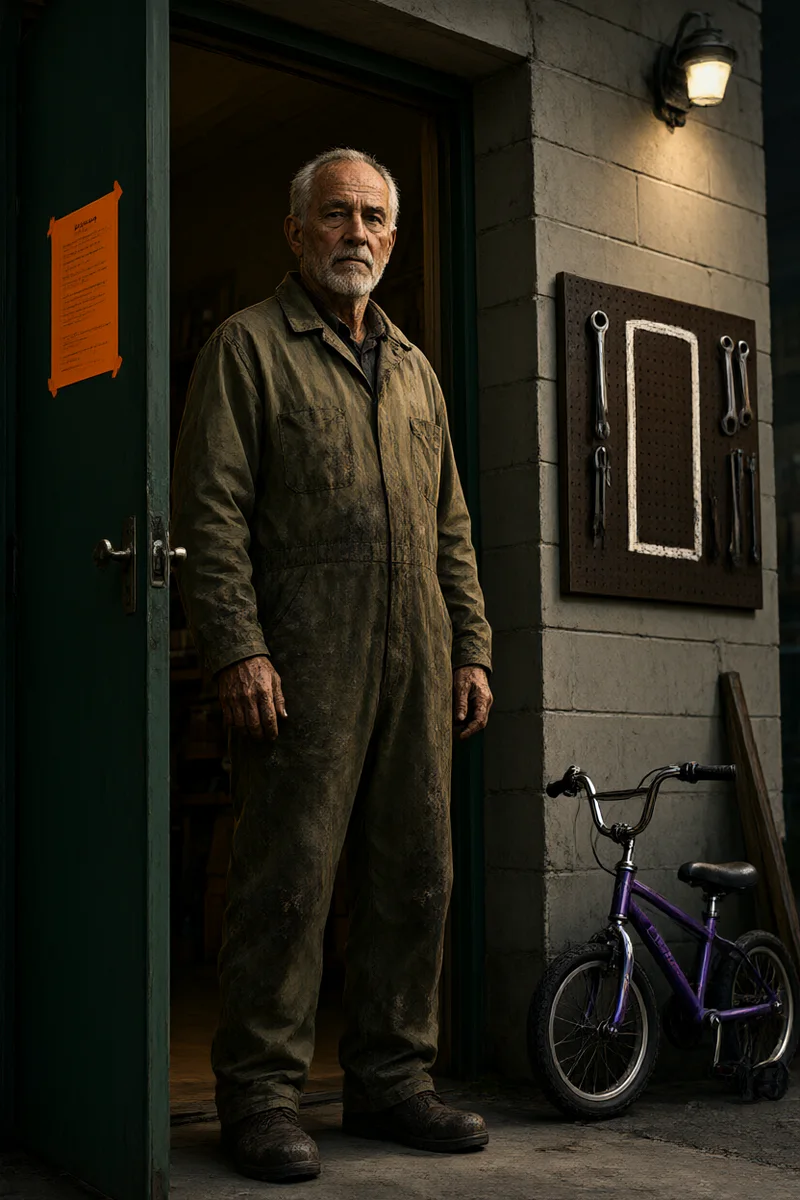
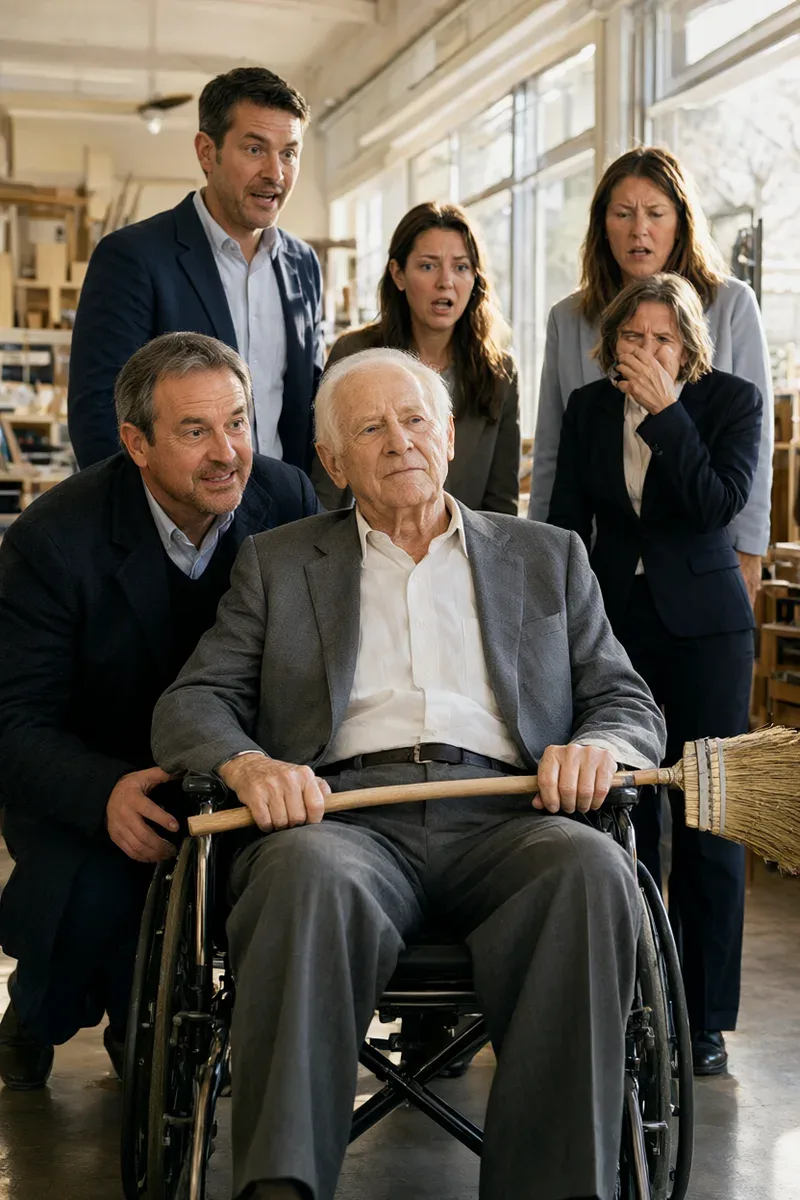
He saw Augustin before she found an answer: a narrow old man in a wheelchair by the lobby glass, a plaid blanket over his knees, one hand curled in his lap. The eyebrows were the same. Thirty-two years ago those eyebrows had come down over Tavish in the dark of the Tanner Street workshop, where a twelve-year-old had crawled through a loose window and fallen asleep in a bin of cedar shavings because it was nine degrees outside and his mother had not come home.
Augustin had not called the police. He had made cocoa on the glue stove and said, "Saturdays, eight to noon. Four dollars an hour. You sweep, you don't touch the saws."
Tavish crossed the lobby and crouched so their eyes were level. "Mr. Merrin."
Augustin's mouth worked. What came out was blurred, but Tavish had spent six years of Saturdays learning this man's grunts over the noise of a dust collector. "You got. Old."
"You didn't," Tavish said, and the old man's good hand closed hard on his wrist.
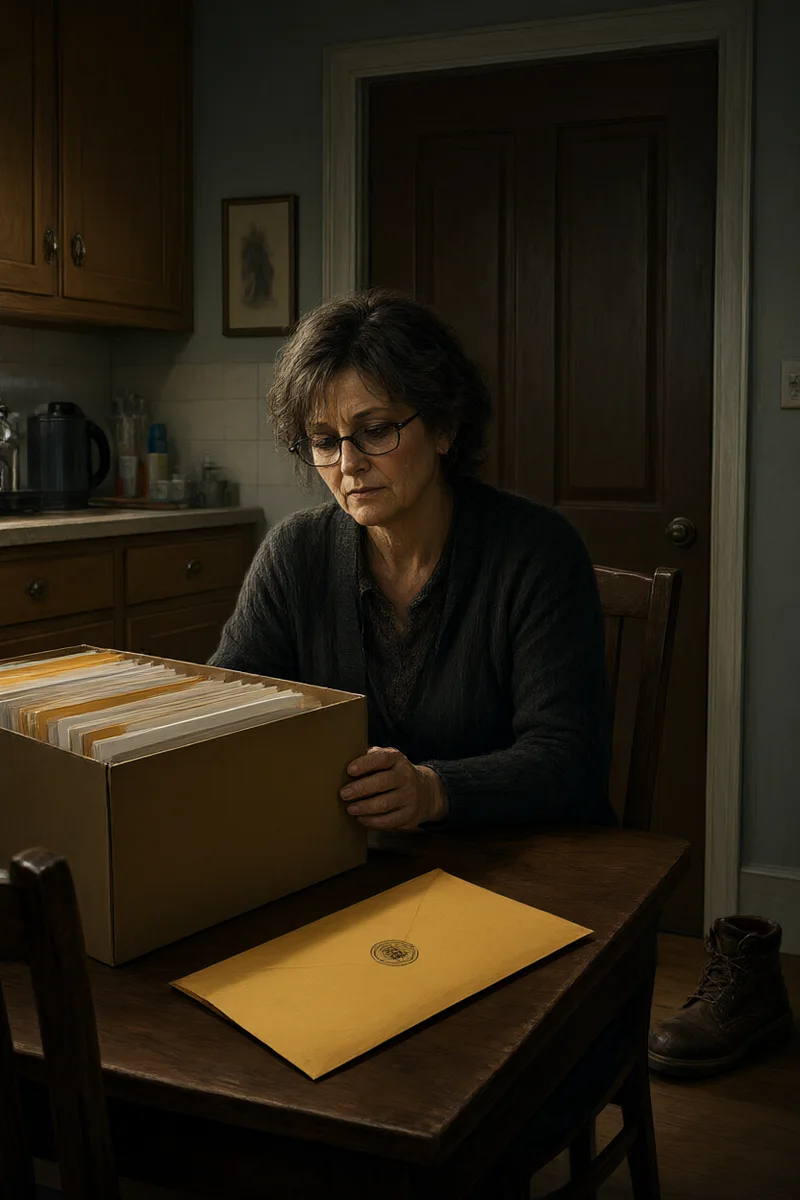
Room 114 had a window onto the parking lot and a bulletin board with a laminated sheet that said TODAY IS and nothing else. Tavish opened the tube and slid out a roll of paper. "Lazlo gave me these at the plant this morning."
They were shop drawings, pencil on vellum, in Augustin's hand: the Merrin rocker, the 1971 drop-leaf table, a sideboard Tavish had glued up at sixteen. Augustin spread the rocker across his tray and studied it the way other men studied photographs of grandchildren. Then he picked up a pencil, crossed out a dimension, wrote a new one, and tapped the paper once, hard.
"That's wrong?" One tap. Yes. The drawing said the back slats were seven-eighths thick. Augustin had written thirteen-sixteenths, and below it: CHANGED 1988. LAZLO KNOWS.
"Okay," Tavish said slowly. "So you're all there." Augustin gave him a look that had once made a delivery driver reverse forty yards to fix a crooked pallet.
The door opened. A woman in a camel coat stopped in it, keys in her hand. "Excuse me. Who are you?"
"Tavish Mulgrew. I worked for your father when I was a kid."
"Mulgrew." Corinna Merrin said it like a word she was filing. "My father gets confused and agitated, Mr. Mulgrew. Strangers make it worse."
"He doesn't seem confused."
"You've known him for twenty minutes."
"Thirty-two years," Tavish said. "And my firm is being asked to finance the sale of his company."
Corinna's face did nothing at all, which told him more than shouting would have.
Behind him paper rustled. Augustin had torn a corner from the rocker drawing and was pushing it across the tray with his thumb. On it, in hard block capitals, were four digits and two words.
1460. ASK HER.
The End