 The Page I Kept
Chapter 1
Five Thousand at the Gate
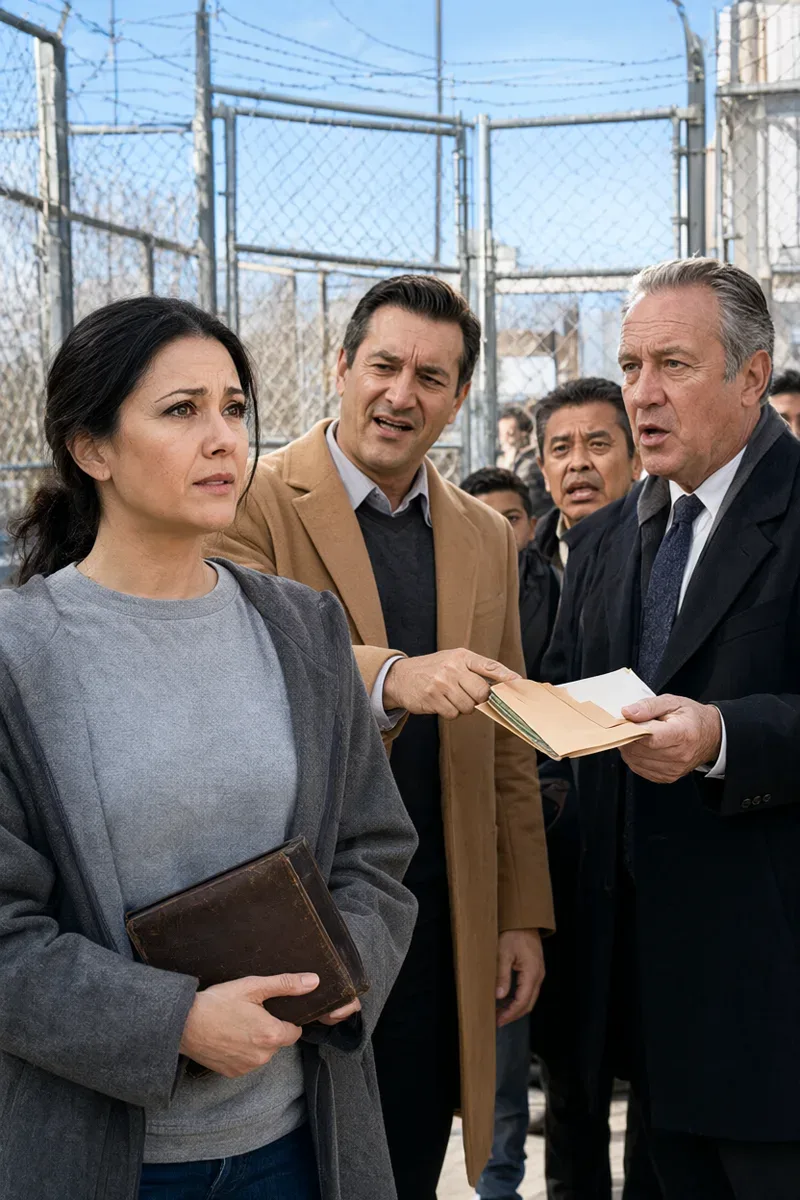
The gate at Oxbury federal prison camp opened at 7:10 a.m., and the cold came in first. Twenty-one degrees. I had a mesh bag with two sweatshirts, a release packet, a bus voucher to Merriton, and my mother's Bible, and I had exactly four hours to report to the halfway house or be counted as an escape.
Fitzroy was standing by the visitor lot in a camel coat I had never seen.
Four years and two months. He had gained ten pounds and a better haircut. He did not walk toward me. He waited for me to walk to him, the way he used to wait at job sites for the inspector to come over to his truck.
"Moira." He said it like he was confirming a reservation. "You look good. Thinner."
"Where's Finnian?"
"School. It's a Tuesday." He took a white envelope from his coat and held it out between two fingers. "That's five thousand. Cash. To get you started."
I didn't take it. There was a second envelope behind it, long and cream-colored, with a return address I knew: Emmerich Brockhurst, Attorney at Law, the man who had sat beside Fitzroy at our kitchen table and explained how a plea worked.
"What's that one?"
"Read it on the bus." He kept holding both. "Look. Things changed. You got the divorce papers, you know that part. I'm remarried. Her name's Yara. We're out at Cardew Lake now, the house on the point. Finnian has his own dock." He smiled a little at that, as if I should be pleased about the dock.
"You said you'd bring him to see me. Every month." He said it was a long drive for a kid. "You said you'd pay me back."
"I'm paying you back right now." He pushed the white envelope an inch closer. "Moira, he's settled. He's doing great. He thinks you went away because you were sick, and honestly, that was the kindest version. Brockhurst put it in writing. You stay away for a while, let him stay settled, and there's more where that came from."
The bus idled at the curb behind me. A guard I liked, Officer Banfield, watched us from the gatehouse window without pretending not to.
"Sick," I said.
"It's what you tell a six-year-old."
"He's ten."
Fitzroy put the cream envelope in my mesh bag himself, tucking it between the sweatshirts, the way you'd slip a tip into a waiter's apron. The white one he held out a last time. When I didn't move, he shrugged and put it back in his coat.
"Your call," he said. "It always was. You signed the paperwork, Moira. Not me."
He walked to a gray Lincoln with a lake association sticker on the bumper and drove off without looking back.
On the bus I opened Brockhurst's letter. It asked me, on behalf of Mr. and Mrs. Fitzroy Sutton, to refrain from contacting the minor child, his school, or the family residence, and it reminded me that my conditions of supervised release could be "jeopardized by conduct a court might view as harassment."
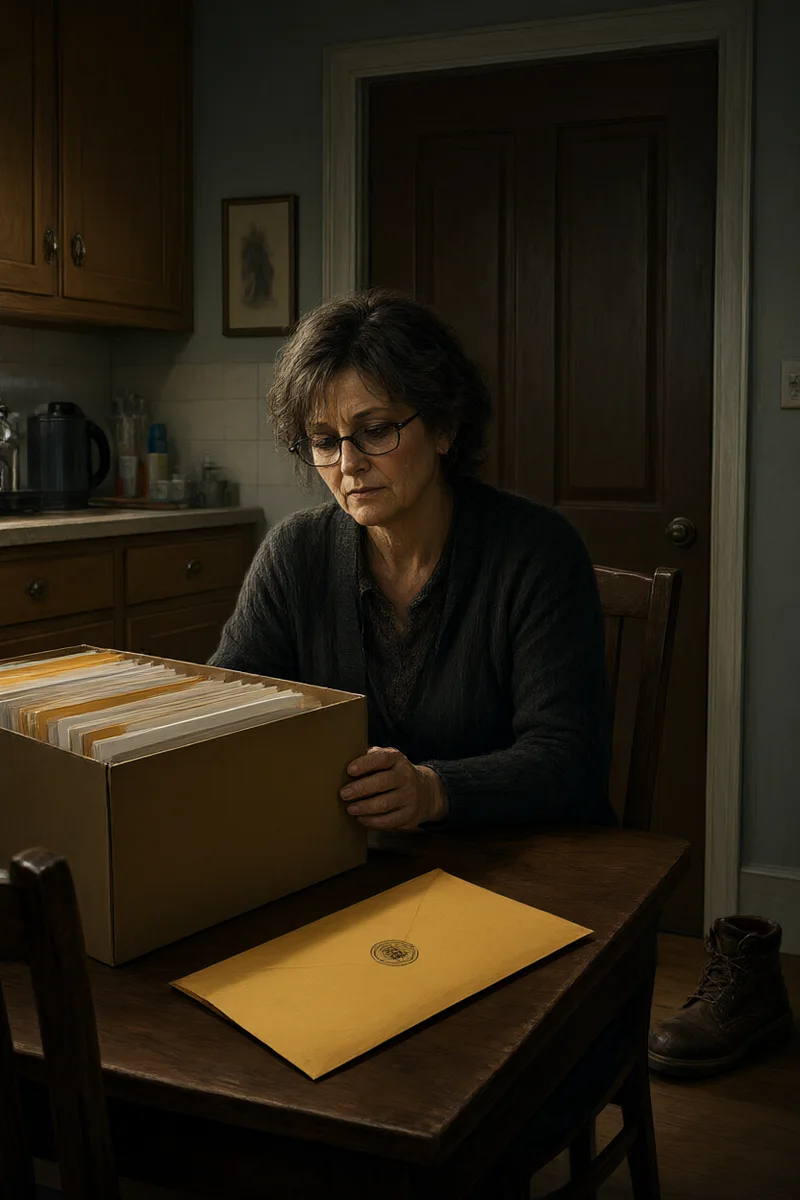
Mrs. Fitzroy Sutton. I folded it into thirds and put it inside the Bible, at the back, against the inside cover where the binding was slit.
My fingers found the other page that was already there. A photocopy, soft as cloth from four years of being unfolded and folded again. One sheet from the original discovery, the one my plea lawyer had tapped with his pen and told me did not matter.
The End