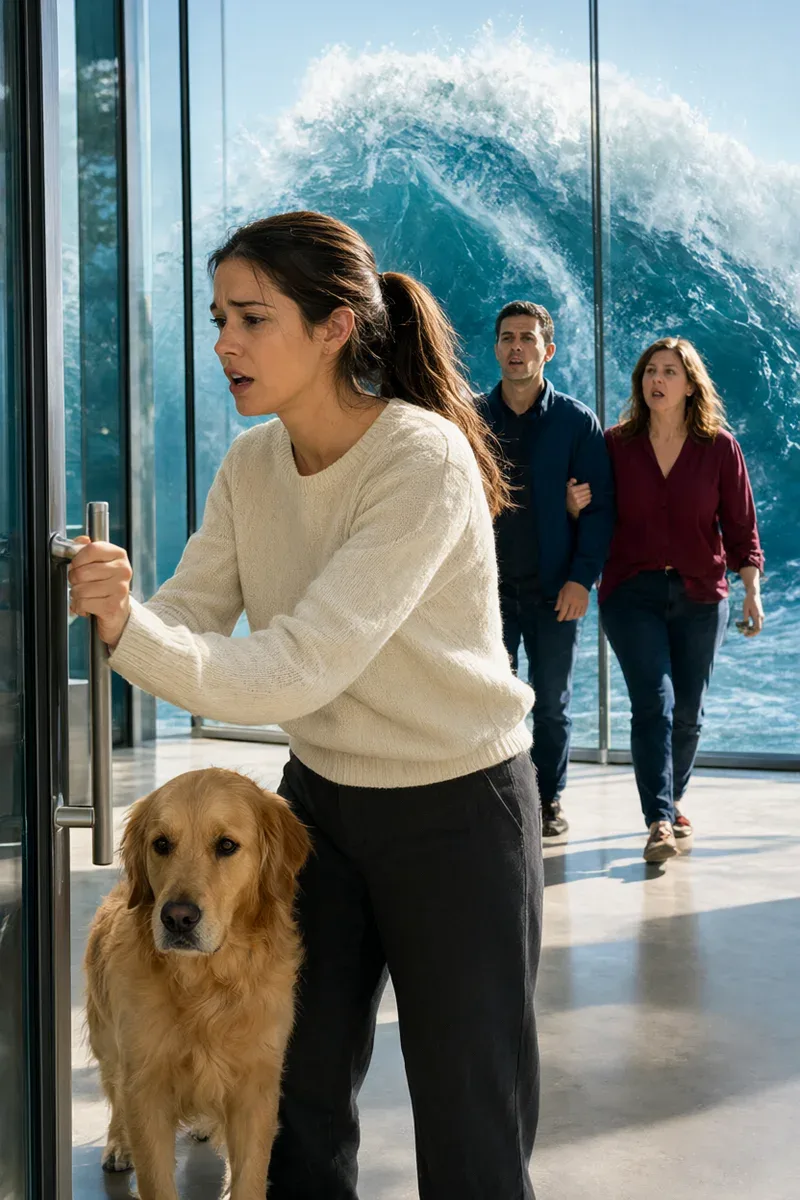
 The Glass House Shelter
Chapter 2
What the Wall Said
She counted to two hundred before she let go of the dog.
The room was a concrete box, twelve feet by sixteen, with a ceiling she could touch. A cot. Steel shelving bolted along the north wall. Three blue five-gallon water jugs, only one of them full. Cans of chicken, stew and peaches with dust on the lids. A hand-crank radio, a rack of tools, a saucepan, a bucket with a lid. By the stairs a small white meter glowed: CO2 640 PPM.
Rusty walked the edges with his nose down, then came back and leaned on her shin.
The instructions were stenciled straight onto the wall in black paint, each letter squared off the way an engineer prints.
AIR: TWO 4-INCH LINES RUN 60 FT UPHILL TO THE VENT STACK. FLOAT VALVES SHUT IF THE STACK GOES UNDER. THEY WILL CLACK. THAT IS GOOD. SEALED, THIS ROOM HOLDS 30 HOURS OF AIR FOR TWO ADULTS.
HATCH: TURN THE WHEEL UNTIL IT STOPS. THEN ONE MORE. DO NOT OPEN FOR 12 HOURS AFTER THE LAST SURGE. IF THE HATCH IS BLOCKED, SEE SHEET S-7.
Underneath, small, in pencil: This vault is poured into the basalt, not hung from the house. Let the house go. N.S., August 2010.
Maya put two fingers on the initials. She owned exactly one sample of that handwriting, a card for her ninth birthday, and the capital N had the same hooked foot. Nels Sundgren had died the following April in a fall at a job site in Astoria. Roland always told it the same way: her father drew a few sketches for the glass house, Roland paid for every pane, and Nels left behind a daughter and debts.
A man leaving debts does not pour a room like this.
At 10:07 the valves clacked, both of them, sharp as a slammed drawer, and her ears filled. Rusty whined. Above the slab the second wave went over with a long grinding drag, and a thread of water ran down the inside of the hatch and dripped onto the top stair.
She climbed up and found the wheel. It was red, the size of a dinner plate, and it turned hard. Until it stops. Then one more. The drip thinned and quit.
The third wave came at 10:52 and it was the worst. It did not roar so much as lean. Then something enormous slid across the concrete over her head, steel shrieking on stone, and stopped directly above the hatch with a boom that shook dust from the ceiling.
After that there was only water moving, and later not even that. The valves dropped open. Somewhere behind the wall a fan began to whir.
She poured water into the saucepan for Rusty and drank from the jug herself. Her phone showed 61 percent and no service. In an alcove beside the stairs stood a tall gray battery cabinet reading 41%. That, at least, she recognized. Roland had it installed in 2021 along with the new locks, and she had always assumed it lived in the garage.
Mounted next to it was a black box the size of a paperback, with a memory card slot and a two-line screen. HOUSE HUB, the label said. RUNNING ON BACKUP.
She thought of the cream envelope from a Portland law firm that Roland had lifted out of her hand at the mailbox in September. "Mine," he had said, smiling. He had not smiled much since.
There was one arrow button under the screen. She pressed it, and the lines scrolled back through the morning.
09:22 SEISMIC SENSOR TRIPPED.
09:41 ARMED AWAY. USER: ROLAND. WARNING: MOTION INSIDE.
She pressed the arrow once more.
09:41 ARM ANYWAY? YES.
The End