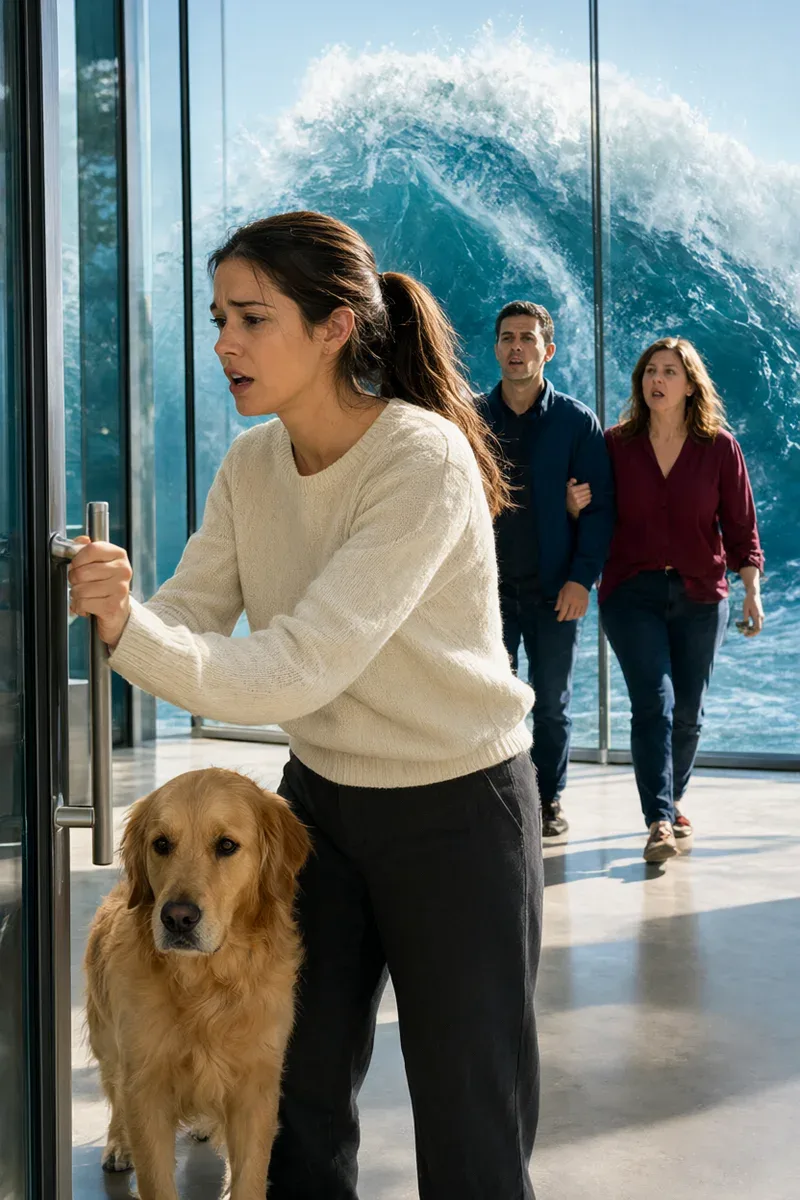
 The Glass House Shelter
Chapter 10
An Ordinary Tide
The hospital in Tillamook kept Maya two nights for dehydration, and let Rusty sleep on the bed after an hour of pretending they wouldn't.
She turned twenty-five on a Sunday, in a motel room the Red Cross paid for, with a vanilla cupcake from the grocery store and a dog who got most of it. That week a lawyer from the Portland firm with the cream envelopes drove out over the patched highway and laid the original trust on the motel desk beside her father's photocopy. They matched to the last initial.
The accounting Roland owed her took a court-appointed examiner until January. Of the $640,000, there remained $11,800. The rest had gone, over fifteen years, into a forty-foot sport boat, a restaurant in Seaside that closed within a year, and the ordinary upkeep of a man who liked to be seen picking up the check. He had also let the flood policy lapse in 2022. The glass house had gone into the sea insured for nothing.
In March, in Tillamook County Circuit Court, Roland Sundgren, fifty-three, pleaded guilty to attempted murder in the second degree and to first-degree aggravated theft. The clip was never played for a jury. His own lawyer had watched it.
The judge gave him ninety months with no early release and ordered restitution of $671,400: every dollar missing from the account, plus six years of rent collected from the girl the house was held for. The boat and his retirement account were sold and brought $236,000. The balance he would owe her for the remainder of his life.
Dorrie pleaded guilty to recklessly endangering another person and to making a false report. She had testified against her husband for two days and filed for divorce from the county jail. At her sentencing Maya asked to speak. She told the judge about the bolt and the car. Then she told him about a trowel, and three days, and the state of a woman's hands. She did not ask him for anything. He gave Dorrie ninety days and three years of probation.
Maya sold the lot to the county for $410,000, on two conditions written into the deed. The slope would become a marked evacuation path to high ground. And the vault stayed, with its hatch and its stenciled wall, and her father's name on a plate by the stairs.
In June she rented a small yellow house in Portland, three hundred feet above the river, and went back to the veterinary technician program for her third term, paid in full.
Dorrie came on a Sunday in August, by bus. She stopped at the bottom of the porch steps in a gray cardigan, her hair cut short, her hands empty.
"I'm not asking to come in," she said.
Rusty looked at Maya. Then he went down the steps, taking his time, and sat on Dorrie's shoe.
Maya watched her aunt's face come apart and put itself back. Neither of them said anything for a while. Then Maya went inside, came out with two mugs, set one on the top step, and sat down beside the other.
"It's only instant," she said.
In October she and Rusty drove out to the Point. The county had hauled the crab boat away. The slab lay bare and pale, with a new steel railing around the hatch and a path of crushed rock climbing the hill to a grate painted yellow.
The tide was halfway out, an ordinary tide. The cove held its water and went about its business.
Rusty walked to the middle of the slab, turned twice on the spot where the rug used to be, and lay down beside the hatch with his chin on his paws. Maya sat next to him on the sun-warmed concrete, put her hand on the red collar, and watched the water stay where it was.
The End