 The Giant Biker Refused to Leave the NICU Chair for 12 Hours
Chapter 2
The Loneliest Bed in the Ward
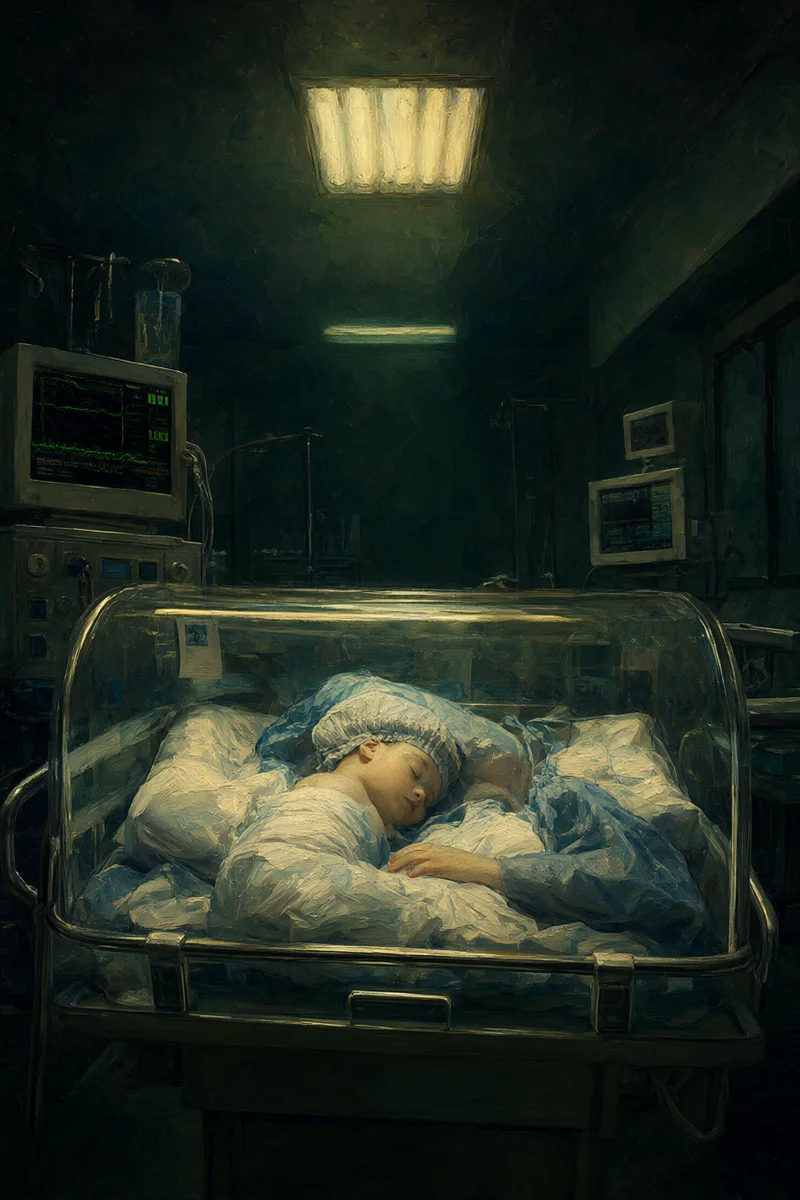
Bed nine was located in the quietest corner of the NICU, far enough from the main station that its monitors sometimes felt like a distant, lonely heartbeat. The chart hanging at the foot of the incubator held a name that felt more like a placeholder than an identity: Baby Boy Nolan.
No middle name. No proud parents smiling from framed photos taped to the plexiglass. No colorful balloons bobbing from the railing, and no knitted blankets smelling of home. Just sterile white sheets, a tangle of monitoring leads, and a tiny, shuddering chest fighting for every drop of air.
Shelby Nolan had vanished before the ink on the birth registration paperwork had even dried. She was nineteen, terrified, and caught in a vortex of personal crises that no hospital ward could solve. She had slipped out the side doors while the morning shift was changing, leaving behind a bewildered nursing staff and a baby boy who possessed nothing in this world except a plastic identification band around his fragile wrist.
No father had ever signed in. No grandparents had called asking for updates. While other incubators were surrounded by exhausted families sleeping in uncomfortable vinyl chairs, talking in hushed, hopeful tones, bed nine sat in absolute isolation.
That morning, Baby Boy Nolan was inconsolable.
We had tried everything in our medical playbook. We checked his temperature, adjusted his swaddle, dimmed the overhead lights, reviewed his feeding tube output, and re-calibrated the oxygen flow. Nothing worked. His cries were thin, raspy, and heartbreakingly tired—the sound of a newborn who already understood the cruel indifference of the world.
That was when Wade turned away from the doorway, his heavy boots making no sound on the rubberized floor. He looked across the room, caught my eye, and spoke in a rumble that vibrated through the quiet air.
"Is that the little one who needs someone to sit with him?" he asked.
His voice wasn't aggressive. In fact, it was surprisingly deep, rich, and steady, carrying a strange kind of gravity that made it impossible to ignore. I hesitated, a professional instinct warning me to keep him away from the critical patient. But protocol was protocol. He was cleared, trained, and approved.
Swallowing my apprehension, I nodded slowly and motioned toward bed nine. "He's been crying for over an hour. We can't seem to settle him."
Wade didn't smile. He just gave a solemn nod, walked over to the hand-washing station, and spent a full three minutes scrubbing his massive arms with antibacterial soap, following every single instruction down to the letter. When he finished, he dried his hands with careful precision, his movements unnaturally slow and deliberate, as if he were handling a pane of thin glass.
The End









