 The Corn Days Girl
Chapter 10
Slack Water
The state police forensic team came on Wednesday morning, October 28, with a walk-behind concrete saw and a ground radar cart that looked like a lawnmower. It was a bright, windy day. The saw shrieked for two hours.
They cut the corner first, as my mother asked. Two troopers lifted out a square of concrete about the size of a doormat and carried it to the carport, where my mother covered it with a beach towel so the dust would not get into the letters.
At 1:20 in the afternoon, thirty inches down in my father's drain trench, under gravel that had been put there by the wrong hands, they found Juliska Bekker.
I will not describe what I saw. I will say that there was a blue hair elastic, and the brass buttons of a jean jacket, and that the forensic anthropologist, a tall woman from Indianapolis, took off her cap before she climbed into the trench.
Ebba stood at the back fence the whole day. Kristof stood beside her. At some point in the afternoon he put his arm around her shoulders, and she let him leave it there.
Dental records confirmed it in nine days.
Sarabeth Mott was charged in November. She pleaded guilty in February, to a charge her lawyer spent three months negotiating down, and to obstruction of justice for the voicemail and the florist card. The judge gave her the maximum the plea allowed. She did not look at Ebba once during the hearing. She looked at me.
Sheriff Tilney drove out to Wilda Tibbs-Baskin's house in person and told her, on her porch, that the county had been wrong about her father in 1998 and wrong again in October. Wilda told me later he stood there with his hat in both hands like a man at a funeral. She asked me to say Orvel's name in the last episode. I said it four times.
I fired Avis. Then, in January, I hired her back, because she called and did not pitch me anything. She just said she was sorry, and she was.
Jules was buried in March at the Methodist cemetery on Pike Hill, which is about as far from water as you can get in Kessick. Ebba chose a plain gray stone. Kristof dug out the frozen gravel by the gate so the hearse would not get stuck.
My mother sold the yellow house on Dewitt Lane in April. She did not even try to get full price. She moved into a two-bedroom apartment in Lafayette, forty minutes from Kessick, with a balcony over a parking lot and no yard at all.
She asked me to help her pack. I asked her to help me with the finale. We did both on the same weekends, at her new kitchen table, her voice on one track and mine on the other, our coffee going cold between the microphones. Some weekends we fought. We had twenty-eight years of things to fight about. Then she would make grilled cheese, and we would go back to work.
The last episode of Slack Water's fourth season ran forty-one minutes. I had not planned that. Inga pointed it out.
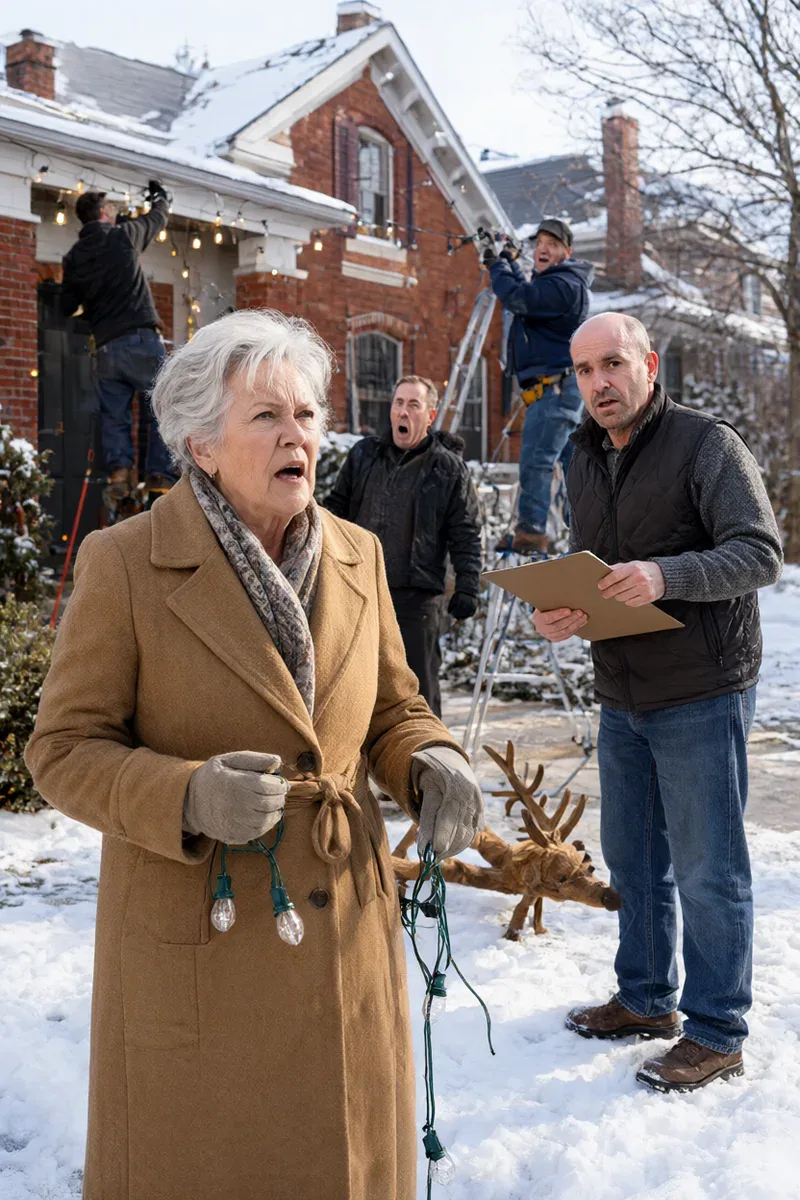
The square of concrete lives in my mother's storage unit now, under the beach towel, leaning against a box of my father's receipts. Last Sunday I went down there with her to find the Christmas lights, and while she dug through the bins I lifted the towel and looked at it.
R.V. 8-15-98. A hand so small it would barely cover a coffee mug.
I was humming. I did not notice until my mother stopped digging and looked at me.
I stopped. I put the towel back over the square, smoothed the corners flat, and carried the Christmas lights up to the car without making another sound.
The End