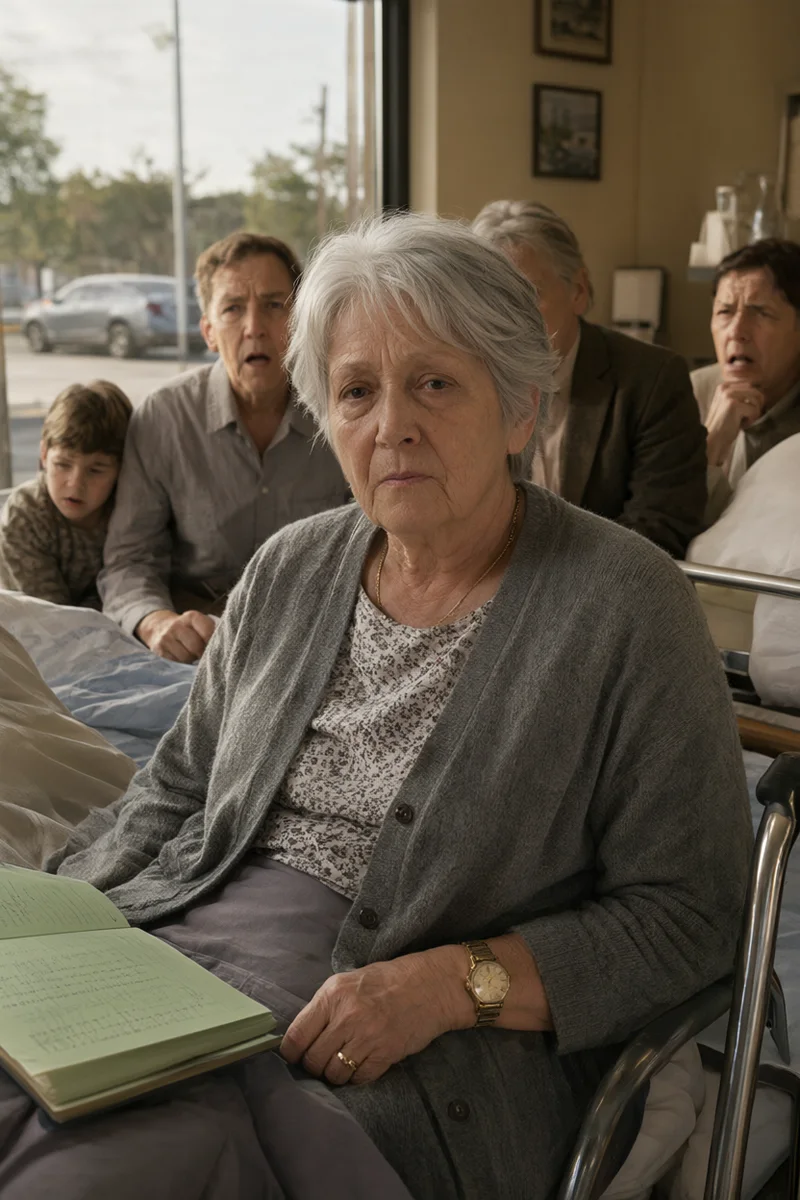
 The Cheapest Bed
Chapter 4
Forty-Seven Minutes
The $18,500 had left as a single check, number 4471, written on the twelfth to a lender called Tri-County Auto Finance and signed by Gordon as my agent. The memo line said reimbursement. I got that much from a human being at the bank on Saturday morning. I have never owed an auto lender a dime; the Buick was bought for cash in 2014.
I meant to call Rupert on Monday. On Sunday night the building gave me something else to think about.
Philomena pressed her call button at 1:52 a.m. I know because by then I was timing every light on the hall, out of what I told myself was professional interest. The light came on over our door. Down the corridor somebody's bed alarm was chirping, and I could hear Osei's shoes going the wrong way, toward it.
At ten minutes she said, "I can't wait, dear."
"You can. He's coming."
At twenty she said it again. At thirty-five she had her legs over the side of the bed, ninety pounds of seamstress with a mind of her own, and I was up behind my walker telling her to sit down in the voice that once stopped a lumberyard foreman from firing a man.
"I've been taking myself to the toilet for eighty-five years," Philomena said, and stood.
I was four feet away with both hands on aluminum. She took two steps, reached for the curtain as if it were a wall, and went down on her left side. The sound was small. That was the worst of it, how small.
I did not go to her; I'd have landed on top of her. I went to the door and shouted down that hall for Osei by name until he came running, and when he knelt beside her I looked at Casimir's watch. Forty-seven minutes from the button.
He was nearly in tears. "I had Mr. Abara on the floor in 131, I couldn't leave him, I'm sorry, I'm so sorry." He was one aide with thirty-eight people. There was a night nurse too, I learned, shared with the memory wing and passing medications at the far end of the building.
The ambulance took Philomena at 3:10 with a broken hip. She held my hand on the way out and asked me to turn off her television.
At nine Mr. Pryce stopped in, quarter-zip and coffee, to check on me. "A difficult night, young lady. I want you to know Mrs. Drozd was unfortunately non-compliant with our call-light protocol. Staff responded within six minutes, per the log."
"It was forty-seven."
"I understand it can feel that way at night." He smiled at me as you would at a child holding up a drawing. "Time gets slippery for our residents. We'll find you a new roommate soon, how's that?"
I showed him nothing. Six minutes was the number in my quarterly reports. So was three aides on nights. I had been reading those reports in a blazer for sixteen years and signing off on them, and a woman had just broken her hip four feet from me, in the gap between the paper and the hall.
Odalys found me after lunch. She shut the door and stood with her back against it.
"You stayed awake," she said.
"Why didn't you tell me it was like this?"
"I did." She stared at me. "I've sent the ownership group four memos about nights since March. In writing, through his office, the way the policy says. I thought you'd read them and decided it was fine."
"Odalys, I have never seen one."
The End









