 The Cheapest Bed
Chapter 2
What Do You Want
By the third day I had learned the building from the mattress up, which is not how I'd learned it from the conference room.
Breakfast came at 7:40 and was warm in the middle. The aides on days were quick and kind and called everybody honey, which I allowed. The executive director, a Mr. Lorcan Pryce, hired eight months ago by my partner in the operating company, walked the hall each morning in a quarter-zip sweater and said "Good morning, young lady" to women who had buried husbands. He had never looked at me twice. The ownership group, to him, was a mailing address.
Nights were different. On my first one, Philomena pressed her call button at ten past one because she needed the toilet. The light over our door came on. I had nothing to time it by but the clock radio, so I used that. Thirty-one minutes.
The aide who finally came was a tall young man named Osei, out of breath, apologizing before he was through the door. "I'm the only one down this end, ma'am." He did not say he was the only one down every end. I worked that out by listening: one set of shoes, all night.
My children did not call. On Thursday my granddaughter did better and showed up.
Kezia is Gordon's girl, nineteen, with a job at a garden center and two classes at the community college. She drove forty minutes in a 2009 Corolla with a gas-station coffee in each hand, and she'd remembered I take mine black.
"Dad said you were settling in great." She looked at the curtain, the parking lot, Philomena asleep. "Are you?"
"I'm settling."
She sat on the bed, which is against the rules, and asked me the thing nobody had asked in two weeks. "What do you want from the house? Like, really want. I'll go get it."
I took a minute over that. "Top dresser drawer, your grandfather's watch. The Hamilton with the sweep second hand. And the green ledger from the kitchen desk."
"A ledger. Grandma."
"I like to write things down."
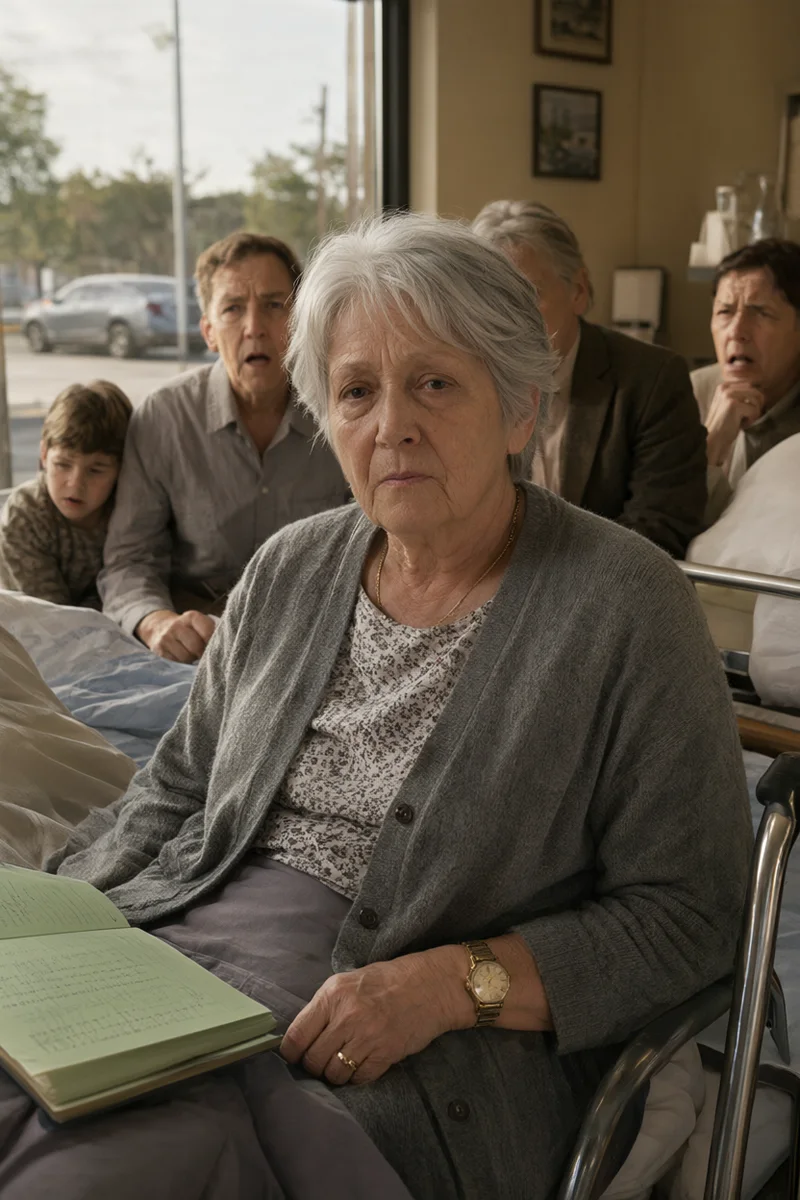
She was back Saturday with both, plus my good glasses and a card of hearing aid batteries. "They were in the kitchen drawer," she said. "Where they've always been. It took me four seconds." She wound the watch for me, because my wrist was still stiff from catching the stair rail, and she stayed two hours. She learned Osei's name, and Philomena's, and that Philomena had been a seamstress who once hemmed a dress for a governor's wife.
That night I timed three call lights with Casimir's watch and entered them in the ledger. Twenty-two minutes. Thirty-eight. Twenty-six. I have received a staffing report from this building every quarter for sixteen years, and the average night response time in those reports has never been above six.
On Monday the tenth, a week to the day after they left me here, Kezia came straight from work with potting soil on her jeans. She didn't sit.
"Grandma, did you tell Dad he could sell your house?"
"No."
She handed me her phone. There was my kitchen, photographed from an angle that made it look larger, with the pierogi board gone from the wall and a bowl of lemons I had never owned on the counter. 214 Sorrel Lane. Three bedrooms, original hardwood, motivated seller. $389,000.
"There's a sign in the yard," Kezia said. "Aunt Deanna's friend Trudi is the agent. I asked Dad and he said it was grown-up stuff." Her voice went thin. "He said you signed something."
I looked at the lemons for a while. Then I picked up my own phone and dialed a number I have known by heart since 1999.
The End









