 The Burnt Edges
Chapter 6
Gristmill Road
I got in. I've thought a hundred times about why, and the only answer is that my body was already sitting down while my brain was still holding a yellow crayon.
The door shut with that heavy, expensive sound. A second later the locks went down.
Primo drove with both hands at ten and two, like a man in a driving-school video. His hands were clean, except for a dark line ground in under the right thumbnail, the kind that doesn't scrub out. I looked at the back of his neck and thought: on his back like a bug, with a flashlight in his mouth.
We didn't go toward any lawyer's office. We went east on Kittredge Avenue to a strip of dark storefronts and parked behind one with a sign that said Sarnese Fine Cleaning, Since 1971. Inside it smelled of steam and solvent. Plastic-sheathed coats hung in rows from a ceiling track that ran back into the dark.
Ermanno sat at a folding table under a single fluorescent tube, with two espressos in paper cups. He looked at my empty hands. "Where is it?"
"Not in this car."
"I asked you to bring it."
"You asked me to get into a stranger's car at eleven at night with the only thing a dead woman ever trusted me with. I'm tired, Mr. Sarnese. I'm not stupid."
He took his glasses off and folded them, and the uncle went out of his face so smoothly I understood it had never been in there. Behind me, Primo stood in front of the door.
"Let me tell you where you are," Ermanno said. "This afternoon I sat down with Lee and told him the truth as it appears. That Mira was seeing someone. That the Tuesdays were cover. That a cafeteria cook made a little money passing notes for a lonely rich wife, and now the cook is very close to his son and asking a lot of questions. He believed me. He has believed me about Mira for a year." He sipped his espresso. "So no one is coming down that hallway for you. Do you understand?"
"What happened on Gristmill Road?"
"She drove too fast on the ice," he said. "It was very sad."
My hands had gone cold in my lap. I put them under my thighs.
"Then here's where you are," I said. "My supervisor opens the kitchen at five. If I'm not on that clock by five, she opens what I left and calls the number written on the lid." There was no number. Henrike didn't even know the tin existed. "So whatever you were planning for me tonight, you'll have to explain to her by breakfast."
He watched me a long time. I made myself look back.
"Then you'll clock in at five," he said finally. "And Primo will help you carry it."
Primo smiled at me. It was a nice smile. That was the worst part.
They kept me in the Lincoln outside my building until 4:30. Primo had my phone. He gave me a bottle of water and a granola bar, which I didn't eat, and listened to sports radio with the volume low.
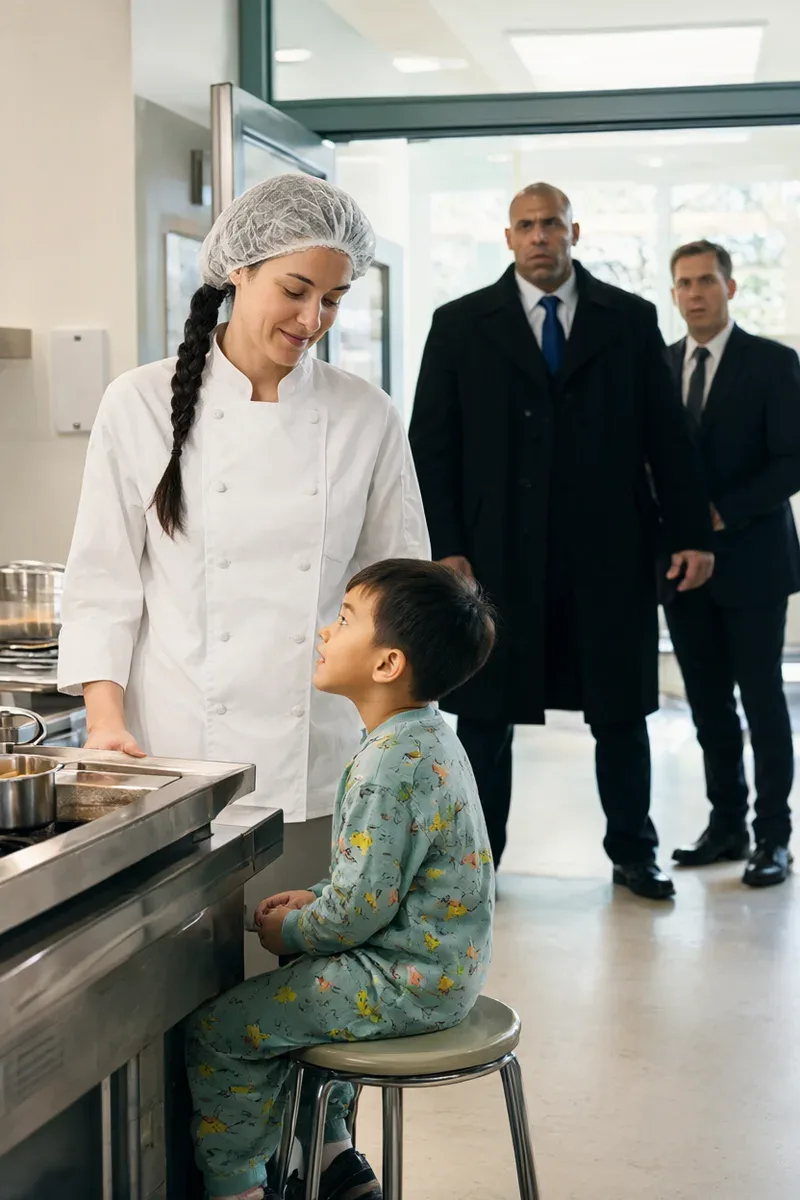
When we pulled up at the hospital, Ermanno was waiting by his own car at the curb with his collar up, and he leaned in at my window like a man saying goodnight to his niece.
"One more thing," he said. "The boy is very fond of you. Let's not make him lose two of you in one month."
The End