 The Burnt Edges
Chapter 10
Count to Forty
Varesi didn't move from the stool. "Ermanno. Come sit."
Ermanno set the box on my counter, sfogliatelle from Pizzuti's, clapped his cousin on the shoulder, and looked at me with nothing at all in his face. "Ilse. Early shift." "Always," I said.
"Primo's not answering his phone," he told Varesi, easy. "Thought I'd see the miracle myself. What did the boy say?"
"He said Mira used to come here on Tuesdays and cook."
"That's the big secret?" Ermanno shook his head, smiling, sad. "Lee. She drove too fast on that ice, coming from somewhere she shouldn't have been, and we both know it. You have to let her go."
"You said that to me too," I said. They both looked at me. "Saturday night, at your dry cleaner's on Kittredge, around midnight. 'She drove too fast on the ice. It was very sad.' Primo was holding the door shut at the time."
Ermanno laughed. It was a good laugh. It had worked on rooms for forty years. "Lee, this woman..."
Varesi set the little black recorder on the steel between them and pressed play. Turn signal. Heater. Ermanno's own voice, warm as a bath: Primo's handling the wife. At the window table, Sergeant Thibodeaux put down her cinnamon roll and stood.
Ermanno didn't look at her. He looked at his cousin, and for the first time since I'd met him he looked scared, and then, worse, confused. "You're giving me to them? You?"
"She asked me to," said Leandro Varesi.
They took Ermanno out through the front, past the gift shop, in handcuffs and his cardigan. Primo's sworn statement ran eleven pages, from the brake line to the birthday dinner. The Kasparians went very quiet across the river. In March, Ermanno was charged with Mirela Varesi's murder and with conspiracy, and the judge set no bail.
I won't pretend Varesi walked away clean. Thibodeaux had questions for him, and eventually so did other people, and he had lawyers for that. But every Sunday he was home for dinner, and every night he was home for bed.
Enzo was discharged on a Wednesday. He talked to his father in the elevator all the way down, about Pancake, about the purple stethoscope nurse, about whether heaven had a grill. I heard most of it. The doors were slow.
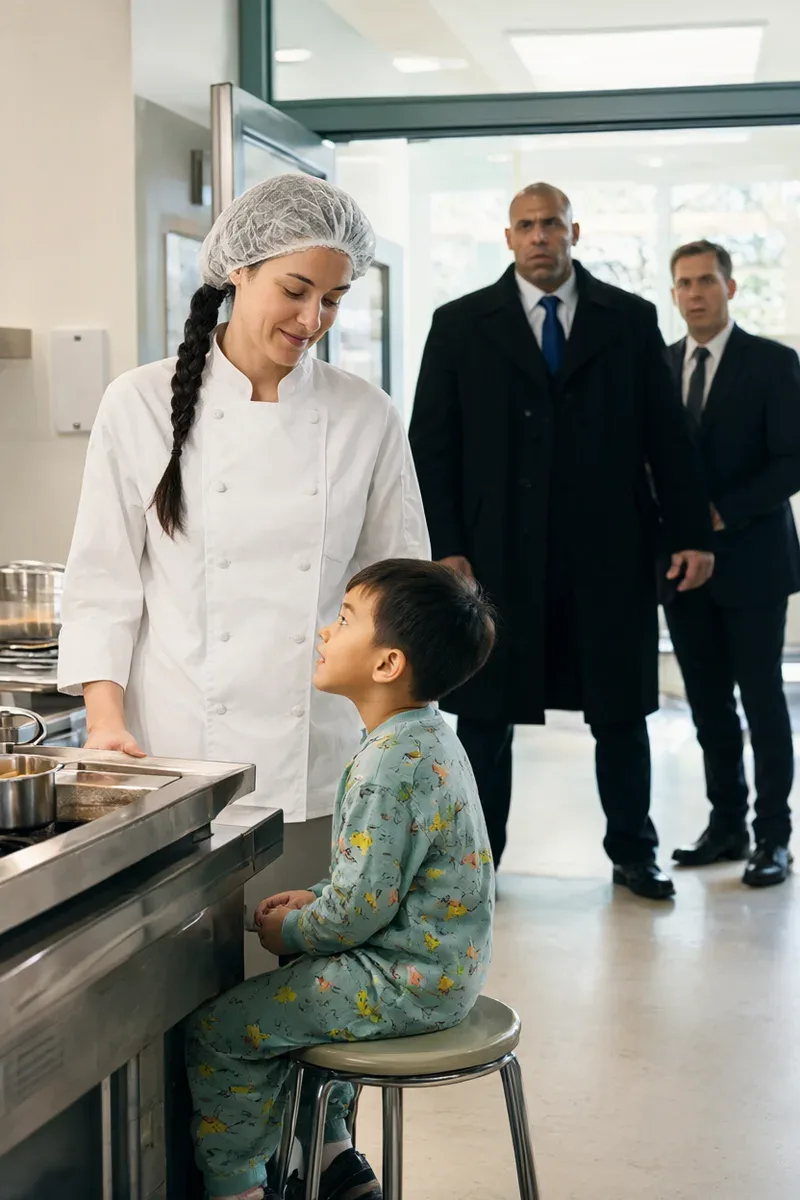
Three Tuesdays later, at ten past two, Leandro Varesi stood behind my grill in a borrowed apron that didn't close across his chest. Enzo knelt on the stool, sling off, his new front tooth halfway in. Mira's index card was propped against the ticket rail: Parmesan on the pan first. Butter outside. Count to forty after it smokes, he likes the corners black. Thank you for my Tuesdays, Ilse. M.
"You're pressing too hard," Enzo told his father. "Mama pressed medium."
"How hard is medium?" Leandro asked. "Medium," said Enzo, with contempt.
The smoke came up off the parmesan. Leandro looked at me, and I didn't help him.
"One," Enzo said, loud enough for the dish room. "Two. Three."
His father counted with him. Somewhere in the thirties, without looking up from the bacon weight, Leandro asked whether the grill was open next Tuesday too, and I told him it opened at eleven, same as always, and he could bring his own apron.
"Thirty-nine," Enzo said. "Forty."
Leandro lifted the weight. The corners were black. He cut it in triangles and pushed the plate across the steel to his son, and Enzo broke off the darkest corner and held it up over the counter for me.
The End