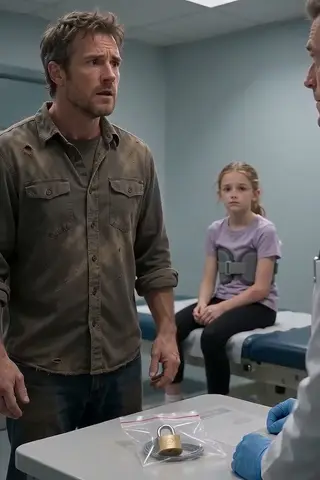
 The Brass Padlock: Echoes Behind the Closed Door
Chapter 8
Returning to the Hollow
The drive back to our house near the edge of the timberline felt entirely different this time, even though the same gray mist was clinging to the tops of the Douglas firs and the same gravel crunch sounded beneath the tires of my father’s pickup truck. When we walked through the front door, the air inside smelled clean and strange—like fresh lemon wax and open windows—because my father had spent his entire weekend off work scrubbing the house from top to bottom while I was still recovering in the hospital. Clara’s floral-print armchair in the corner of the living room was gone, replaced by a low wooden bookshelf filled with my mother’s old storybooks and a basket of colored yarn for my knitting projects. The framed portrait of my mother by the umbrella stand had been straightened, and beneath it hung a new calendar with my physical therapy appointments marked in bright red ink by my father’s own hand.
“Well,” Dad said, tossing his canvas cap onto the small table by the door and rubbing his hands together with a tentative smile that looked like it was still getting used to being worn. “Mrs. Gable is coming over at seven o’clock tomorrow morning to help you get ready for school, and Dr. Mercer wants you to come in on Thursday for a checkup on those pressure sores.”
“I can walk all the way down to the mailbox by myself now, Dad,” I said, dropping my schoolbag onto the newly polished floorboards and feeling the wonderful, unhindered lightness of my ribs as I took a deep, unobstructed breath of the clean indoor air.
“We’ll walk down together after dinner,” Dad promised, walking over to the kitchen counter to put the kettle on for tea. “And this time, if the mail carrier has a postcard from your aunt, we’ll read it right there on the porch without anybody hiding the keys.”
The next few weeks passed in a blur of small, miraculous changes that felt almost dreamlike after the long, dark winter of the locked brace. Dr. Mercer fitted me with a new, lightweight canvas support that fastened with simple Velcro tabs that I could open and close myself whenever my skin needed cleaning or my muscles needed to stretch during the long afternoon hours. Mrs. Gable turned out to be a kind, flour-dusted grandmother who smelled of cinnamon rolls and brought me fresh blackberry jam every Tuesday, sitting with me at the kitchen table while I did my arithmetic homework and listening patiently when I talked about my mother’s garden. My father started coming home from the mill an hour earlier than usual, his clothes still smelling of pine resin and wood smoke, but his eyes bright and focused on the simple things we used to do together before the shadows took over our home.
Yet, even as the physical scars on my back slowly faded from angry purple welts to pale, silvery lines of tissue, the memory of the brass padlock and the cold snap of the cable cutter remained etched into my mind like an old watermark on paper. I still kept the broken pieces of the steel cable in a small wooden box at the back of my closet—not because I wanted to remember the cruelty of those mornings, but because they served as a permanent reminder of the day I finally found out what it sounded like when my own chest learned how to take a breath without asking for permission first.
The End









