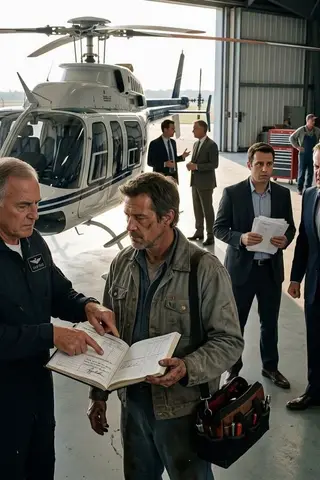
 The $4 Million Mistake: How a Corrupt CEO Forged My Signature
Chapter 7
The Downfall of an Emperor
Three weeks after the federal raid, the full magnitude of Victor Hale's corporate collapse rippled across the state's aviation sector.
Without an operating certificate, with their primary flagship asset seized by the bank, and facing millions of dollars in liability lawsuits from betrayed investors and cancelled clients, Hale Executive Aviation filed for Chapter 7 bankruptcy liquidation. The once-proud charter company was dismantled piece by piece, its remaining assets sold off at public auction to pay off angry creditors.
More importantly, the Department of Transportation's Office of Inspector General moved forward with formal federal criminal indictments against both Victor Hale and Craig Danner. The charges weren't just about unpaid invoices or broken contracts; they included conspiracy to commit wire fraud, commercial falsification of federal aviation documents, and reckless endangerment of the traveling public—charges carrying potential prison sentences of up to ten years in federal penitentiary.
The aviation industry is a surprisingly small, interconnected community where reputation is everything. Word travels fast across hangars, pilot lounges, and regional flight schools. Within weeks, the story of how Victor Hale tried to cheat a master mechanic—and ended up losing his entire company, his freedom, and his reputation—became a legendary cautionary tale told over coffee mugs across every major airfield in the region.
Arrogant executives often make the fatal mistake of looking at working-class mechanics as disposable commodities—hired muscle easily bullied, underpaid, and discarded when the bills come due. They forget the foundational rule that governs every aspect of our industry, both in mechanics and in life: gravity always wins, shortcuts always catch up to you, and sooner or later, the paper trail tells the absolute truth.
The End









