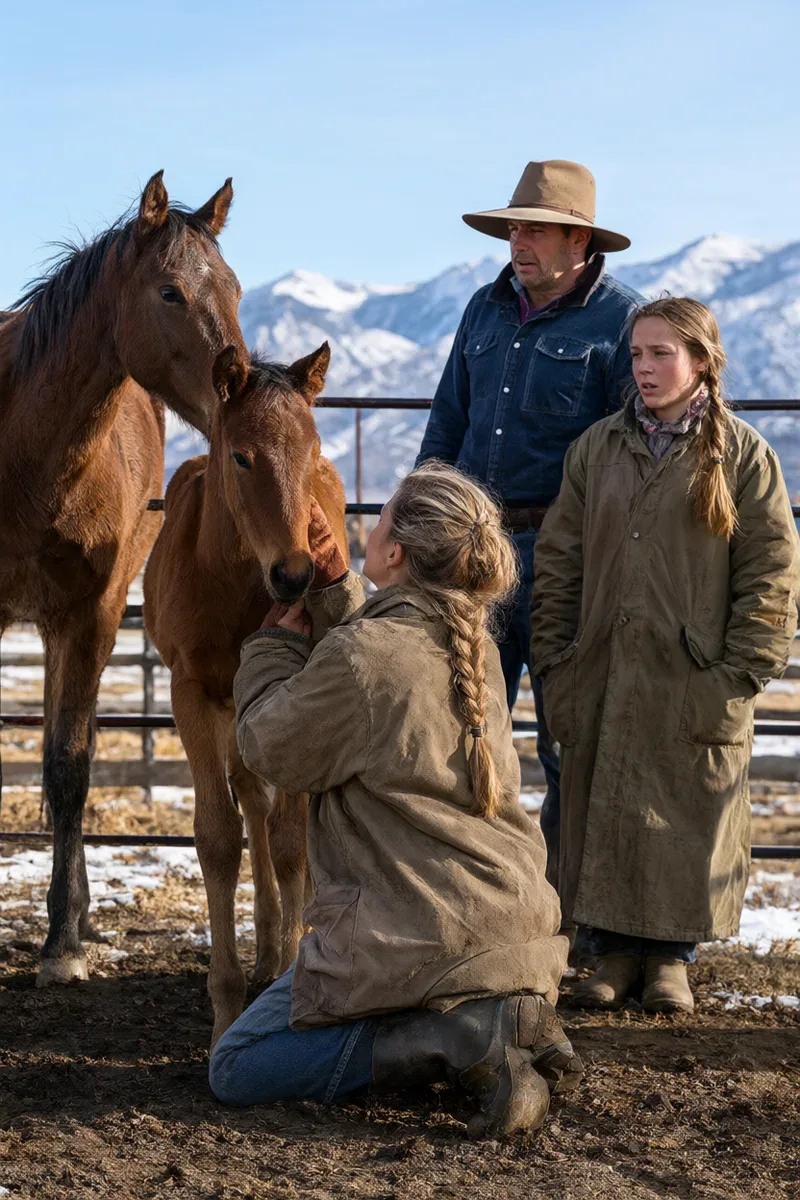
 Sixmile Bench
Chapter 1
Suede Boots
The vet Wyeth Almquist had hired over the phone to help him calve sixty first-calf heifers climbed out of a green Subaru with Kentucky plates, stepped into the March mud of his yard, and sank to the ankle in a pair of gray suede boots.
She looked down at them. Then she looked at him, standing on the porch with his coffee. "You could have mentioned the mud," she said.
"It's Montana in March," Wyeth said. "The mud mentions itself."
Behind the Subaru she was pulling a rented two-horse trailer, and inside it a horse stamped and nickered. Wyeth came down the steps. Through the slats he saw a tall bay mare, ribs showing under a winter coat, belly round as a rain barrel.
"I. Marsh," he said. "You didn't say anything about a horse."
"You didn't ask. You asked if I could start Tuesday and if I'd work nights." She pulled one boot free with a sound like a cork leaving a bottle. "Isobel. I'll pay her board out of my wages. Two hundred a month, and she eats less than she looks."
He had placed the ad in the Meager County Ledger and on two vet school job boards after Hob Szekely, who had worked the Sixmile Bench place for twenty-two years, slipped on the ice by the loading chute and broke his hip. The nearest large-animal vet was seventy miles away in Brodnax Crossing and did not come out for heifers. Isobel Marsh had been the only reply that wasn't a joke.
"How many calves have you pulled?" he asked. She considered the question. "Personally?" "That's usually how it's done," he said.
"One. On a teaching cow at Auburn, eleven years ago. Her name was Bertha and she had seen it all." Isobel unlatched the trailer. "I've foaled out about four hundred Thoroughbred mares, if that helps. I'm told the plumbing is similar."
A door banged on the house. Wrenley came down the porch steps in her nightgown and her dead mother's barn coat, which reached her shins. She was nine and had not said ten words to a stranger in three years.
"Is that horse yours?" Wrenley asked.
"She's mine for now," Isobel said. "Do you want to lead her in? She's gentle. She just doesn't like men in hats." Wyeth, in his hat, stepped back.
Wrenley took the lead rope like it was made of glass. The mare lowered her head and blew warm air into the collar of the oversized coat, and Wyeth watched his daughter smile at a horse the way she used to smile at everything.
He showed Isobel the bunkhouse, the calving barn, the whiteboard with the heifer tag numbers and due dates, the calf puller hanging on its nail. She asked good questions. She wrote things down in a small notebook with a pencil, not a phone. When he told her the cell signal died a quarter mile past the cattle guard, she looked almost relieved.
At eleven that night he went out for the heifer check and found the bunkhouse dark and its bed still made.
There was a light in the horse barn. Isobel was asleep on a hay bale outside the mare's stall in a sleeping bag, her suede boots set side by side, and across her lap lay the tire iron from her Subaru.
He must have made a sound. Her eyes opened and her hand closed on the iron before she saw who it was.
"Who are you expecting?" Wyeth asked. She let go of the iron one finger at a time.
"Nobody," she said. "If I did this right."
The End