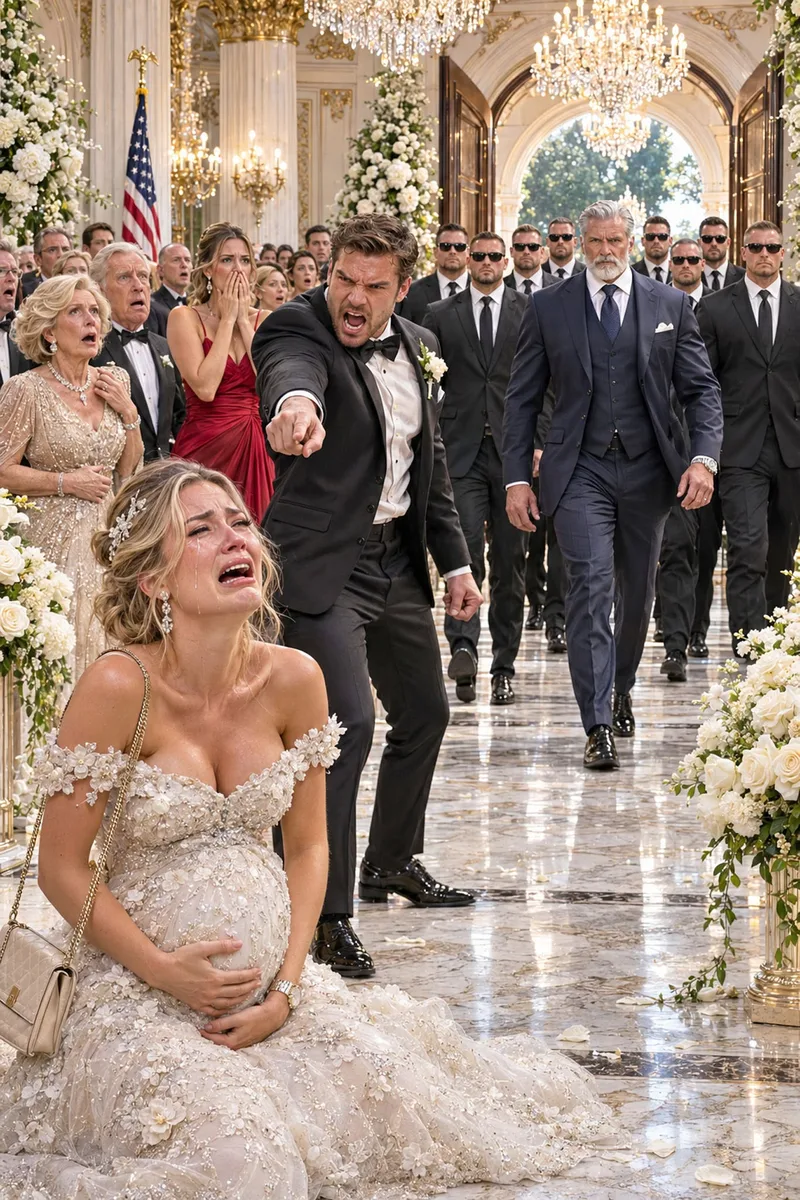
 Seven Months Pregnant, I Was Thrown Out of My Sister-in-Law's Wedding Until My Father Revealed an $18.4 Million Secret
Chapter 1
The Ambulance Doors
The paramedic asked me to describe the pain while the room behind her filled with whispers. I tried to answer, but another tightening swept across my stomach, taking the words away. The young woman put a steady hand on my wrist and waited. I could see the wedding cake over her shoulder, white roses cascading down its tiers, and beside it the place where my ring still lay on the table. My husband had demanded a divorce into a microphone. Somehow my body was still expected to manage an ordinary medical emergency beneath three hundred watching faces.
"Seven months," I managed to say when the pain eased. "First baby. It started just now." The paramedic asked whether I had bleeding, fluid loss, or changes in the baby's movements. I answered as carefully as I could.
She told me they would take me to the hospital for assessment and that I didn't need to decide what the pain meant by myself. The sentence was so reasonable that I almost cried again. My father stood beside the stretcher, gripping the jacket he had wrapped around me as if he could keep me warm by refusing to let go.
Drew tried to approach when the team began moving me toward the ballroom doors. "I'm her husband," he said. It sounded less like an explanation than an assertion of ownership. A paramedic asked me whether I wanted him to come. Before I could answer, my father moved as though he might speak for me. I shook my head. "Not tonight," I said. Drew stopped, stunned that anyone had asked what I wanted. Dad lowered his arm, then leaned close and said he would follow the ambulance if I wished. I did.
Near the head table, Celeste Harding turned away with her phone pressed against her chest. Marjorie Pembroke stood beside her, looking not at the stretcher but at the black leather folder containing Glenhaven Partners' name. I remembered the frantic message Celeste had been typing beneath the table.
I couldn't know whether it concerned me, Drew's company, or the humiliation at the wedding. I only knew that the two women had shared a frightened look at the precise moment my father explained the financing. I asked his adviser, Andrew, to preserve the documents they had brought. He nodded and took the folder with him.
Nora stepped into the corridor as the stretcher passed. Her wedding gown brushed the carpet, and her eyes were wet. "Tessa, I'm sorry," she whispered. I wanted to tell her what six months of planning had cost me, how I had spent nights calming her worries about flowers and seating, and how quickly she'd asked me to disappear when her brother took the microphone. I couldn't form any of those sentences. "Please let them get me to a doctor," I said. She moved aside. That small act was the only help I could accept from her yet.
The ambulance doors closed on the noise of the ballroom. I could still hear my father's voice outside, asking which hospital we were going to, before he climbed into the car following us. The paramedic attached monitors and explained what she was doing. I focused on the sound of the equipment rather than the image of Celeste smiling beside Drew in her red dress. The baby moved beneath my hand. I whispered that we were going somewhere safe, though I did not know enough yet to promise anything more.
At the hospital, clinicians evaluated me and the baby. They checked my vital signs, asked about the timing of the pains, and monitored the baby's heart rate while considering possible causes. The obstetric clinician explained that some contractions could settle, but symptoms in the third trimester deserved careful attention. I was frightened by every pause between answers.
Dad sat in the corner wearing only his dress shirt, his coat still draped over the back of my chair. He did not make phone calls about the company. He asked whether I wanted water and whether he should call someone who could stay if he needed to step outside.
I asked him to call my friend Maya, a former coworker who knew me before I married Drew. She arrived with a phone charger and an overnight bag, as though she had expected that one day I might need both. When she saw the red mark on my wrist from gripping the chair at the hotel, she asked what had happened. I told her only the essentials. I wanted my body to stop shaking before I tried to arrange the night into a story. She sat beside me and held my hand without asking me to forgive anybody.
Later the clinician said the immediate findings were reassuring enough that they could focus on monitoring, rest, and follow-up rather than rushing into a delivery decision. I asked whether stress had caused everything. She said there was no responsible way to assign one cause from what they knew, and she didn't want me blaming myself. I was relieved and still afraid. I had watched Drew treat my pain as another performance, and now I was grateful for people who spoke carefully instead of deciding what they wanted to believe.
Dad finally opened the black leather folder when I asked him to. He showed me the Glenhaven financing summary: an eighteen-point-four-million-dollar package structured through a firm that had helped keep Pembroke Development operating three years earlier. He reminded me that it was financing, with agreements, conditions, and continuing obligations.
It was not a personal gift Drew could be forced to return because he'd been cruel, nor a button Dad could press to empty a company's bank account. I knew that. I had helped arrange the first conversations, then stepped away because I wanted the marriage to belong to us.
"He accused me of stealing company information," I told Dad. "In front of everyone." His mouth tightened. He said he would have counsel obtain the precise allegation and preserve relevant records. He would not punish employees or call a loan merely to satisfy our anger. I looked at him in surprise. Dad could be impatient and controlling when he believed someone had hurt me. His restraint made me trust the promise more. He was choosing to protect me without pretending that protection required destroying another business.
At midnight a message appeared from Drew: I didn't know about Glenhaven. We need to talk before your father does anything. There was no question about the baby, no request for a medical update. I showed the screen to Maya. She didn't tell me how to reply.
I asked the nurse about limiting calls during the night, then silenced the phone. Dad offered to stay. I said yes. He settled into the uncomfortable chair and began reading an old magazine, as if the richest man in the room had nothing more important to do than wait while his daughter rested.
Before dawn I woke to the faint squeak of the monitor and touched the curve of my stomach. My daughter moved. The pain had eased, though the medical team would make the next decisions after further observation. I remembered the look Celeste and Marjorie exchanged when the financing was revealed. My marriage had broken publicly, but that frightened glance suggested other questions still needed answers. I would ask them when I was safe enough to listen, and I would not let anyone make my daughter's arrival another argument about who held the most power.
The End









