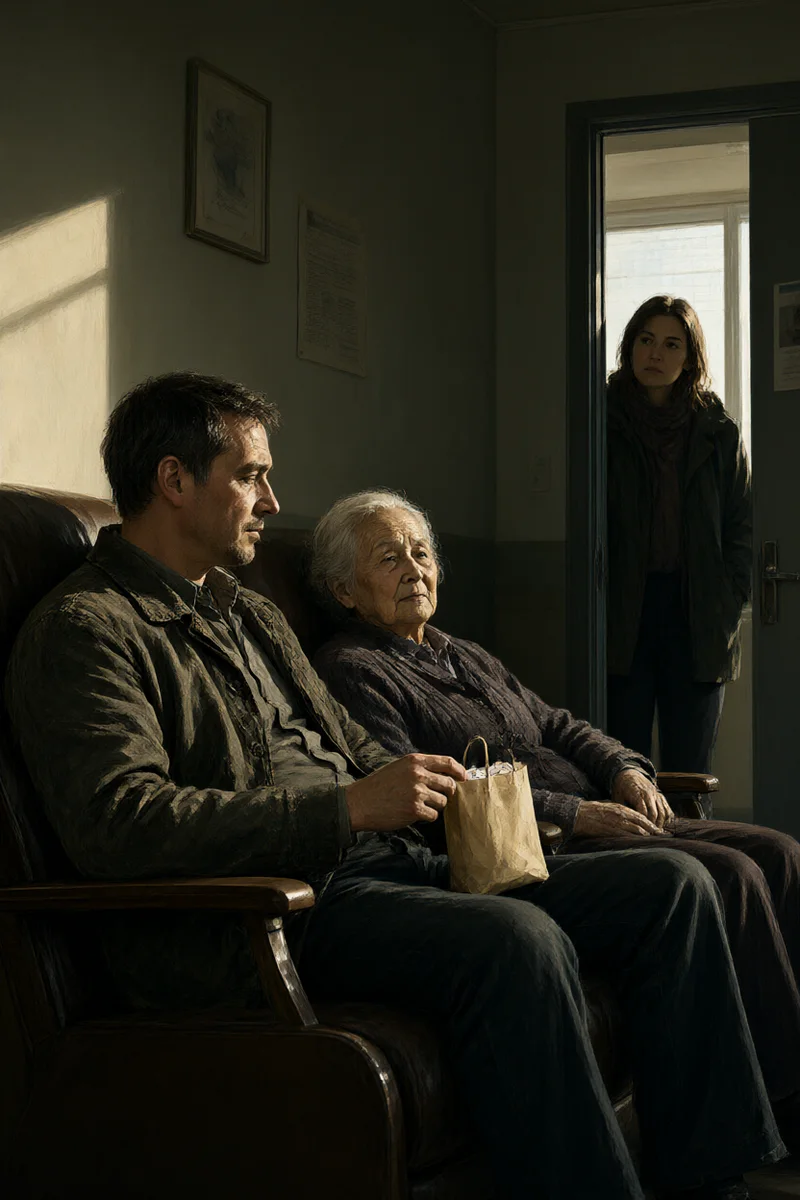
 Peppermints in Chair Nine
Chapter 1
Chair Nine
My husband lasted eleven minutes in the infusion room on the first day of my chemotherapy. I know, because I watched the clock over the nurses' station the whole time.
Chair nine was by the window. The nurse, a broad, cheerful woman called Rochelle, hung the first bag and checked my name and birthday twice, and Sully sat in the plastic visitor's chair with his knees jammed together and his coat still on. He kept looking at the line where it went into my port. Then he kept not looking at it.
At eleven minutes he said he'd better move the car before it got ticketed. At forty minutes he texted from the parking garage. Sorry, Thee. Felt dizzy. I'll be right here when you're done. Love you.
He was right there when I was done, four and a half hours later, with the engine running and the heat on. He drove me home very carefully and didn't ask how it was.
The second session he dropped me at the door. By the fourth, my sister Bridget was driving me, because Sully had a job in Pettibone Falls he couldn't move. He was an electrician. There was always a job in Pettibone Falls.
He started sleeping in the den in the second month, because he said his snoring would keep me awake, and I was too tired to argue that I'd been sleeping next to his snoring for nineteen years. When my hair came out in the shower in clumps, I shaved the rest of it off myself in the upstairs bathroom with his clippers while he was at the hardware store. Our daughter Maisie found me sitting on the edge of the tub with the clippers still buzzing in my lap. She was thirteen. She took them out of my hand and finished the back for me.
He was never cruel. I want to be fair about that. He paid every bill and brought home soup and fixed the dishwasher. He just could not be in a room with me. If I came into the kitchen, he found a reason to go to the garage.
Six rounds, then radiation. The day they told me there was no evidence of disease, I came home and found him on the back step with a beer, and I sat down beside him and asked him, in the kindest voice I had, to move out.
He didn't argue. That hurt more than I expected. He found a one-bedroom over a laundromat on Quarry Street and moved into it in eleven days, and after that he was a polite man who picked up our daughter on Saturdays and called me Thea instead of Thee.
That was thirteen months ago.
Last Thursday I was back at the cancer center for a port flush, a ten-minute thing I have to do every six weeks until they take the port out. I was early. I sat in the waiting room with a magazine about boats I would never own.
The woman in the chair beside mine was in her seventies, small, with a bright silk scarf tied over her head and a canvas tote bag on her knee. She kept looking at me. When I looked back, she smiled.
“You're Thea,” she said. “Aren't you? The blonde one with the little crooked tooth. You've got your hair back. He showed me a picture.”
I said I was sorry, but I didn't think we'd met.
“No. But I'd know you anywhere.” She patted my knee. “I'm Dolores. Your Sully drives me here every Thursday. He's just gone round to park the van.”
The End









