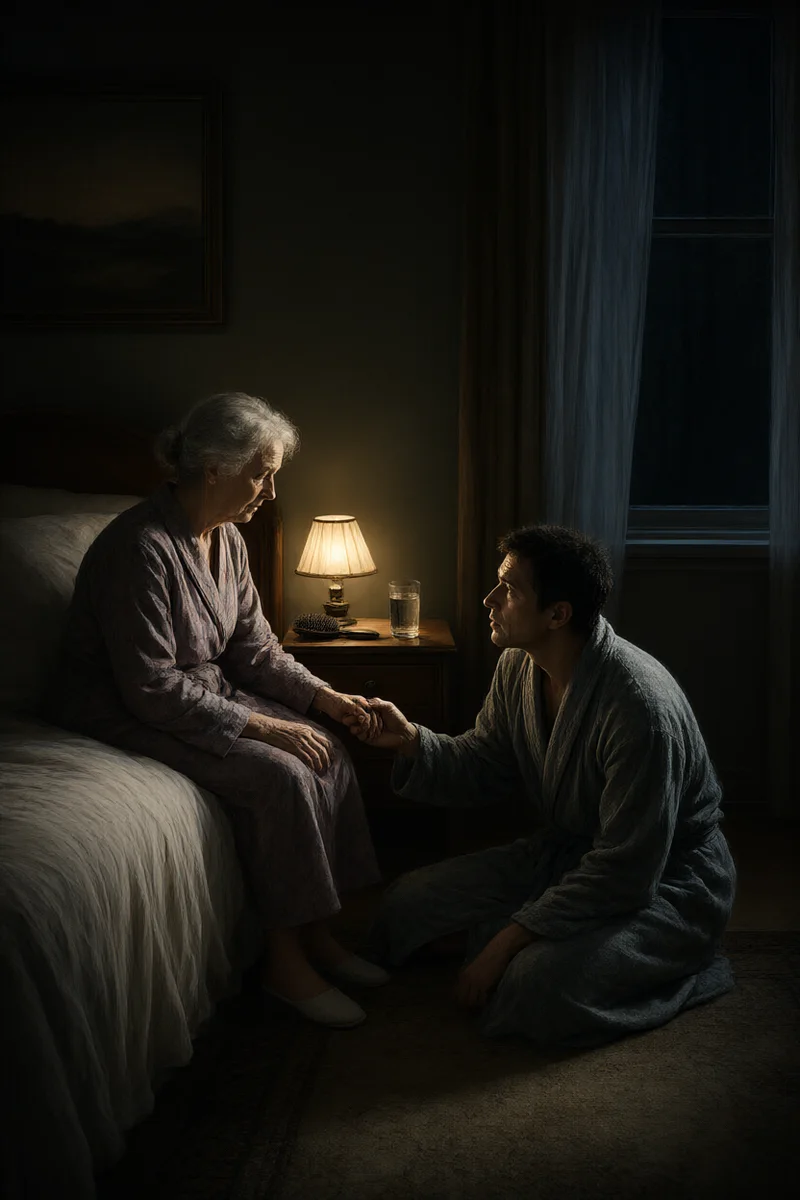
 The Night Man
Chapter 5
The Second Verse
Paloma's first feeling was rage, clean and bright, and she let herself have it. Twice in one week she had found out her husband and her mother had made a plan about her life in a room she wasn't in.
She went out to the garden and walked up and down the wet lawn in her socks.
Desmond came out after ten minutes with her shoes. He held them out. She didn't take them.
“You drove her to a care home,” she said. “Behind my back.”
“She asked me to. She said if I wouldn't she'd get a taxi, and she meant it, she had the number on a bit of paper.” He set the shoes down on the step. “I told her it was your decision. She said, no, it's mine. And it is, Pal. It's still hers. Not for much longer, maybe. But it is now.”
Paloma stopped walking.
She thought of her mother at the gate in the frost, in a nightdress, trying to get to a harbour a thousand miles away. She thought of her mother asking for the blue bowl, and the pins, and the sewing club on Wednesdays.
She put her shoes on.
They went to Fernhill together on the Tuesday, the three of them. It was a low brick building with a car park full of moss and a smell of lunch and polish. The ground-floor room was small and yellow and looked out on a bed of late roses and a bird table. Inez walked to the window with her stick and stood there.
“Here,” she said. “The chair here. Facing out.”
A woman in the sewing room waved at her through the glass, and Inez waved back as if they'd known each other for years.
Nando phoned that evening. He'd heard from Inez. He said people would think they'd dumped her. He said, what would it look like. Paloma listened to him for a while and then told him Fernhill's visiting hours were ten until eight, every day of the week including Sundays, and that he should bring flowers that hadn't come from a petrol station, and put the phone down.
Inez moved in on the fourth of November. Paloma packed her pin cushion, and the blue bowl, and the dressing gown with the frayed cuffs, which was not Inez's, but which her mother had asked for.
That night, at home, the house was so quiet Paloma could hear the fridge. She didn't take a tablet. Neither of them slept much. At three, out of habit, Desmond got up, and stood in the doorway of the empty back bedroom, and Paloma got up too and stood beside him.
“I took everything off you,” she said. “Everything you tried. I took it back and did it again.”
“I let you think I'd gone,” he said. “I'd rather you'd shouted.”
“I'll shout next time.”
“I'll get it wrong next time. Out loud. In daylight.”
On the second Thursday a night carer at Fernhill rang to say Inez was unsettled and asking for the night man who sings. Desmond drove over at eight, and Paloma went with him.
They sat on either side of the bed in the small yellow room, with the curtains open on the dark roses, and Desmond sang the first verse of the little boat song in his flat baritone, every word in the wrong place.
When he got to the second verse, he stopped, and looked at his wife.
Paloma took her mother's hand and sang it for him, the way it went, and Inez closed her eyes and mouthed the words along with her until she was asleep.
The End









