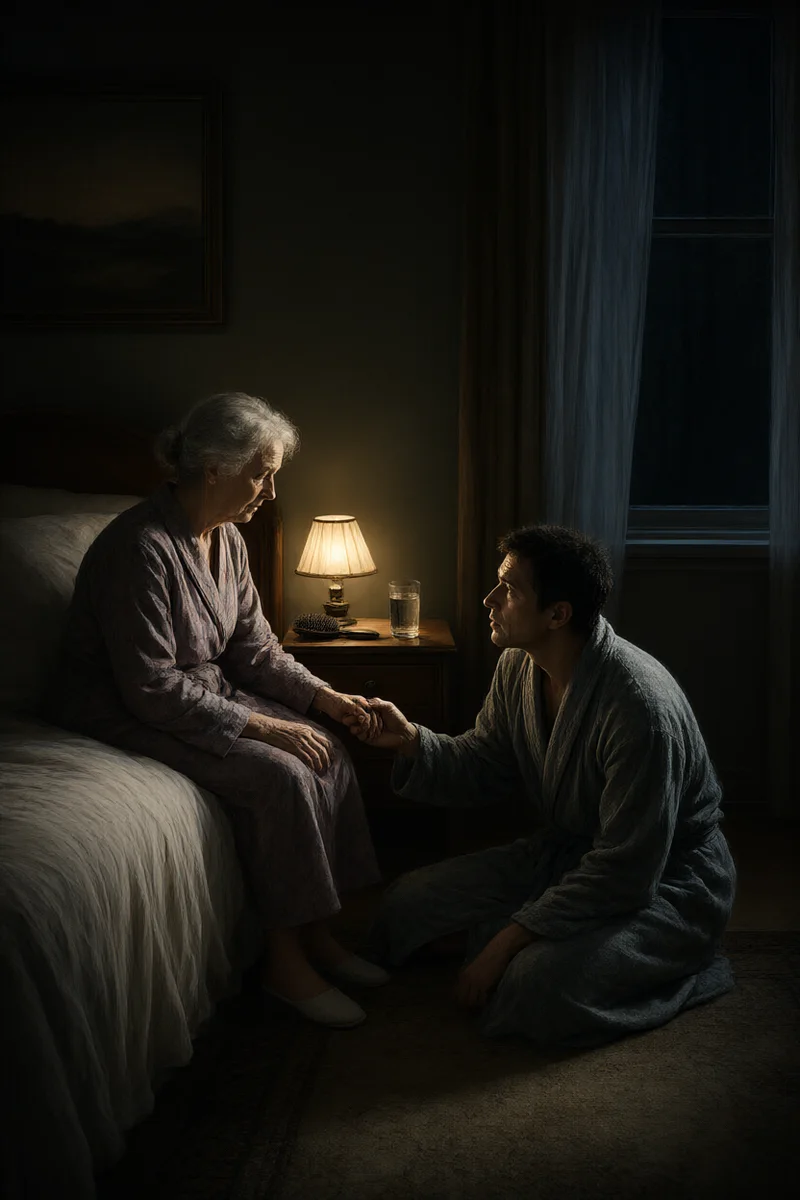
 The Night Man
Chapter 1
Porridge
“He didn't come last night,” her mother said. “The night man. Where is he?”
Paloma Ashdown put the porridge down in front of her, in the blue bowl, because the white bowl made Inez think she was in hospital. “What night man, Mamá?”
“The one who sings.” Inez Reyes was seventy-nine and had been living in their back bedroom for fourteen months, since the fall on her own stairs. She looked at the porridge as if it had been made by a stranger. “He sings it wrong. The little boat one. He never gets the second verse.”
It was the fifth morning in a week she'd mentioned him.
The memory nurse had warned Paloma about this. Vascular dementia was a staircase, she said, not a slope; you went along flat for a while and then dropped a step. Paloma had read the leaflets. Visual disturbances. Sundowning. Confabulation, which was a long word for making things up and believing them.
She had also read, at two in the morning on her phone, about people who got into the houses of the elderly.
“Des,” she said, when her husband came down in his work shirt. “Did you lock the back door last night?”
“Always do.” Desmond kissed the top of Inez's head. Inez patted his hand and looked past him at the window.
“Mamá says a man comes in at night. Sings to her.”
Something passed over Desmond's face so fast Paloma could not have named it. Then he poured coffee. “She's confused, love. She told me yesterday the postman was her cousin Alfonso.”
He was gone by seven-thirty. He was always gone by seven-thirty now, and back after seven, and in between Paloma did everything else.
She had gone part-time at the dental practice in the spring. She did Mondays and Thursdays, while a carer called Bisi came in. The other days were medication and porridge, the commode and the washing, the hairbrush, the slow walk to the end of the road and back, the questions asked six times in an hour. Inez had been a seamstress for forty years in a fishing town in Galicia and then in a dry cleaner's in Reading. She still held a hand out for pins.
Desmond had tried, at the beginning. He would make Inez tea in the wrong mug, the one with no handle, and she wouldn't drink it. He'd let her go out to the garden in her slippers when it had been raining. He had once given her the evening tablets at lunch. Paloma had redone all of it, quietly and then not quietly, and after a few months he had stopped offering.
On Sundays her brother came. Nando drove down from the city with flowers from a petrol station and stayed two hours, and Inez lit up like a shop window. My Nando. My clever boy. He took a photograph of the two of them every visit and put it online, and people wrote under it about what a devoted son he was.
Paloma read those comments at the sink with her hands in Inez's nightdresses.
That afternoon she drove to the electrical shop by the retail park and bought a baby monitor with a camera, the kind that sent pictures to your phone. She told the boy at the till it was for a grandchild.
She put it on top of the wardrobe in Inez's room while her mother was asleep in the armchair, angled down at the bed.
That night she took her sleeping tablet at ten, as the GP had prescribed and as Desmond reminded her every evening, and set the phone to wake her if the camera saw movement.
At 3:12 a.m. it buzzed against her cheek. On the little screen, in grey night-vision, the bedroom door was opening.
The End









