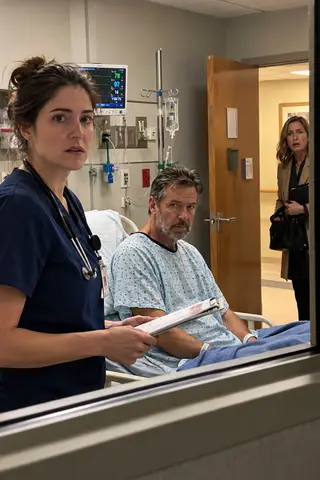
 My Husband Had a Medical Emergency
Chapter 5
The Confrontation at Home
The drive across town took twenty minutes, but it felt like driving through a simulation. The streets were wet from an afternoon drizzle, the taillights of the evening commute smearing into long, bleeding streaks of red against the asphalt. My hands gripped the steering wheel so tightly my knuckles were stark white.
When I pulled into the driveway of our suburban home—the house we had bought together, painted together, planted hydrangeas around together—it looked entirely ordinary. The porch light was on, casting a warm, inviting glow over the welcome mat. Inside, nothing had changed. Outside, everything was incinerated.
I unlocked the front door and stepped inside. The air smelled faintly of the coffee Declan had brewed that morning before rushing off to his project meeting—a meeting where his heart had decided to stage a mutiny. How long ago that morning felt. Centuries. Eons.
I walked straight to our bedroom. I didn't cry. I didn't scream into a pillow. The shock had burned hot and fast, leaving behind a cold, crystalline clarity. I pulled a duffel bag out of the top shelf of the closet—ironically, the exact same bag we had taken on our anniversary trip to Napa six months ago—and threw it onto the bed.
Drawer by drawer, I started packing Declan’s clothes. Shirts, sweaters, socks, underwear. I didn't fold them; I shoved them into the canvas bag with ruthless efficiency. Every zipper pull sounded like a gunshot in the quiet house.
As I reached into the back of his closet to grab his winter jackets, my hand brushed against a small, locked metal lockbox tucked behind a stack of old tax files.
I stared at it. I had never seen that box before.
For nine years, we had an unspoken rule of mutual trust. Passwords were shared, drawers were open, secrets were foreign concepts. Or so I had foolishly believed.
I walked downstairs to the kitchen, pulled a heavy flathead screwdriver from Declan’s toolbox in the pantry, and walked back upstairs. It took exactly three seconds of leverage to pop the cheap brass latch on the lockbox. The lid flew open with a sharp snap.
Inside weren't piles of cash or dark, sinister secrets. It was much worse.
It was a folder containing certified copies of municipal documents, a joint bank account statement listing two names—Declan Vale and Dana Bell—and a stack of greeting cards. Handwritten cards.
I picked up the topmost card. The handwriting was neat, elegant, feminine.
“Declan, thank you for standing by me through the zoning board hearings. We make a hell of a team. Here’s to keeping up appearances until the dust settles. — D.”
I dropped the card back into the box as if it were burning hot.
So it wasn't just a cold, sterile corporate arrangement signed under duress. There was a camaraderie there. A shared world, a private language, inside jokes written in ink on pastel cardstock while I was downstairs cooking dinner or working a double shift at the hospital.
My phone buzzed loudly on the nightstand, shattering the heavy silence. I walked over and picked it up.
Missed Call: Claire.
New Text: Declan.
I unlocked the screen and opened his message:
“Maris, please pick up. The doctor says I’m being transferred to observation for the night. Dana isn't here. It’s just me. Please talk to me.”
I stared at the screen, my thumb hovering over the keypad. For a split second, the old instincts flared up—the nurse's instinct to comfort, to heal, to rush to the bedside of someone in distress.
Then I remembered the lockbox. I remembered the emergency contact registry. I remembered the months of calculated deception.
I typed out three words, hit send, and blocked his number.
The End









