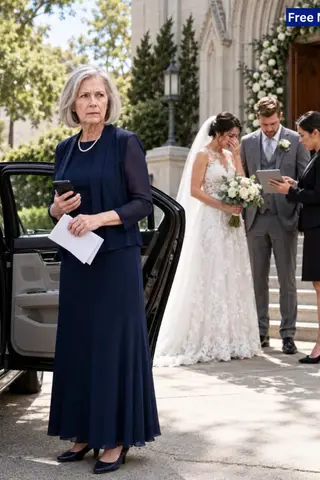
 My Daughter Banned Me From Her $200,000 Wedding, So I Canceled The Reception Before She Reached The Altar
Chapter 2
The Silent Drive
I put the sedan in reverse, backed out of the church gravel lot, and turned onto the blacktop. Overhead, the ancient Spanish moss hung from the live oaks, filtering the Southern sun into long, sharp ribbons of gold. Through my rearview mirror, St. Andrew’s grew smaller and smaller until it disappeared behind the bend of the Ashley River.
My mind drifted backward through thirty years of steam, starch, and blisters. When Robert died suddenly of an aneurysm in 1996, the world told me to file for bankruptcy and put Clara into state-assisted care while I found hourly retail shifts. Instead, I worked eighteen hours a day. I took on the filthy, grease-stained uniforms from the Charleston shipyards. I stayed up until two in the morning pressing silk shirts for wealthy tourists, saving every dime in an old metal biscuit tin beneath the floorboards.
When Clara was in middle school, she wanted ballet lessons; I took on the laundry contract for two local hotels to pay for her pointe shoes. When she got into UNC Chapel Hill, I wrote checks for her tuition every semester so she would never graduate with a single dollar of debt. I wore the same three pairs of comfortable orthopedic shoes and the same faded cotton cardigans for a decade so she could wear boutique dresses to sorority formals.
“Mom, you smell like detergent,” she had complained when she was nineteen, pushing my hand away when I brought her forgotten lunch to her campus apartment. “Can’t you buy real perfume?”
I had laughed it off back then, assuming it was just youthful foolishness. I thought that once she matured, once she understood how hard the world was, she would realize that the smell of detergent was the smell of her freedom.
Instead, she met Evan Sterling.
Evan came from old Charleston blood—the kind that lived in grand antebellum houses with rotting foundations and empty bank vaults. His father, Richard Sterling, was a man who traded purely on his great-grandfather’s reputation, driving leased luxury sedans while borrowing against mortgages he couldn't pay. When Clara brought Evan home, he looked at my modest brick bungalow and my dry-cleaning shop with thin-lipped amusement.
They wanted a high-society wedding. They wanted the historic gardens, the crystal chandeliers, the imported French champagne, and the five-tier lemon-lavender cake. Evan’s parents promised to cover the rehearsal dinner, but when the bill arrived, Richard Sterling casually claimed his assets were “temporarily tied up in international municipal bonds” and asked if I could cover it “just for a fortnight.”
I had paid it. I had paid all of it. One hundred and ninety-four thousand dollars, down to the hand-calligraphed place cards.
My phone chimed on the passenger seat. It was a text from Nora, my niece:
Aunt Marian, where are you? The ceremony just started. I’m sitting in the back pew and your chair in the front row is empty! Did something happen?
I pulled over to the side of the road near the battery wall, the sea air stinging my eyes.
I typed back: Clara told me there was no room for me. I am going home, Nora. Stay if you wish, but be prepared to leave the reception early.
Nora called within ten seconds. “She did what? Aunt Marian, she walked down the aisle five minutes ago! Evan’s father’s real estate partners are sitting in the front row where you were supposed to be! I am walking out right now.”
“No, Nora,” I said gently. “Stay. Watch your cousin marry the man she traded her mother for. And when the wedding party arrives at the reception, watch what happens when the bill comes due.”
The End









