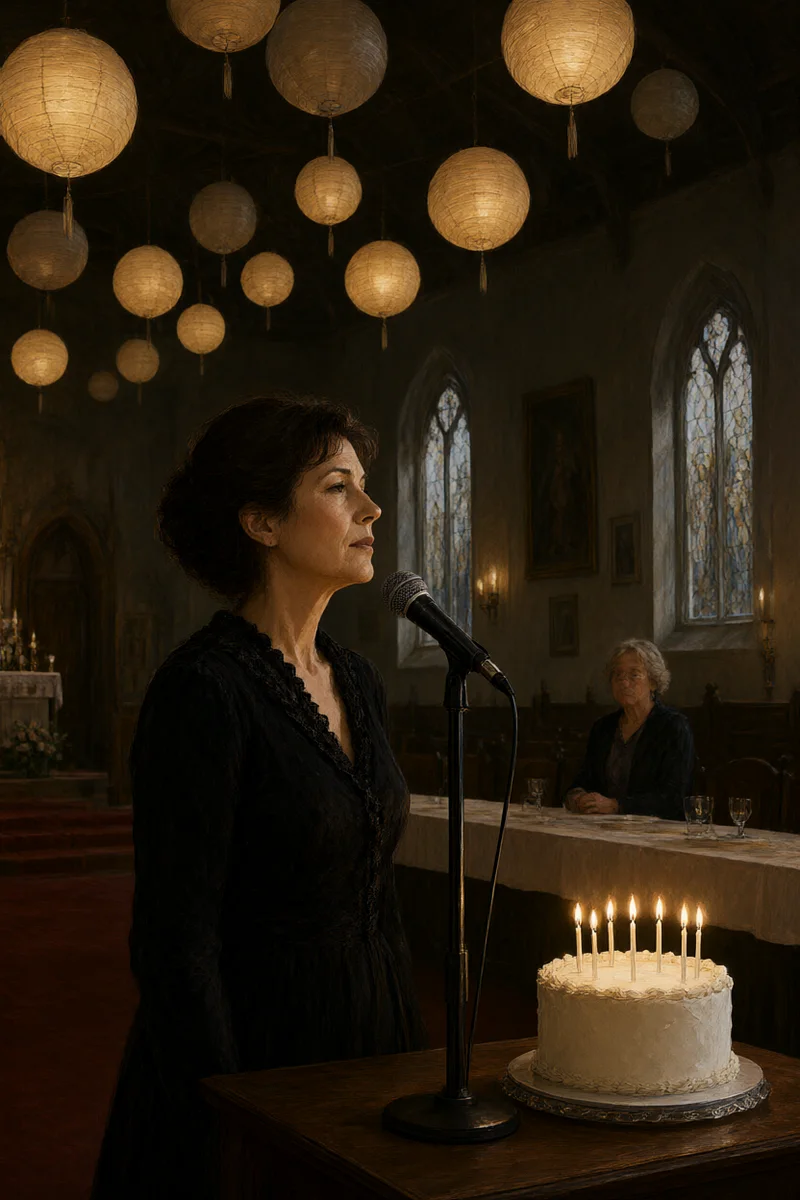
 The Seventieth Toast
Chapter 5
The Ferry
Agnes drove back to her mother's at one o'clock with Linnea in the passenger seat and the tickets in her bag.
Maeve opened the door still in her bathrobe. She looked at the two of them on her step and gripped the doorframe.
“I've made up my mind,” she said. “Don't argue with me on the porch.”
“Then let us in,” said Linnea, “and we'll argue in the kitchen.”
Her grandmother blinked at her. After a moment, she stepped aside.
They argued for two hours. Maeve said she had taken enough from Agnes and would not take this. Agnes said that it wasn't a trade, it was a trip. Maeve said she would only spoil it, that she would be difficult on a boat. Linnea pointed out that she had been wanting to go since before the moon landing and that was frankly a long time to be difficult about a boat.
In the end it was settled by money, the way things often are in Minnesota. Agnes had eleven thousand dollars in a savings account labeled KITCHEN, for the cabinets she and Gerrit had been meaning to replace since 2015. She bought a third ticket that night, on the laptop at her mother's table, with her mother watching over her shoulder and saying it was too much, it was far too much, and not once telling her to stop.
On the first of June the three of them flew to Oslo, and then north on a small propeller plane, and then they stood on the deck of a ferry going out across grey-green water toward an island Maeve had only ever seen in one photograph.
Linnea had packed for summer and was wearing her grandmother's spare cardigan, which came to her knees. Maeve had not stopped talking since Trondheim. She had told the woman at the ferry kiosk about Solveig, and about the cannery, and about her grandson in Denver who called her every night, though in fact, since February, he called on Sundays and Wednesdays, and the building super had been informed.
Agnes stood at the rail and watched the island come up out of the haze: a low hump of rock and heather, a white church, a scatter of red houses at the water's edge.
“Which one was hers?” Linnea asked.
“I don't know,” Maeve said. “I've only got the picture.” She took it out of her coat, a small square photograph with scalloped edges: a girl of about twelve on a stone step with a red door behind her, squinting. “Your great-grandmother. Nineteen thirty-one.”
Linnea took it and studied it. Then she looked at her mother, and at her grandmother, and back at the girl in the picture.
“You've all got the exact same chin,” she said. “It's honestly upsetting.”
The ferry's horn went, long and low, and the deck shuddered under them as the engines changed. Maeve swayed. She was seventy and had been on her feet since four in the morning, and for a moment she put out her hand for the rail and missed it.
Agnes caught her by the elbow.
Her mother looked down at the hand on her arm. Then she turned her own hand over and took hold of her daughter's, and held on.
They stood like that long enough for the red houses to become separate houses, with separate windows and doors. Long enough for Linnea to come and stand on Maeve's other side, and for Maeve to take her hand as well, without making anything of it.
“There,” Maeve said quietly. “That one. With the red door.”
None of them could possibly tell from that distance. Nobody said so. The ferry came about toward the landing, and the three of them stood together at the rail, holding on, while the island came to meet them.
The End









