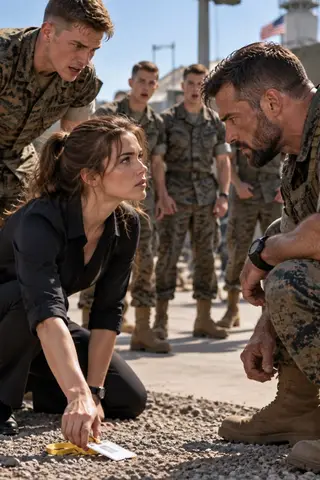
 Marine Brother Stomps on Sister's Guest Pass to Humiliate Her
Chapter 35
The Storm Over the Pacific
At thirty-two thousand feet, the air was minus-forty degrees, thin enough to freeze human lungs in seconds, and completely devoid of warmth.
The interior of the C-130 was bathed in the dark crimson glow of combat jump lights. I stood on the edge of the lowered cargo ramp, holding the overhead steel static line with one gloved hand, staring down into the swirling, violent abyss of the Pacific storm. Below us, dense layers of black storm clouds were illuminated from within by intermittent, spider-web flashes of lightning.
The green jump light on the bulkhead flashed to life with a sharp, piercing chime.
Thirty seconds to drop zone.
I checked the digital readout on my forearm slate. San Clemente Island was directly beneath us, a narrow strip of jagged rock battling the raging swells of the ocean. The commercial container ship Caspian Dawn had already anchored two miles off the eastern cove, deploying three high-speed combat boats toward the island's southern shoreline.
"Jump master, clear!" the crew chief shouted over the screaming gale of the slipstream.
I didn't hesitate. I released the steel cable, leaned forward into the freezing void, and fell into the sky.
The freefall was a terrifying, beautiful symphony of speed and focus. The wind roared against my aerodynamic jump suit like an angry beast, tearing at my gear as I plunged through the upper atmosphere at one hundred and twenty miles per hour. I crossed thirty thousand feet... twenty-five thousand... twenty thousand.
At fifteen thousand feet, I penetrated the upper cloud deck. The world turned blindingly white, then pitch black as rain and sleet battered my visor. Ice crystals formed along the edges of my helmet seal, instantly swept away by the integrated thermal heating elements.
My heads-up display flashed an amber warning: ALTITUDE 1,200 FEET. PULL ALTITUDE APPROACHING.
I reached across my chest, grabbed the deployment handle of the non-reflective ram-air parachute, and yanked it hard.
The canopy deployed with a muffled WHUMP, the braided Kevlar suspension lines catching the turbulent air and jerking my descent from a screaming terminal velocity down to a controlled, gliding glide. I steered the high-performance canopy through the jagged rock outcroppings of the island’s southern cliffs, using the infrared terrain-following radar on my visor to avoid the jagged granite spires rising out of the foaming surf.
With practiced, silent grace, I flared the parachute fifty feet above a muddy plateau overlooking the eastern cove.
My boots hit the wet, rocky ground in a rolling crouch. Within five seconds, I had collapsed the silk canopy, stuffed it into a concealed crevice beneath a boulder, and brought my suppressed MCX rifle up into the low-ready position.
The storm howled around me, masking the sound of my approach. Through the darkness ahead, the flickering amber lights of the naval radar station loomed like a fortress on the hill.
And down on the rocky beach below, the first enemy assault boat was grinding its hull against the gravel shore.
The End









