 Kindest to the Colonel
Chapter 8
Red Twine
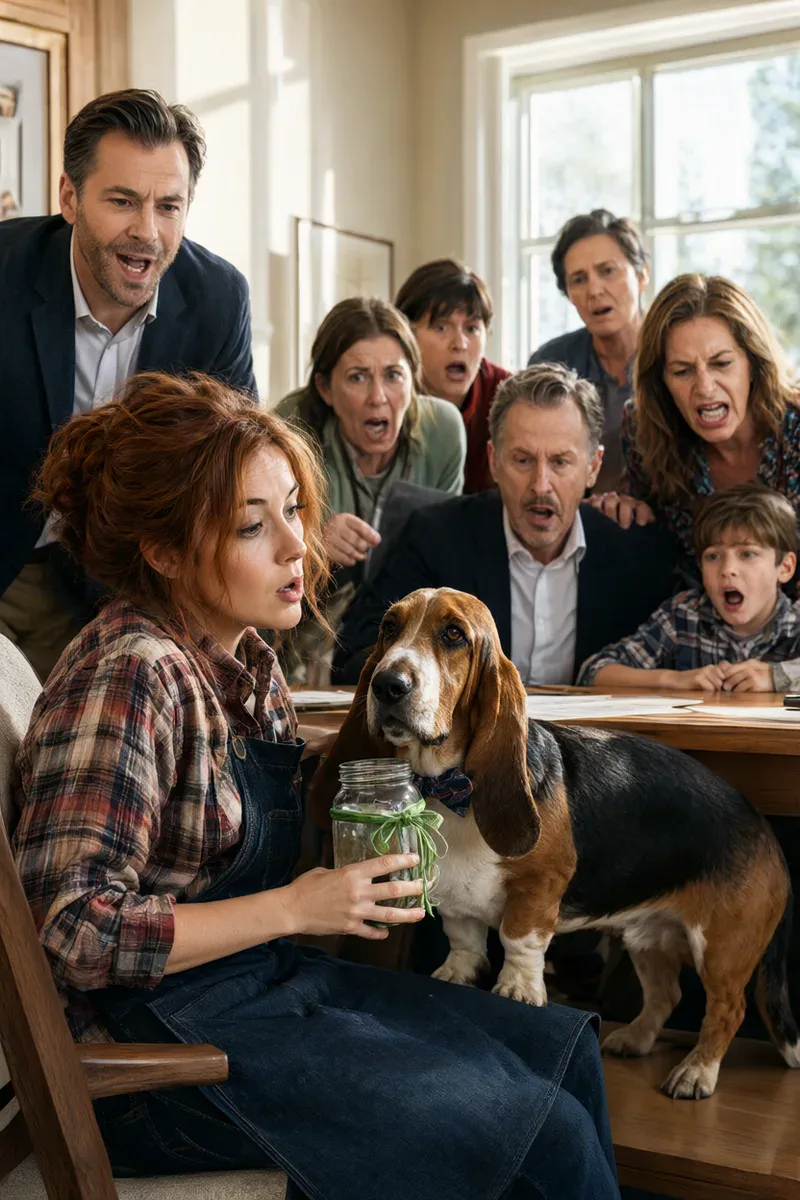
I did not open the jar. I stood on the porch holding it away from my body while the Colonel leaned on my shins and gazed up at it with the purest love I have ever seen.
I have tied green twine on every jar I've sold for four years. I have never owned a red spool.
Lowry came back in six minutes. We sat at Gran's table with the jar between us and the dog shut in the living room, protesting. "They look like yours," Lowry said.
"They're puffed. Mine are flat." I unscrewed the lid an inch and smelled. Peanut butter, but sweeter, wrong, like a candy store. I screwed it closed.
Dr. Hesper Prost opened her clinic on Saddler Road an hour early, at seven, because I asked. She broke one biscuit with gloved hands, smelled it, and her mouth went thin.
"I'm sending this to a lab," she said. "My bet is xylitol. It's in a lot of sugar-free peanut butter. It drops a dog's blood sugar off a cliff and it can wreck the liver. He'd need very little."
"How little?" I asked. She looked at the Colonel, who was examining a jar of cotton balls. "Two of these would have been an emergency. Three, I wouldn't promise you anything."
The lab took two days. It was xylitol, a lot of it. Dr. Prost called the police herself.
Detective Rhoda Orrock drank her coffee black from Gran's lobster mug and interviewed Brynlee first. Brynlee had spent the rest of that evening at Verena's, watching a dating show and sobbing, and Verena's doorbell agreed.
That afternoon Verena came to Pellard Street alone. She sat on the porch steps in her good coat and didn't ask to come in.
"I wanted the house," she said. "I'll say that. I wanted the house, and I wanted her to have been wrong about you. I never wanted—" She stopped. "He's Mother's dog."
"I know."
"Lyall called me two weeks ago," she said. "He asked what kind of treats you sold. Where you got that ugly green string. I said I didn't know. I didn't, Greer. I never bought one thing from you." She looked at her hands. "I should have."
Across the street, Mrs. Gadsby was already coming over in her slippers, holding her tablet out like a casserole. "My camera points right at your porch," she said.
At 9:52 on the night of the lake, a gray Volvo pulled up to the curb. A man in a ball cap came up the walk with a jar, set it by the door, and left in under thirty seconds. He kept his face down. He couldn't do anything about his car.
Lowry watched it twice. Then he handed back the tablet very gently and went to stand in the yard with his back to us.
Mr. Mothwick came at five and sat at the kitchen table. "I don't understand," I told him. "If the dog dies, Lyall doesn't automatically get anything."
"Think like a trustee," he said. "Verena, excluded under Section Nine. Brynlee, excluded for taking him. You, the caretaker whose own treats would have killed him. Lowry, who is his son, and whom he believes he can manage. Who remains, with a folder of time-stamped photographs and a $2,900 bed?"
The Colonel snored on the bed in question.
"Then I'm asking," I said. "Not about him. About me. Why did I really leave school?"
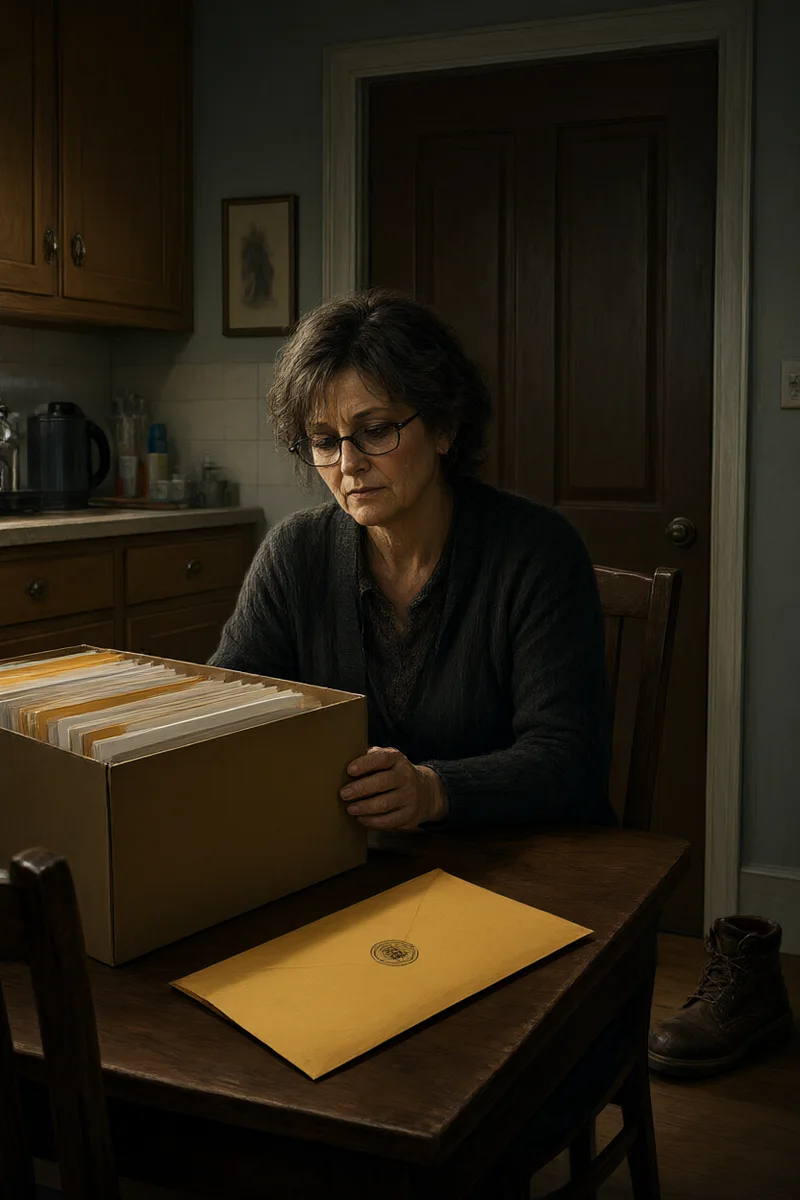
Mr. Mothwick took the fourth envelope from his breast pocket. He had brought it with him. He slit it, unfolded two pages, and laid the second one in front of me first.
It was a short letter, in my handwriting, signed with my initial. I had never seen it before in my life.
The End