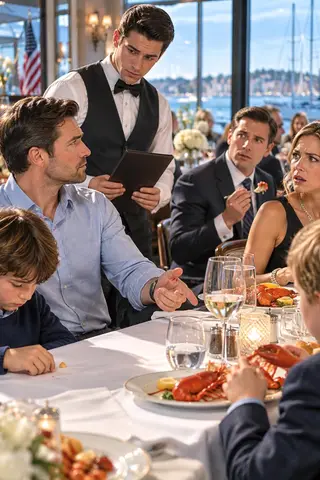
 "He'll Be Fine, He's Used to Going Without": Sister-in-Law Humiliated a 10-Year-Old Boy at a Luxury Restaurant
Chapter 18
An Unconditional Table
Without a second thought, Caleb walked over to the adjacent shelf, picked up a sturdy wooden case containing a professional seventy-two-piece set of artist-grade paints, and laid it gently into Leo’s plastic basket. He then added two packs of heavy, premium canvas paper and a set of balanced sable brushes.
The twins froze, staring at the sudden wealth of tools resting in their basket as if they were made of live embers.
"We can't take this," Julian stammered, pulling back instinctively. "Our parents would kill us. We don't have the money to pay for this, Uncle Luke. Mom works thirteen hours at the mall and Dad's wages are locked. We literally can't afford this."
"You don't need to pay for it," Caleb replied, his voice bright and entirely sincere. "Art shouldn't be something you're excluded from because of a price tag. Everyone deserves a blank canvas."
I smiled quietly, placing a warm hand on Caleb's shoulder. I looked down at Gavin's sons, making sure my gaze carried absolute authority.
"Your mother and father will not find out unless you choose to tell them," I said smoothly. "If they ask, tell them you won a youth development materials grant through the Horizon Foundation. Which is technically true, as I am approving it right now."
I escorted the three boys to the front register, paid for the extensive supply kits along with our own materials, and walked outside into the warm afternoon sunshine of the plaza. The twins stood on the sidewalk clutching the heavy bags of professional supplies, their postures completely transformed from the terrified, slumped figures they had been twenty minutes earlier.
"Thank you, Uncle Luke," Leo whispered, his voice thick with unearned gratitude. "Thank you, Caleb."
"Use them well," I said. "Work hard in school, respect your teachers, and never, under any circumstances, measure another human being's value by the size of their plate. Do you understand me?"
Both boys nodded vigorously, tears once again welling in their eyes. They turned and hurried toward the bus stop at the corner, glancing back three times to wave—small, fragile gestures of gratitude from two kids who had spent the last two years living in the cold shadow of their parents' ruins.
As we walked toward our car, Caleb slipped into the passenger seat and adjusted his seatbelt, a calm, luminous smile playing on his lips.
"You did a good thing, Caleb," I said, starting the engine.
"It felt good, Dad," Caleb answered softly, staring out the window at the distant ocean line. "It felt like closing a door that had been rattling in the wind for years. We aren't them. We never will be."
The End









