 Family Left Me Out of a 118-Person Retreat
Chapter 3
The Empty Chair
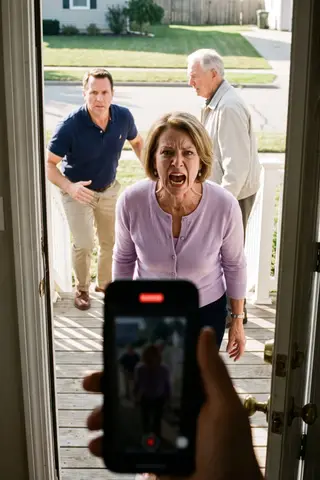
Two weeks after the porch confrontation, the fallout within the Miller household had reached biblical proportions. According to a text from my youngest sister, Chloe—who had quietly slipped into my DMs with a burner account—the annual family retreat had turned into an absolute disaster of epic proportions. Without my mother’s iron-fisted, micromanaged coordination, the carefully constructed illusion of the "perfect Miller family" had completely imploded under the weight of its own hypocrisy.
Apparently, half the cousins had spent the weekend arguing about Elena’s failing podcast sponsorships, while my father had reportedly locked himself in a rental cabin for three days to avoid answering frantic emails from church elders. The family group chat, once a relentless firehose of toxic positivity, matching vacation photos, and passive-aggressive Bible verses, had gone completely dead.
For the first time in my life, I didn't feel the phantom itch of exclusion. I didn't wonder what jokes I was missing or what seating charts I had been scrubbed from. Instead, I was sitting at a sticky laminate table in the back of a bustling downtown café, nursing an iced oat milk latte and staring intently at a glowing laptop screen.
My fingers flew across the keyboard as I hammered out the final beats of a brand-new thirty-minute comedy set. It wasn't just a collection of biting family anecdotes anymore; it was an entire narrative about the architecture of conditional belonging. It was about the weird, suffocating pressure of trying to shrink yourself to fit into a mold that was never designed to hold a human being in the first place.
"You look dangerous," a warm, familiar voice said, breaking my concentration.
I looked up to see Mia sliding into the booth opposite me, balancing two oversized paper bags smelling deliciously of garlic naan and chicken tikka masala from the Indian place down the street. She dumped the food on the table, kicked off her sneakers under the bench, and leaned forward with a triumphant grin.
"Tell me you got the email," Mia demanded, tearing open a container of garlic naan with ruthless efficiency.
I tilted my laptop screen toward her so she could read the official confirmation letter from the Chicago comedy festival booking director. The subject line read: HEADLINER CONFIRMATION: THE FRIDAY NIGHT SHOWCASE.
Mia let out a high-pitched squeal that made the barista at the front counter jump. Several patrons turned to stare, but Mia didn't care in the least. She reached across the table, grabbed both of my shoulders, and shook me gently. "Clara! Oh my god! Chicago! That’s a five-hundred-seat theater! That’s not a basement club with flickering lights and sticky floors—that’s the big leagues!"
"It’s happening," I whispered, a slow, disbelieving smile spreading across my face as the reality of it finally began to sink into my bones. "They actually want me. Not the version of me they wished I was, not the quiet, compliant background character... they want my voice."
"And the best part?" Mia grinned wickedly, popping a piece of chicken into her mouth. "Your mother’s church group is still holding virtual prayer circles trying to 'cleanse the digital atmosphere' after your viral videos. My mom told me your aunt Linda accidentally liked your TikTok while trying to cyberstalk you and had to deactivate her entire Facebook account out of pure shame."
I laughed, a rich, genuine sound that bubbled up from somewhere deep inside my chest. It felt light, unencumbered by decades of forced obligation.
"Good," I said, leaning back against the vinyl cushions. "Let them pray. I’m too busy writing punchlines."
Later that afternoon, after Mia had headed back to her office, I packed my notebooks into my backpack and decided to take the long way home through the city park. The autumn air was crisp, carrying the sharp, earthy scent of decaying leaves and woodsmoke from nearby chimneys. Couples walked hand-in-hand along the paved pathways; children chased pigeons across the emerald lawns; and street musicians strummed acoustic guitars near the grand fountain, their voices rising and falling in sweet, unforced harmony.
As I passed a row of wooden park benches, I noticed an elderly woman sitting alone, knitting a brightly colored woolen scarf while watching the world drift past. Beside her sat an empty wooden chair, wet with morning dew and dusted with fallen maple leaves.
Once upon a time, seeing an empty chair would have triggered a familiar, aching twist in my stomach. It would have reminded me of birthday parties where I sat in the corner, family dinners where my chair was quietly removed to make room for a more important guest, and lake-house retreats where my absence was treated as a design feature rather than a flaw.
I stopped walking for a second, looking down at the empty seat, and then down at my own two hands, which were currently strong, capable, and entirely free.
I didn't need an invitation anymore. I didn't need to beg for a fraction of space at a crowded table built on silence and performance. I had built my own table—one with wide, welcoming seats, where nobody had to strain their voice to be heard, and where every joke landed right where it was supposed to.
I turned my back on the empty chair, adjusted the strap of my backpack, and kept walking toward the bright, wide-open avenue ahead.
The End









