 Column B
Chapter 2
Normal
The attending on nights was Dr. Faustina Mbeki, who was young and quick and listened with her whole face. Birdie showed her the glove box.
“Carbon monoxide,” Mbeki said immediately. “Headache, vomiting, sleepy, better after a few hours here, whole family sick. Okay. That's a good catch, Birdie.” She was already pulling up an order. “Pulse ox won't show it. The machine can't tell carbon monoxide from oxygen. We need a blood gas with a co-oximetry panel on both of them, the boy and the mom.”
Birdie went to wake the Hailes.
The results came back at 4:10. Dawit's carbon monoxide level was four percent. Senait's was five.
Mbeki frowned at the screen. “That's high-normal. It's not nothing, but it isn't diagnostic either. A smoker could be at five.”
“She doesn't smoke,” Birdie said. “I asked.”
“How long have they been here?”
Birdie checked. They had come in at 2:15. They had been sitting in the waiting room, breathing clean hospital air, for two hours.
“It clears,” Mbeki said. “That's the trouble with it. Every hour away from the source, the level drops. If they were exposed overnight and came straight here, they might have been much higher at home. Or it might be nothing. I can't tell from this.” She rubbed her eyes. “I'll call the fire department and ask them to check the building. That's what we can do.”
She called. Birdie stood next to her and heard the dispatcher's voice through the receiver, tired and polite. Seventy-seven Gannet had been inspected in October. Every unit had a working carbon monoxide alarm, hardwired, landlord's certificate on file. No calls from the address. They would send an engine by when they could.
“When they could,” Birdie said, after Mbeki hung up.
“It's three below outside and half the city's running space heaters. They're busy.” Mbeki looked at her. “You did your part. I'll put it in every chart.”
Dawit and Senait went home at five, both of them feeling better, as everyone from Gannet Street had felt better, after a few hours somewhere else.
The charge nurse, Gil Strasser, caught Birdie at the coffee machine as she was leaving at seven.
“Heard you've been running searches on the triage log,” he said. “Birdie. That's a privacy thing. You can't just pull charts because you've got a feeling.”
“It wasn't a feeling. It was a letter.”
“Then the fire department's got it now. Go home. Sleep.”
She did not go home. She sat in her car in the staff lot with the engine running and the heater on high and looked at the glove box on the passenger seat.
Every unit had a working alarm. The alarms were quiet. The children were sick in only one column of apartments, and only at night, and they got better in the morning when they left.
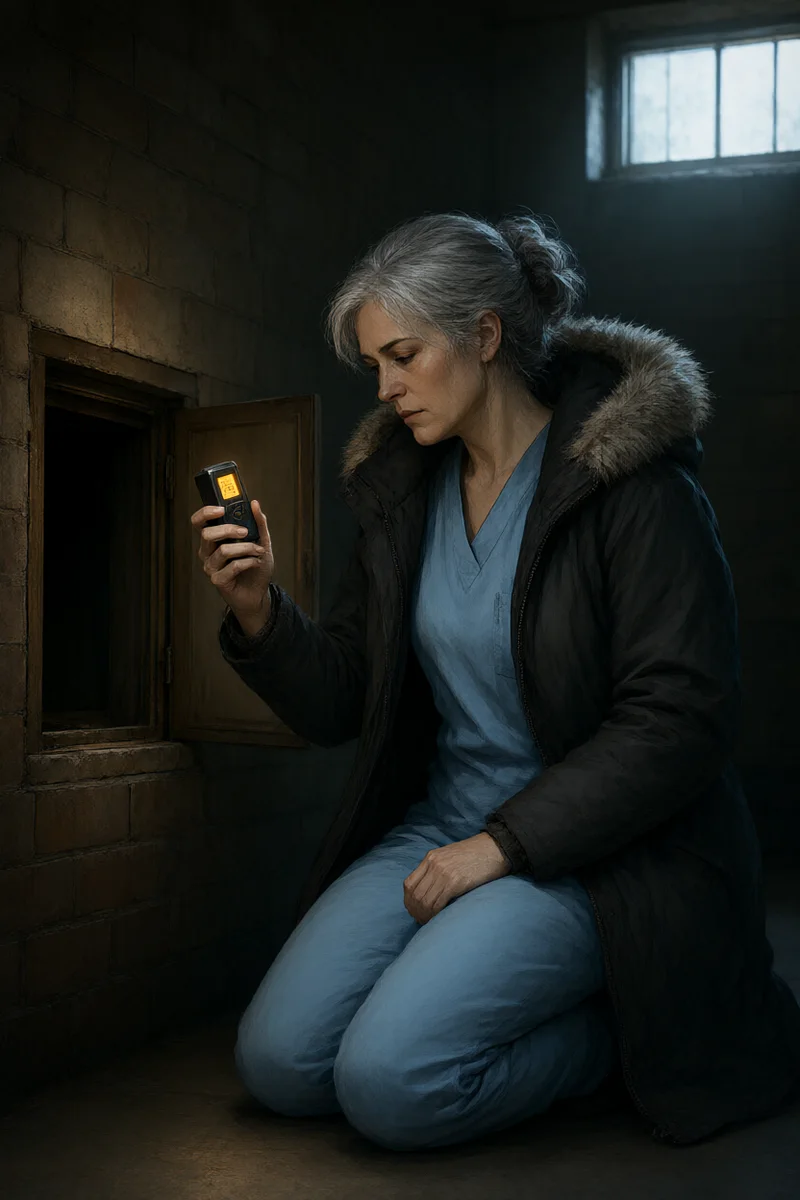
Birdie put the car in gear and drove to the hardware store on Fennick Avenue, where she paid forty-two dollars for a handheld carbon monoxide meter with a digital readout, the kind contractors used.
Then she drove to 77 Gannet Street. It was 7:40 in the morning and still mostly dark. And standing on the front step, in a coat over pajamas, with a phone pressed to her ear, was Senait Haile.
She saw Birdie's scrubs and came down the steps fast. “You're the nurse,” she said. “Please. Dawit won't wake up properly. He went back to sleep when we came home, and now he won't wake up.”
The End









