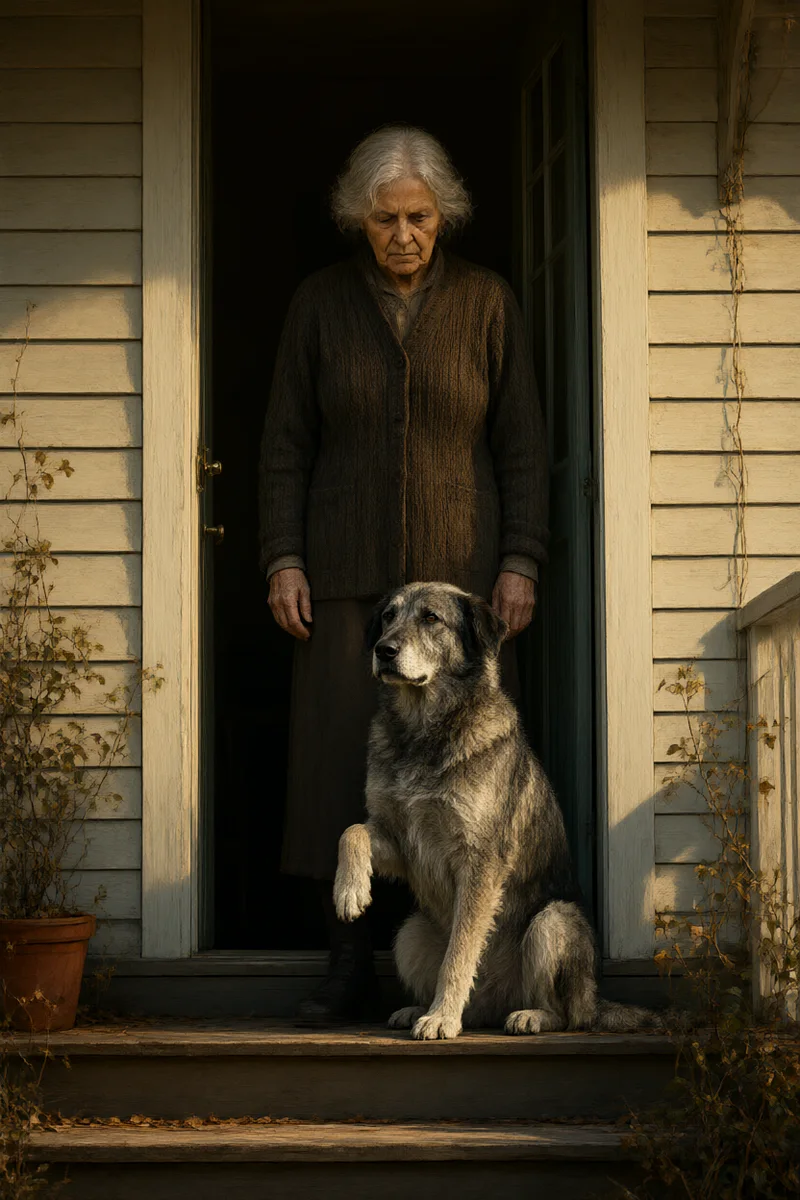
 The Dog on Larch Street
Chapter 3
Booth Three
The Harwick River Bridge had six toll booths, and for twenty-six years Ottilie Brannock had worked Booth Three, six to two. She knew the regulars by their cars. Silver sedan, pays in quarters, hates it. Bakery van, Fridays, sometimes a roll.
And the little blue hatchback with the rust on the wheel well, at seven fifty-two, give or take a minute. A woman with a cloud of graying hair and hospital scrubs under a parka, who always said, “Morning, Booth Three!” as if Ottilie were a person and not a slot for money. And in the passenger seat, for the last ten of those years, a gray dog who sat up when the window came down and held up one paw for the biscuit Ottilie kept in a coffee can by the register.
Forty seconds a day, for nineteen years. She had never learned the woman's name. She called her Hatchback.
Two years ago the bridge authority had gone electronic. Cameras on a gantry, booths bulldozed in a weekend. On Ottilie's last morning, the blue hatchback had stopped at the window, and the woman had handed her a tin of shortbread and said, “What'll I do now, without you to say good morning to?”
And Ottilie, who had been crying in the staff toilet at six, said, “Get a transponder like everyone else,” and closed the window.
She turned the car around in the shelter lot and drove to Canal Street.
Raff was asleep. She knocked until he wasn't. He opened the door with his hair flat on one side and started to say something hard.
“Did your mother drive a blue hatchback,” Ottilie said. “Rust on the back left wheel. Did she work at the hospital in Harwick. Did she take the bridge.”
Raff's mouth stayed open.
“Every day,” he said slowly. “She was a home aide, she had patients over there.” He looked at her, at the short gray hair and the reading glasses on a chain. “Oh my God,” he said. “You're Booth Three.”
He made her coffee, very good coffee, which annoyed her. He told her that his mother had talked about Booth Three at dinner for as long as he could remember. That on bad days, when a patient died, she said the only person who'd been glad to see her all day was the lady at the bridge. That the shortbread had been her grandmother's recipe, baked at five in the morning.
“After they closed it,” Raff said, “she called the bridge authority. Twice. To find you. They said they couldn't give out employee information.”
Ottilie set her cup down because her hand was not steady.
“She started taking the long way,” he said. “Over the Mill Street bridge, instead. Added twenty minutes. I asked her why and she said she couldn't stand going under those cameras where you used to be. It was like driving past a grave.” He looked at Moss, lying across both their feet. “He still does it. That's his route to your house. The long way round.”
She drove home with the dog in the passenger seat, sitting up. The shelter, she told herself, was a decision for tomorrow.
That night the temperature dropped twelve degrees in an hour and rain turned to ice on everything. At ten Moss wanted out. Ottilie stood on the top step in her slippers, calling him in from the dark yard, and reached for the rail, and the rail was not where her hand expected, because this was a different house.
She did not feel herself fall. She only found herself on the frozen walk with her right arm bent under her wrong, the kitchen light far above, her phone on the counter inside.
Moss stood over her and licked her face once. Then he turned and ran, out through the side gate and into the black, and did not come back.
The End









