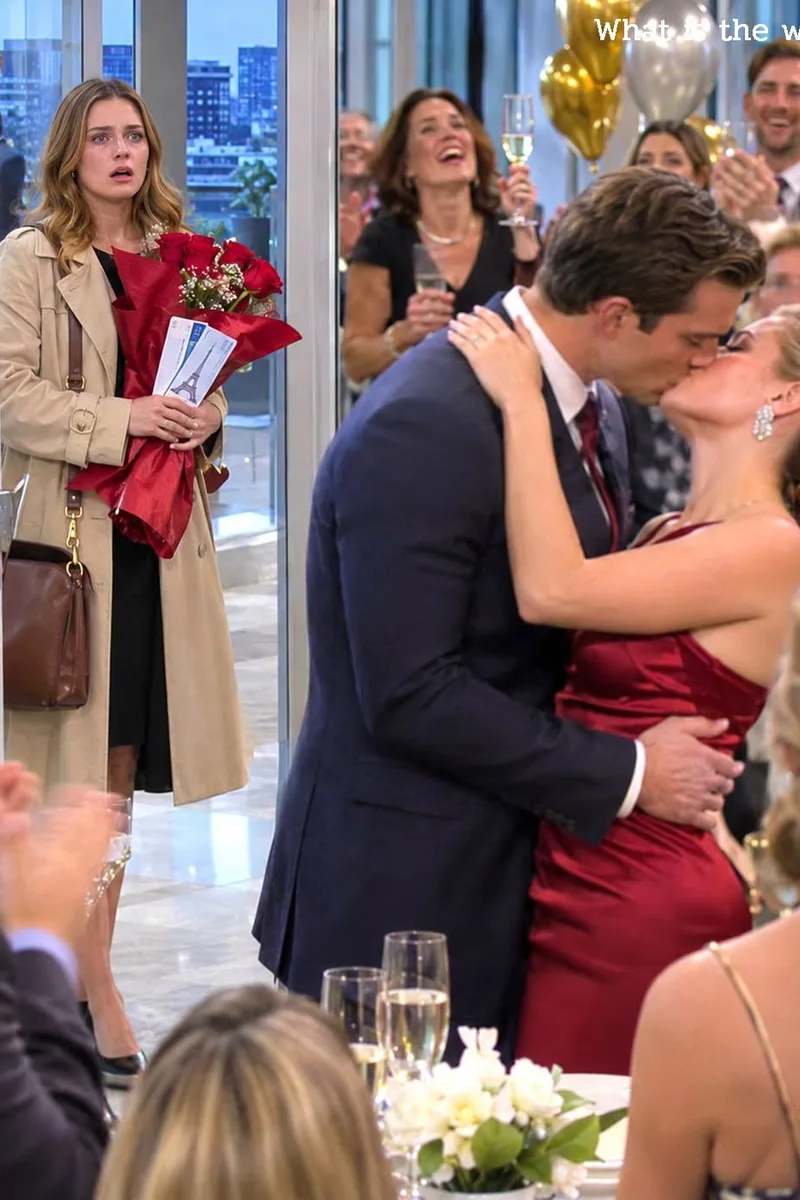
 When My Husband Celebrated His Engagement to Our CEO on Valentine's Day, I Stopped Hiding My Father's Company Shares
Chapter 10
What My Father Left Me
The annual meeting began with a routine report on manufacturing capacity, safety testing, and employee development. I sat among shareholders rather than on a raised stage. There were no cameras aimed at a wedding scandal, only a company secretary recording attendance and the chair explaining the resolutions. When the votes were counted, the proposed independent directors received the required support under the governing procedures. My eighty-three percent mattered. It did not make their qualifications optional. I signed the record of my vote and listened to the next item on the agenda.
The board confirmed the process for appointing a permanent chief executive, including an independent search and review of candidates with experience relevant to Whitmore Dynamics. Dana would continue as interim leader in the meantime. Mara's team had completed the additional safety testing for its sensor platform, and the results were ready for the next technical review. Those announcements drew ordinary questions and practical follow-ups. I felt proud that the room was more interested in a working product than the identities of the people who had once stood beneath a silver engagement banner.
Afterward an older shareholder approached me near the coffee table. He had owned a small number of shares since the company's earliest days and had worked with Dad during the first factory expansion. He said he was glad I had become more visible but hoped I would never feel obliged to speak on every subject.
"Your father knew which arguments belonged to engineers," he said. I laughed and told him I was still learning. He replied that learning was a better sign than certainty. We talked for ten minutes about the old plant and the people who had kept it running.
Ruth met me outside with a photograph of the first apprenticeship class the foundation had funded. Dad stood at the edge of the group, half hidden behind two tall students. He had never liked photographs when someone could see him posing. I looked at the young faces and thought of Antonio, whose environmental monitor was now being tested with a community partner. The company was changing in ways that had nothing to do with my marriage. My father's legacy would be measured partly by whether people like those students still found a place to learn.
The final divorce arrangements took longer than the headlines expected. Daniel and I settled certain property questions through mediation and left the remaining formal steps to the appropriate court process. The trust assets were addressed according to their governing documents and applicable law, not by an angry declaration in a parking garage. We returned personal belongings without turning each exchange into a contest. The house was handled under an agreed plan. I did not leave with every possession I had once cherished. I left with decisions I understood and could defend.
At our last scheduled meeting Daniel asked whether I would ever forgive him. I told him I didn't know exactly what forgiveness would mean, and that I wasn't willing to promise it as a reward for signing papers. He said he understood. Then he asked if I thought we had wasted ten years.
I looked at the man I'd once waited for at hospital doors and dreamed of traveling with to Paris. "No," I said. "But the years mattered enough that you should have told me the truth before you began another life." He nodded, and neither of us tried to make the answer easier.
We left the building separately. Daniel stopped near the curb and turned as though he might say something else. Then he raised a hand in a small farewell and walked away. I did not feel victorious. I felt the ache of a future closing, and beneath it a relief so quiet I barely trusted it. I called Helen, who asked whether I wanted company. I said yes. I was learning that independence did not require spending every difficult evening alone. It meant being allowed to choose who came through the door.
That summer Whitmore Dynamics announced the permanent leadership appointment after the completed search. The new CEO spoke publicly about engineering reliability, transparent decision-making, and the people who carried out the work. The company also strengthened conflict disclosure procedures and provided an independent channel for employee concerns. No governance system could guarantee that every leader would behave well. But the changes made it harder for someone to turn personal influence into an unchallenged claim of authority. I had insisted on that because I knew what the old silence had cost.
Miriam came to my townhouse one evening with the completed record of our voting and trust notices. She asked whether I wanted a copy stored in the foundation archives. I said yes, provided the archive kept only what was appropriate for its purpose. We laughed about the number of folders my father would have insisted on making.
Then Miriam asked how I was doing, meaning something other than the company. I told her I was still sad some mornings, angry on others, and unexpectedly happy when I could spend a whole day without thinking about Daniel. She said that sounded like a life beginning to make room for itself.
I began volunteering occasionally at a foundation workshop, helping students practice presenting their ideas without pretending to be an engineer. One afternoon a young woman asked how I handled being the person who held the majority of the votes. I told her I tried to remember that a vote could decide an outcome but couldn't make the outcome wise. She considered that and asked whether I was ever afraid of being wrong. I told her often. She smiled as though the admission had made the role more understandable rather than less impressive.
On Valentine's Day a year after the engagement party, I bought myself a small bunch of yellow flowers from the market. I did not choose red roses. They had become too entangled with a scene I was tired of revisiting. I carried the flowers home, placed them beside Dad's photograph, and made tea.
The Paris tickets were long gone, the unopened champagne had been poured away, and I had begun making travel plans that did not depend on someone else's interest in coming. I was not celebrating Daniel's downfall. I was marking the ordinary fact that I had survived a year of making decisions I once feared.
Helen arrived with dinner and a small framed picture she had found in our father's old albums. In it, I was twelve, sitting beside him at a workbench, wearing safety glasses too large for my face. Dad was pointing toward something outside the frame, and I was looking at him instead of the project. I remembered asking whether he would always own the company. He had told me that ownership changed hands, but the obligation to treat people decently should not. I put the photograph above my desk where I could see it while reading board materials.
After Helen left, I stood by the kitchen window overlooking the narrow garden. Dad's tomato plant was dormant for winter, its stakes still in the soil. The company he founded was not a weapon I had used to punish a husband. It was a responsibility he had trusted me to carry, one I could finally accept without handing my voice to someone else.
Daniel's engagement had exposed the distance between the life I believed we shared and the one he had built in secret. What followed was not a single triumphant vote. It was the slower work of telling the truth, making fair decisions, and choosing a home where I no longer had to disappear for someone else to feel important.
The End









