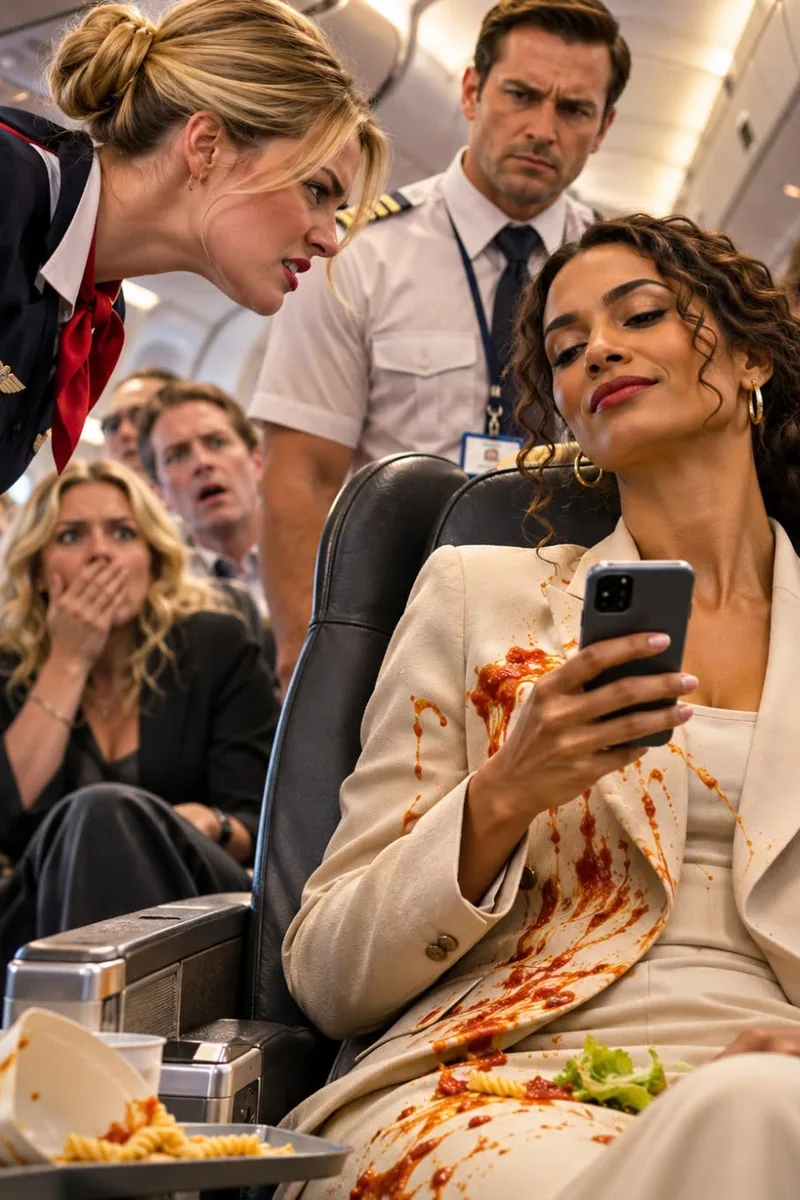
 When a Flight Attendant Dumped Food on Maya Washington and Tried to Remove Her From Seat 12A, One Message Confirmed What the Crew Refused to Believe
Chapter 5
The Report Nobody Wanted to Read
The airline sent its first detailed written response a week after Maya issued her statement. Aisha forwarded it with a note asking her to read it when she had time and not while standing in a grocery-store line. She waited until Elaine was resting, made tea, and opened the attachment at the dining table.
The letter acknowledged that the recorded interaction had fallen below service standards. It confirmed her ticket and apologized for the food incident. It also described the crew's response as a breakdown in communication among staff. The phrase was polished and empty enough to make her put down the cup.
"Breakdown in communication" suggested a lost message, not a person striking a passenger with a tray and taking her documents. Maya called Aisha and told her she didn't want a letter written to minimize the facts. She agreed that the wording could be challenged. They drafted a response asking the company to distinguish the physical act from the subsequent failure to verify her seat. They also asked whether its record included Jessica's comment about her appearance and the assertion that economy passengers didn't usually sit where she was seated. A generic apology couldn't answer a specific question.
Sarah sent a short note that afternoon. She had watched the original recording again and noticed something Maya had missed in the chaos. Before Mike approached, Jessica had spoken to another crew member near the galley. Sarah's phone picked up part of it.
The audio wasn't perfect, but Jessica's voice could be heard describing her as someone who had "slipped into the better seats" without an appropriate ticket. Sarah said she hadn't shared the audio publicly because she didn't want to turn an unclear sentence into a false accusation. Maya thanked her and asked her to send the file directly to Aisha.
They reviewed the recording together. Aisha repeated it with headphones and took careful notes about what was audible and what wasn't. Jessica's statement revealed that she had repeated a suspicion before verifying the reservation. It didn't prove every motive, but it helped explain why Mike arrived expecting her to be moved. Aisha recommended preserving the whole audio track rather than isolating a dramatic few seconds for public release. Maya agreed. She was tired of people chopping the experience into clips designed to win an argument. She wanted the full sequence understood.
The airline's operations manager arranged another meeting with counsel present. Elena Ruiz joined by video. Maya thanked her for checking the record and giving her the choice to remain in her seat. She looked uncomfortable with the praise and said verifying a reservation should never have been remarkable. The manager acknowledged that the crew had relied on an unverified assumption. When she asked whether that assumption was tied to how she looked, she said the investigation was considering employee statements and available recordings. It was the first time someone in the process had answered without pretending the question was unfair to ask.
Elena described how the support desk had alerted her. A message from her phone had been logged in the passenger-help system while Jessica was away with her boarding pass. Maya had entered her flight number and seat and written that a crew member had spilled food on her and was withholding her documents.
The first alert was automatic confirmation; the second said Elena had been dispatched. Maya remembered reading it and smiling, not because she knew how the confrontation would end but because a real person was coming with access to the reservation record. She had been holding a small piece of certainty in an otherwise uncertain cabin.
The manager asked what remedy Maya was seeking. She talked first about her ruined clothes and the bruise on her leg, then about the time and work she had spent documenting the incident. But she also asked what training staff received when they suspected somebody was in the wrong cabin section.
What checks were required before taking documents? How did a senior crew member verify an allegation instead of repeating it? What steps existed for a passenger who felt a crew member was mistreating them before a plane departed? Maya didn't ask them to guarantee nothing bad would ever happen. She asked for procedures that could be tested.
After the meeting Aisha said they had enough information to negotiate with more clarity. There were still questions about any unlawful discrimination claim, and she would not promise a legal outcome. They could assess the evidence and decide which routes made sense.
Maya told her she didn't want to spend the rest of her mother's recovery turning the flight into a full-time job. She said they could set boundaries around the process too: deadlines for responses, clear requests, and a plan for what she would do if the company declined to address them. She felt better having choices rather than a single imagined confrontation.
That evening Elaine asked if Maya would help her practice the steps the therapist had assigned. They walked slowly from the living room to the front porch and back, stopping whenever she wanted. She told her about the first time she'd traveled alone for nursing school, wearing a borrowed coat and carrying her books in a paper bag.
A conductor had questioned whether she belonged in the reserved section of the train. She'd shown her ticket, then spent the whole trip feeling ashamed though she'd done nothing wrong. "I should have been angry," she said. "But I was young and alone." Maya squeezed her hand and told her there wasn't a correct expression for being mistreated.
Maya thought about all the strangers who wanted her to model perfect composure. At work she helped teams build systems for people who came to clinics frightened, exhausted, or unable to explain their needs easily. They didn't tell patients they deserved care only if they spoke politely. They tried to make the system legible enough that distress didn't become evidence against them. She told Aisha she wanted the airline's response to address that principle. A passenger should not lose the right to be heard because an employee was irritated by a question.
Before bed Maya placed the original boarding pass, which Elena had returned, in an envelope with the airline's case number. The paper had a crease where Jessica had gripped it. She wasn't keeping it as a trophy. It reminded her that a ticket could be valid and still fail to persuade someone determined not to believe it.
Tomorrow Aisha would send their response, and the company would have to decide whether to answer the actual questions. Maya folded the envelope closed. The next chapter wouldn't be written by Jessica's assumptions alone, but she knew it would take more than one email to make that true.
The End









