 The Wednesday Pill
Chapter 2
The Wrong Yellow
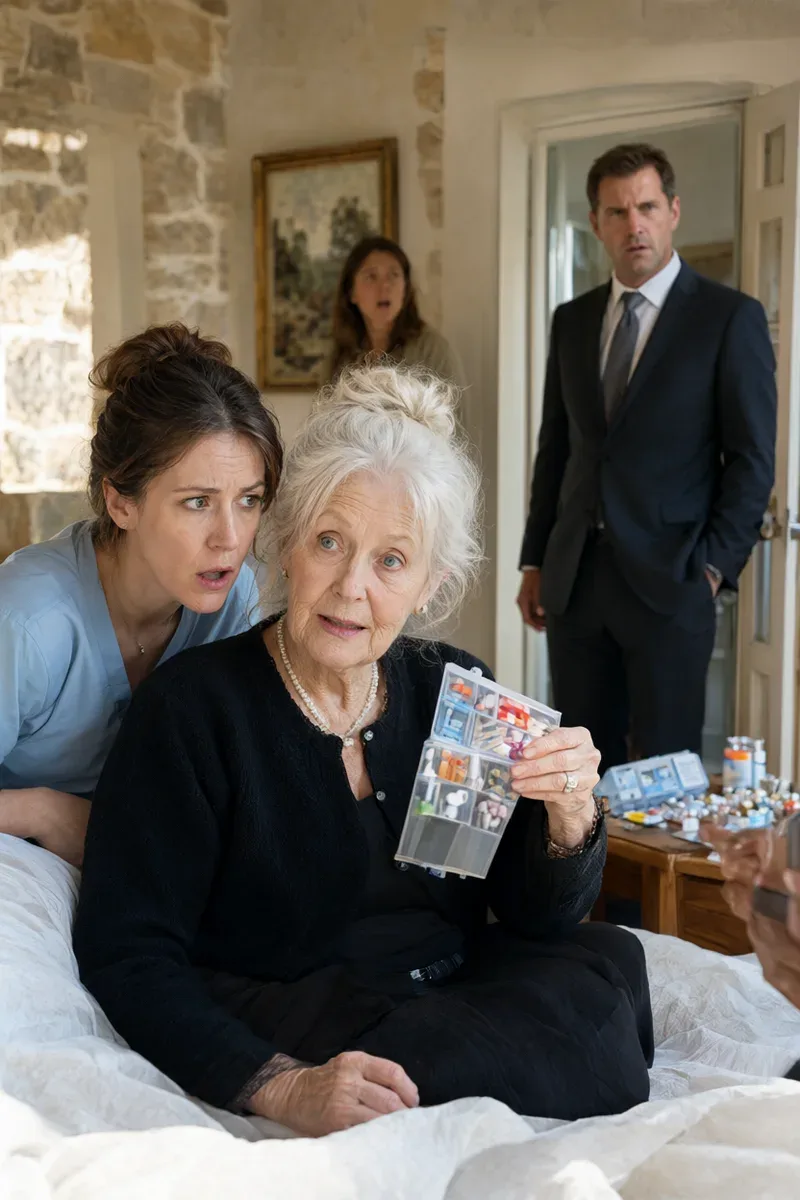
"Not here," Assunta said, when I reached for the lid. "Take it to your room and lock the door. Look in the morning, in daylight. Then tell me I'm a crazy old woman. I'd like to hear it from someone who means it."
So I lay awake with the organizer on the nightstand and the radiator knocking like someone who wanted in. At half past six, with gray light on the window, I opened every lid.
The morning row held the usual for a woman a month out from a hip repair, and a small round yellow tablet for her heart rhythm. I knew that one from cardiac step-down. It's an old drug and a good one, but the distance between helping and hurting is short, and shorter in an eighty-four-year-old whose kidneys clear it slowly.
Monday, Tuesday, Thursday, Friday, Sunday: the yellow tablet carried the imprint I knew. Wednesday and Saturday held tablets just as round and just as yellow, a shade warmer, butter beside lemon. The letters stamped on them were different. I looked them up on the pill identifier every nurse keeps on her phone. Same drug. Higher strength.
In the kitchen I found the pharmacy bottles in the cabinet over the coffee maker. Her heart pill was there, the lower strength, every tablet matching the label. Whatever was in the Wednesday slot had come into this house from somewhere else. I set it on my palm beside the bottle and took a photograph. My phone stamped it 6:40 a.m., Tuesday, October 27.
Assunta was awake when I came back. "Well?"
"Someone put a stronger version of your heart pill in two of the slots," I said. "It looks almost the same. Twice a week, with your kidneys, it would build up."
"And then?"
"Nausea. Dizziness. Confusion, worse in the afternoons. A slow pulse." I hesitated. "Some people see halos around lights."
Her face did not move. She handed me a black ledger, its leather gone soft as a glove.
"My husband's," she said. "He kept other people's debts in it. I keep my stomach."
Every day since August 30 was there in a steep, careful hand: a pulse when she could count it, and how she felt. "Sick. The lamps have rings." "Sick. Could not find the word for spoon." Wednesdays and Saturdays, week after week, regular as fence posts. Then Saturday, September 26: "Dizzy on the terrace steps." After that, two blank weeks.
"That's when you fell," I said.
"Fourteen steps from the terrace to the garden. I've climbed them since 1964. I went down three of them on my face." She took the book back. "I saw the halos and I thought it was God. Then I thought, God wouldn't bother with the lamps."
I thought of Craig Pettibone copying my initials onto a count sheet, and of the woman from human resources sliding a box of tissues toward me before she said the word diversion. I had promised myself I would never again stand quietly between a patient and a lie.
"This has to be reported. If it's a dispensing error..."
"An error doesn't happen on Wednesdays and Saturdays."
"Who fills the box?"
"Halina, Sunday afternoons. Then my whole family comes to dinner, and the box sits on the kitchen windowsill for four hours while they tell me how well I look."
I laid the warm-yellow tablets on a paper towel beside two pale ones and was taking a third picture when gravel crunched in the drive and footsteps crossed the kitchen.
A man in a charcoal overcoat stood in the doorway with quarry dust on his shoes.
"Who are you," he said, "and why are you photographing my mother's medication?"
The End