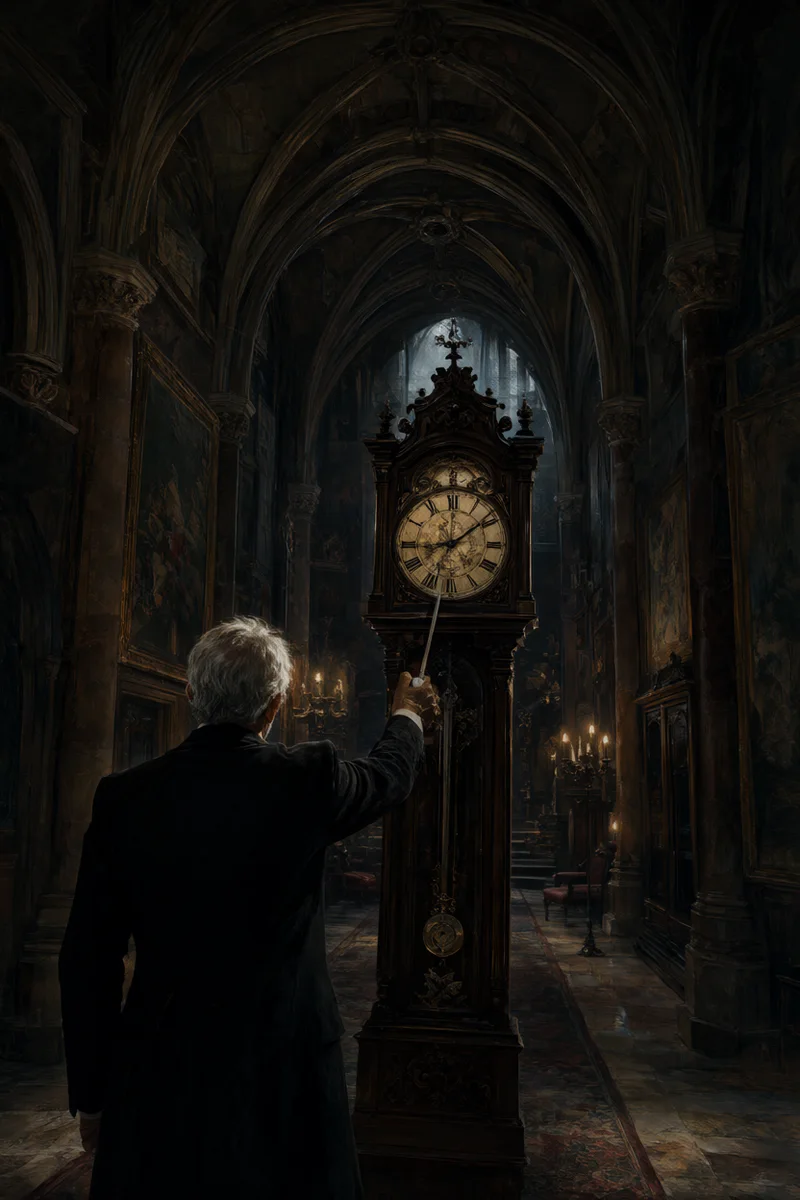
 The Duke Thought His Wife Vanished Without a Trace Seven Years Ago
Chapter 2
The Anatomy of a Lie
To understand why my departure felt like an execution, one must understand how deeply Adrien had woven himself into the fabric of my soul. Before the shadows began creeping into our marriage, our life together had been an oasis of warmth in a cold world.
When we first wed, society whispered that I was merely a country gentleman’s daughter who had captured a great prize, but Adrien treated me as an equal partner. He shared his frustrations with the House of Lords over a late-night glass of port; he laughed at my dry observations about pompous duchesses; he held my hand through the quiet grief of losing our first winter garden to an unexpected frost. In those early years, safety felt like a tangible thing—a warm hearth against the bitter London chill.
Then, imperceptibly at first, the rhythm of our lives began to fracture.
It started six months prior to that fateful night in the library. Adrien began returning home long after midnight, his coat smelling faintly of expensive French tobacco and damp carriage leather. When I waited up for him with a warm cup of tea, he would wave away my concern with a tight, strained smile, muttering vague excuses about parliamentary committee meetings, trade tariffs, or urgent matters concerning the crown.
"You should not trouble yourself with such dreary politics, my love," he would say, pressing a gentle kiss to my forehead before turning away to stare blankly into the unlit hearth. At first, I accepted it. To be the wife of a duke meant bearing the invisible burdens of statecraft.
However, secrecy has a weight of its own, and soon that weight became impossible to ignore. Letters arrived marked with urgent wax seals that Adrien immediately cast into the flames before I could glimpse the return address. Servants were dismissed from the hallway whenever he received unexpected visitors late in the evening. And then, Lady Victoria Ashkam entered our orbit with alarming frequency.
Victoria was a widow of independent means and dazzling, sharp-edged beauty. Wherever Adrien was summoned for state affairs, Victoria conveniently appeared, her laughter ringing out across crowded ballrooms just as Adrien slipped away to the shadows. Every time I spotted them standing close in a dimly lit alcove, Adrien’s secrecy deepened, and the distance between us widened into a chasm.
One evening, pushed to the absolute edge of my endurance, I confronted him directly. He had returned at three in the morning, his cravat loosened and exhaustion carved deep lines around his eyes.
"Where were you, Adrien?" I asked, standing by the window of our bedchamber with my arms crossed tightly over my shawl.
He paused, his hand hovering over the buttons of his waistcoat. "State business, Evelyn. Nothing that concerns you."
"Is it dangerous?" I pressed, my voice trembling despite my best efforts to remain steady. "Are you in some kind of trouble with the crown or your political rivals?"
Adrien stopped entirely. He turned around, walked slowly toward me, and looked me dead in the eyes with an expression so intensely controlled that it felt unnatural. "No, Evelyn. You are in no danger."
That was the precise moment the foundation of our marriage crumbled into dust. It was not his late hours or his evasive answers that broke me; it was the absolute certainty in his tone when he lied to my face. I knew—with the unerring instinct of a woman who had studied every nuance of his expression for four years—that he was concealing something monumental. Yet, human nature is a fragile thing, desperate to cling to happiness. Even then, deep down, I wanted to believe there was some noble, tragic explanation. Because accepting betrayal meant admitting that the happiest years of my life had been built on a foundation of sand.
The End









