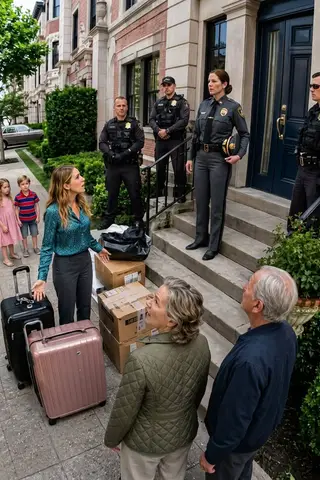
 The Deputy's Penthouse Trap: When Entitlement Meets Federal Authority
Chapter 1
Midnight Echoes Across the Atlantic
The rain drumming against the hotel window in London sounded like a muffled drumroll, steady and relentless. At 2:16 in the morning, sleep was a luxury I couldn't afford. My desk lamp cast a harsh yellow glow over open intelligence files and encrypted transcripts regarding an international fugitive task force operating out of Europe. As a Deputy United States Marshal, my entire professional life was built on operational security, calculated risk, and strict adherence to protocol. Every movement was tracked; every alias was verified; every threat was systematically neutralized. Yet, as my encrypted government-issued phone buzzed violently across the nightstand, all thoughts of European syndicates vanished instantly.
The name glowing on the screen wasn't my supervisor, Director Vance, nor was it my field partner stationed in Frankfurt. It was my younger sister, Paige. My thumb hovered over the screen for a second before I swiped to unlock the message. Her words hit me like a physical blow: Send me the door code, Marissa. I'm outside with the kids. I sat straight up in bed, my heart hammering against my ribs. Outside where? My mind raced back through the geography of my life. I was nearly three thousand miles away, locked inside a secure hotel room in London while my primary residence—a luxury penthouse in Arlington, Virginia—sat vacant.
Before I could even formulate a response, a second notification popped up on the screen, carrying the smug, entitled weight of a family decree that had governed my entire existence. Mom and Dad said this has gone on long enough. You don't need that huge place all to yourself. We're moving in tonight. The exhaustion that had weighed heavy on my shoulders moments ago evaporated, replaced by a cold, razor-sharp adrenaline. I was thirty-four years old, a decorated federal operative handling high-stakes fugitive extraditions, yet my family still treated me like an unpaid extension of their household budget. To them, my career was merely a glorified administrative desk job—paperwork, court files, and occasional prisoner transport. They had no idea what I truly did, because I had spent a decade hiding the brutal reality of my badge behind the comforting illusion of a boring government job. It was easier that way. My work belonged to me, earned through grueling physical tests, sleepless nights, and tactical academies. But according to my family, nothing I owned was truly mine alone. If Paige needed rent, I paid. If Dad needed truck repairs, my phone rang. And now, without warning, they had decided to commandeer my home.
The End









