 The Corner Lot Lights
Chapter 1
Gertrude on Her Side
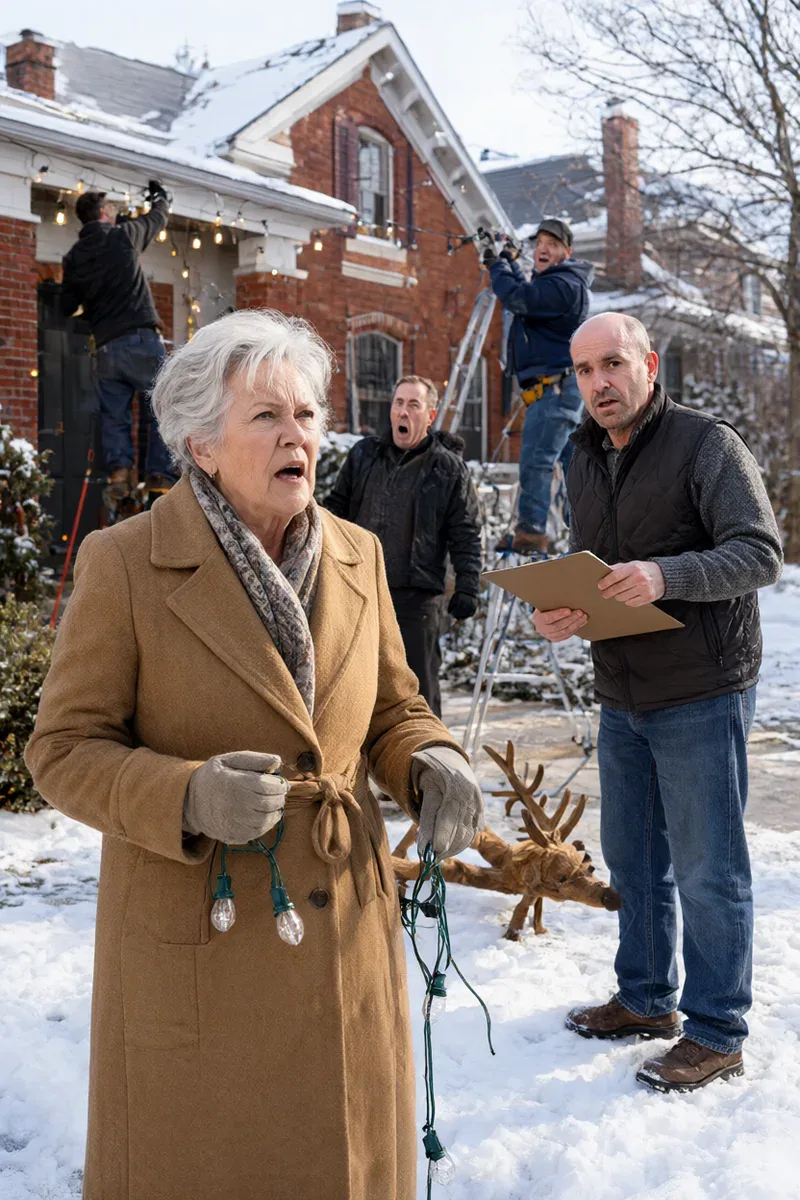
The first thing I saw when Orrin Gaddy dropped me at the curb after the eleven o'clock service was Gertrude, our plywood reindeer, lying on her side in the snow with her extension cord pulled out of her chest like a vine.
The second thing I saw was the truck. White, a ladder rack, KESTREL EXTERIOR WORKS on the door in green letters. Two men in orange beanies were on my roof, and one of them was feeding Alcott's gutter clips into a contractor bag.
The third thing was Brantley Coyne, standing on my front walk in a quarter-zip with a clipboard, as if he'd been hired to judge the pie table.
"Mrs. Fairweather," he said. "You're back early."
"Church runs an hour. It has since the Reformation."
Orrin hadn't pulled away. He sat in his Buick with both hands on the wheel, and I knew without looking that he was not going to get out.
"Get those men off my roof," I said.
"They're almost done." Brantley tipped the clipboard toward me. "You received the notice on November thirtieth. Excessive decorative illumination, Section 7.4 of the Amended Declaration. Fines began December first at two hundred fifty a day. That's six days, fifteen hundred dollars. You chose not to comply, so the board exercised its right of self-help."
"Its what?"
"Self-help. It's in the documents. The removal is billed to your account." He tore off a yellow sheet. "Thirty-four hundred dollars. Kestrel's rate is very fair."
I looked at the yellow sheet and then up at the roof, where a man was yanking a run of C9 bulbs off the ridge so hard that two of them popped and fell into the hedge. Alcott had spent twenty-six Novembers on that ridge. He'd labeled every cord with masking tape and a Sharpie: RIDGE EAST. PORCH LEFT. GERTRUDE.
He died in March, in the recliner, during the second half of a basketball game he didn't even care about. This was the first year I'd put the lights up without him. I had hired two boys from the high school, paid them forty dollars each and a pan of lemon bars, and read them Alcott's diagrams off a clipboard of my own.
"The children's hospital bus comes Christmas Eve," I said. "It has for twenty-five years."
"Then they can drive to the mall. The mall has a permit." He smiled, and it was a nice smile, which was the worst thing about him. "Mabel. Can I call you Mabel? You're grieving. Nobody blames you. But the rules apply to every lot in Quillmont Heath, and corners don't get special treatment. Read your covenants."
"I intend to."
"Good. Do that."
The men came down. They threw the bags in the truck bed, all forty-one thousand bulbs of Alcott's life, and Kestrel drove off with my husband's handwriting flapping out of the tailgate.
Orrin finally lowered his window. "Mabel, I'm sorry. I couldn't."
"I know you couldn't," I said, and went inside.
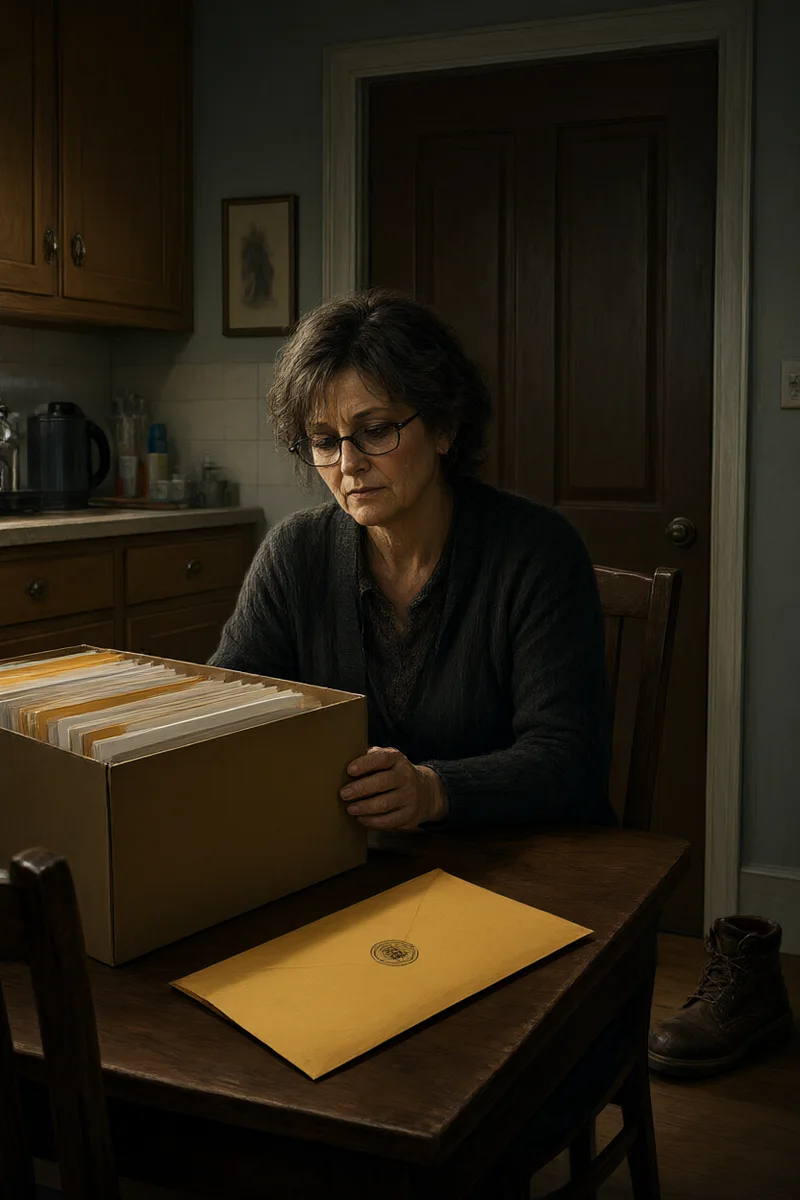
I did not cry, which surprised me. I went to the hall closet, moved the vacuum, and took down the accordion file where Alcott kept everything from closing day in 1994. The Declaration of Covenants for Quillmont Heath was in the third pocket, forty-two pages, stapled.
On the first page, in purple ink, was a recording stamp from the Vantrell County Recorder's Office. Below the book and page number were two handwritten initials.
Mine.
The End