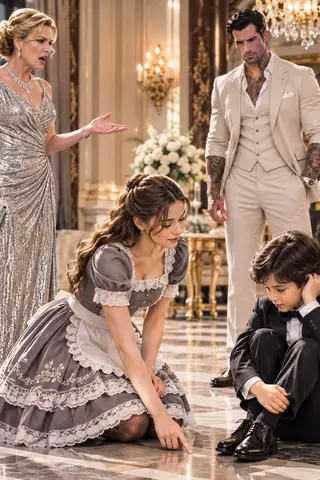
 The Billionaire Mafia Boss Ordered My Investigation After A Waitress Tapped The Floor
Chapter 95
The Daniel Vance Symphony
In the spring of 2050, the Danny Vance Foundation marked its twenty-fifth anniversary with an extraordinary cultural milestone: the world premiere of The Acoustic Universe at Carnegie Hall.
The symphony was a four-movement orchestral work composed by Leo and Clara in collaboration with the New York Philharmonic. It translated three decades of neuro-divergent research, cosmic radio frequencies, and urban architectural harmonics into a breathtaking musical tapestry that utilized traditional strings, woodwinds, and innovative tactile-resonance seating designed specifically for audience members with sensory processing differences.
The grand auditorium of Carnegie Hall was packed to the upper tiers with a gathering that bridged the entire spectrum of human society: pediatric patients and their parents; dockworkers from Red Hook and Elizabeth; Nobel laureates in physics; civic leaders; and three generations of the Moretti family.
Dante and I sat in the center of the first tier box, surrounded by Maya, Clara, and four-year-old Daniel, who sat between Dante and me wearing an miniature velvet tuxedo with an emerald-green silk bow tie.
As the house lights dimmed, the hall fell into an absolute, breathless hush.
Leo did not stand on the conductor’s podium; instead, he sat at the grand Steinway piano, while Clara stood beside the percussion section, holding a set of resonant wooden mallets.
The symphony began not with a crash of cymbals or a blare of brass, but with a single, deep, acoustic vibration on the lowest string of the cellos—a sound that resonated physically through the floorboards and into the seats.
Gradually, the music expanded into a sweeping, majestic movement that told the story of a mind overwhelmed by the roar of the world: chaotic brass fanfares, dissonant violin trills, and the sharp, jarring sounds of industrial machinery. The music painted a picture of absolute, suffocating terror—the ballroom at the Pierre Hotel, the screaming thunder of an sensory overload, the lonely nights in the orphanage dormitory.
Then, at the height of the storm, the orchestra fell completely silent.
In the dead hush of the three-thousand-seat hall, Leo lifted his right hand from the piano keys. He did not play a chord. With his index finger, he tapped the bare wooden soundboard of the Steinway four times.
Tap.
One second of breathless quiet.
Tap.
Two seconds of absolute sanctuary.
Tap. Tap.
Four little taps.
From the percussion section, Clara mirrored the rhythm on a set of hand-carved birch blocks. Then, the cellos entered, transforming the four taps into a sweeping, triumphant theme of breathtaking beauty and light. The music rose, soaring into the vaulted ceiling like a flock of white doves, carrying the entire audience into an ocean of transcendent, healing joy.
Beside me in the box, Dante bowed his head, his large hand gripping mine with a force that made my rings bite into my skin, hot tears falling freely onto the velvet railing. Little Daniel leaned his head against Dante’s arm, his small fingers lightly tapping out the four-beat tempo against his grandfather’s knee.
When the final chord resolved into an eternal, resonant peace, Carnegie Hall erupted into a deafening, ten-minute standing ovation that shook the chandelier prisms like windchimes.
Leo and Clara stood side-by-side on the stage, holding hands, looking up toward our box. They didn't bow to the balcony of dignitaries; they looked directly at Dante and me, their faces glowing in the stage lights, their hands raised in a silent, eternal tribute to the foundation that had given them life.
The End









