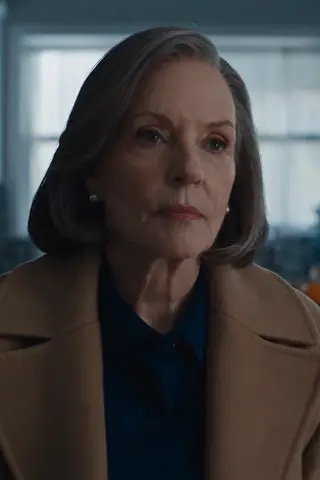
 Son Cancels Mom’s Birthday Dinner, But When She Shows Up at the High-End Restaurant, Her Credit Card Is Paying for His Secret Meeting With a Real Estate Broker Selling…
Chapter 2
The Proof in the Parking Lot
The drive down Maple Street took less than ten minutes, but in that brief span, my mind raced through decades of memories. I thought about the late nights I spent sitting up with Wesley when he had colic as an infant, the endless soccer games I sat through in freezing rain, and the college tuition checks I wrote without hesitation, dipping heavily into my savings after my husband passed away. I had given them my time, my energy, and a significant portion of my financial security, always believing that motherhood was an unconditional investment in love.
When I pulled into the paved parking lot of Willow Creek, the reality of the situation hit me with the force of a physical blow. There, parked in a neat row under the warm glow of the parking lot’s antique-style lampposts, was the undeniable proof. It was arranged like a malicious family portrait: Wesley’s luxury mid-size SUV, my daughter Chloe’s sleek compact car, and a third, unfamiliar luxury sedan parked tightly beside them—a vehicle I had never seen before in our family driveway.
I turned off my engine, but I didn't immediately open the door. For a long moment, I sat in the dim interior of my car, listening to the steady, rhythmic hum of the heater and the muffled sounds of the evening filtering in from the street outside. Somewhere in the distance, a car door slammed shut, and muffled laughter drifted across the pavement. I looked down at my hands resting on the steering wheel. They were completely steady. The trembling I had felt earlier when I first read the bank alert had vanished, replaced by an absolute, unyielding resolve.
I pushed the door open and stepped out onto the polished asphalt. The restaurant facade was charming, featuring dark wood paneling, large bay windows draped with sheer cream curtains, and a glowing brass sign bearing the name Willow Creek. Through the expansive front windows, I could see the warm, inviting interior bathed in golden light.
I pushed open the heavy oak front door, and a tiny brass bell chimed overhead, cutting softly through the ambient murmur of clinking wine glasses and murmured conversations. The hostess—a young woman with a polite, small-town smile and professional posture—looked up from her sleek wooden podium immediately.
"Good evening, welcome to Willow Creek," she greeted me with practiced warmth. "Do you have a reservation with us tonight?"
"Good evening," I replied, my voice remarkably even and controlled. I made a conscious decision not to march up to my children's table and make a public spectacle. "I’m dining alone tonight. I’d love a table near the front window, if one is available. Somewhere quiet, please."
"Of course, ma’asms. Right this way," she said, picking menus up from the counter and guiding me across the plush carpeting.
The restaurant was bustling for a Tuesday night, filled with couples and small groups enjoying upscale meals. The hostess led me toward a cozy corner table near the large front window, tucked slightly away from the main dining room traffic yet offering an unobstructed, panoramic view of the entire restaurant floor. As I sat down on the velvet-upholstered chair, I realized with a chilling jolt of irony that my table was situated diagonally across from theirs—just ten feet away, close enough to hear the cadence of their voices, yet far enough that they hadn't bothered to look around and notice my entrance.
I didn’t need to crane my neck. From my seat by the window, my empty place at their table was practically mocking me. They were gathered around a large circular booth draped in heavy white linen, illuminated by the soft glow of a contemporary chandelier overhead. Sparkling crystal glasses caught the amber light, and expensive wine bottles sat cooling in silver ice buckets beside them.
Cora—who was supposed to be deathly ill at home in bed—was sitting upright, laughing brightly at something Wesley had just whispered. She looked radiant, her cheeks flushed with wine and high spirits, showing zero signs of the debilitating illness that had supposedly forced my son to cancel our long-planned family dinner. Wesley leaned back lazily against the leather banquette, swirling a dark red liquid in his heavy crystal glass mid-laugh. My daughter, Chloe, sat directly across from them, her face lit up with an eager, calculated smile—the kind of smile people wear when they are completely confident that a complex plan is finally reaching its final, successful conclusion.
I opened the heavy leather menu handed to me by the waiter, though I had no intention of ordering a full meal. Instead, I used the menu as a shield, keeping my eyes fixed on the tableau unfolding just a few feet away.
What struck me hardest in that moment wasn't just the raw shock of being lied to, excluded, and completely discarded. It was the casual, effortless nature of their deception. A waiter in a crisp black vest approached their table, bowing politely as he removed empty appetizer plates and poured fresh wine. Another heavy ceramic platter was placed in the center of their table—expensive cuts of steak and artisanal sides that clearly didn’t belong to anyone who was watching their budget or worrying about financial constraints.
Then, as the ambient restaurant noise ebbed momentarily between songs playing softly over the sound system, the first few stray words drifted across the space between us, light as falling napkins, carrying secrets that were never meant for my ears.
The End









