 "Smelled Like Blood": Parents Mock Silver Star Hero
Chapter 1
The Echo of Dried Blood
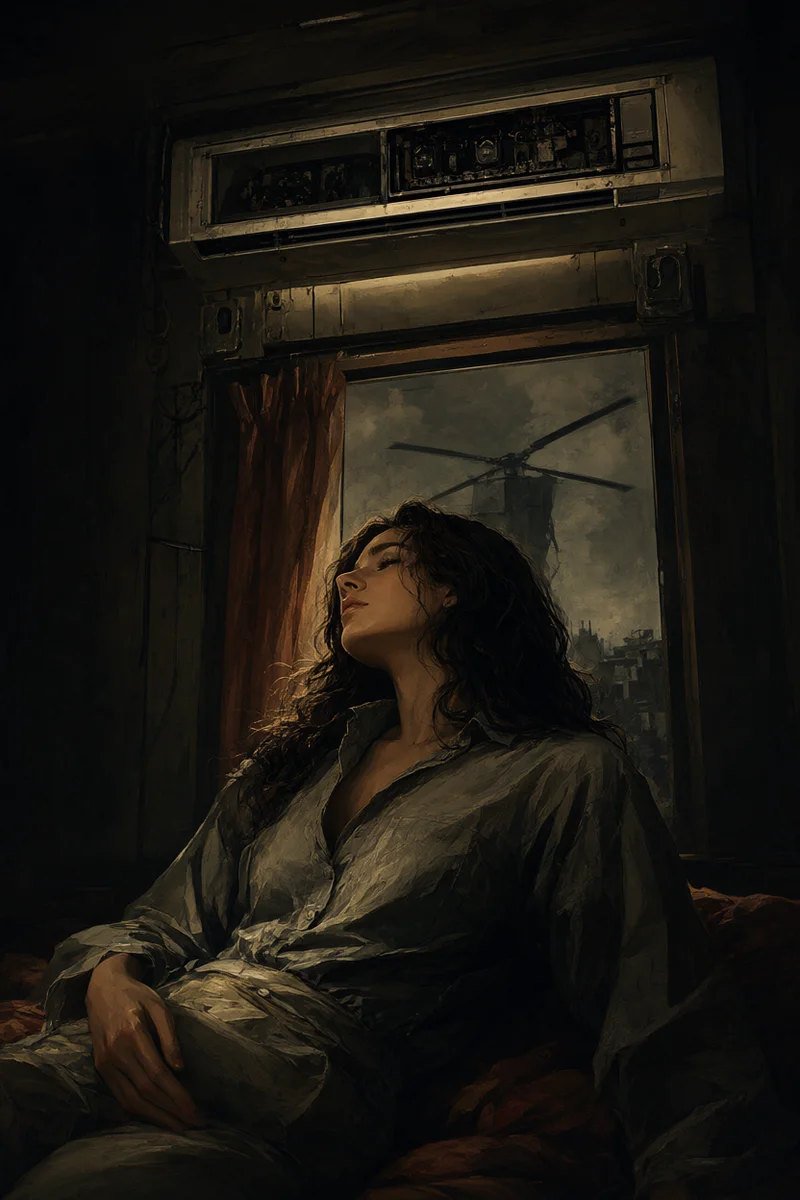
The hum of the HVAC unit in the hotel room sounded less like air conditioning and more like the low, constant whine of a distant helicopter engine. For five years, my world had been partitioned into two distinct realities: the deafening chaos of field medicine where red dirt and copper-tasted air filled your lungs, and the sterile, fluorescent-lit civilian illusion where my mother complained about the humidity ruining her blowout. Sitting on the edge of the queen-sized bed, I stared down at my left forearm. The skin was puckered, cross-stitched with twenty-two neat, tight lines of black nylon suture where a piece of mortar shrapnel had torn through muscle and fascia a little over a month ago.
It still throbbed when the barometric pressure dropped, a dull, rhythmic ache that pulsed in time with my heartbeat. That pain was honest. It didn't lie to me. It didn't smile to my face while bleeding my bank accounts dry.
Three hours before the limousine was scheduled to pick me up for the Pentagon auditorium, my mother, Elaine Mercer, had stood in the center of the hotel suite—booked on my dime, naturally—and surveyed me with the kind of cold, clinical disgust usually reserved for finding a dead mouse in a pantry. She hadn't hugged me. She hadn't asked about the sling I had discarded only days prior, nor had she inquired about the nightmares that still jerked me awake at 3:00 AM with the phantom weight of a dying corporal in my arms.
Instead, she had lifted her chin, wrinkled her sharp, surgically refined nose, and delivered the sentence that finally severed the remaining threads of my childhood conditioning.
"We will never stand next to you looking like that," Elaine had snapped, her voice like ice chips sliding across a marble countertop. "You look like you just crawled out of a ditch. You smell like blood."
My father, Richard Mercer, had been sitting in the velvet armchair by the window, skimming the financial section of a tablet. He hadn't looked up. He hadn't defended me, nor had he reminded her that the blood she found so offensive had soaked into my uniform while I was tourniqueting the femoral artery of an eighteen-year-old kid from Ohio whose mother would have given anything to have him back. Richard had only glanced at the heavy, gold-embossed Pentagon invitation resting on the glass coffee table between us, its thick cream stock gleaming under the lamps, and asked whether the ceremony would interfere with our 8:00 PM reservation at Le Petit Chataigne.
"It's a formal military investiture, Dad," I had said, my voice dangerously quiet. "It might run a little late."
"Well, try to keep it brief," Richard had replied, still not looking at me. "Brooke’s agent is flying in from New York, and we can't keep people waiting. You know how important her branding dinner is this week."
I knew. I had known for five years. I had known through two deployments to Helmand and one brutal tour in the Horn of Africa. Every single paycheck, every hazard-duty stipend, every drop of sweat and risk of shrapnel had been funneled through an automatic wire transfer straight into checking accounts that funded Brooke’s downtown Washington apartment, her equine therapy club dues, her endless stream of boutique clothing hauls, and now, her mysterious "career opportunities."
I stood up from the bed, the hotel carpet soft beneath my regulation boots, and walked over to the full-length mirror. The Class A uniform fit differently now. My shoulders were broader, carved by heavy ruck marches and combat conditioning, but my waist was narrower, stripped down by months of combat rations and stress. Above my left breast pocket, the empty ribbon mount waited for the Silver Star—the third-highest military decoration a service member can receive for gallantry in action.
I remembered the citation by heart: For conspicuous gallantry and intrepidity at the risk of life above and beyond the call of duty...
My parents didn't care about gallantry. To them, the Silver Star was just an accessory, a conversation starter for their high-society cocktail parties, something they could casually drop into brunch conversations alongside Brooke’s latest magazine spread or handbag endorsement deal. They thought it was a social voucher. They had no idea it was bought with iron, salt, and the blood they found so distasteful.
The End









