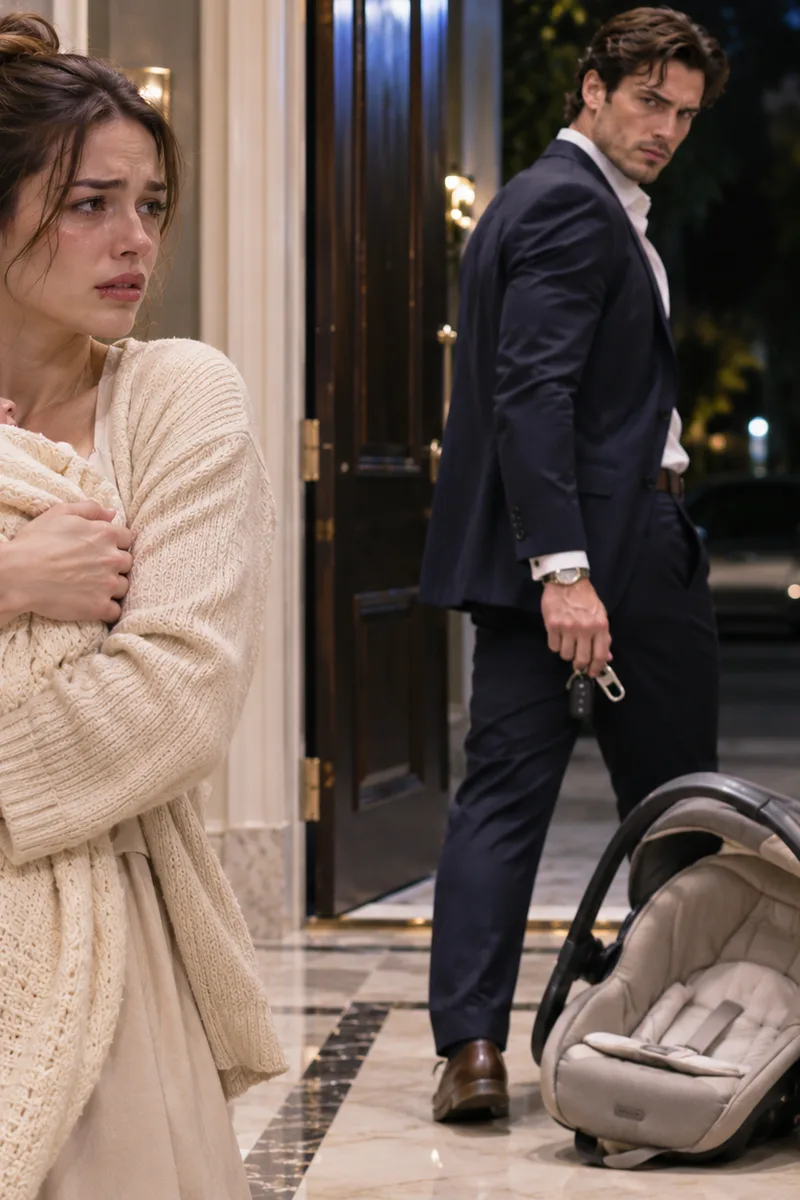
 Six Days After Our Daughter's Birth, My Husband Kicked Her Empty Carrier and Left for Dinner
Chapter 3
The Dinner They Remembered
Emmett agreed to the meeting, but his first words made it clear he still thought the incident had been exaggerated. "I kicked an empty carrier," he said. "You made it sound like I hurt Lily." Helen sat beside me, and Emmett had brought an attorney of his own.
I felt the old urge to explain every detail until his face softened. Instead, I said, "I never said you kicked Lily. I said you kicked the thing meant to carry her, close enough to startle her, while I was holding her. Then you took my car and left."
He looked at me as though I had rehearsed an attack. "You could have stayed home and rested," he replied. "That's all I was asking." I showed him the message his mother had sent and the photograph from the family dinner. "You told Maya I wanted to rest," I said.
"You didn't tell her you'd decided I wasn't coming." Emmett shifted in his chair. "Mom thought the baby would be too much at dinner." The explanation was new. I asked why he hadn't said so when we'd spent twenty minutes getting ready. He had no clear answer.
His attorney suggested we separate the incident from practical arrangements. I agreed, but I wanted the facts on the record before moving on. Emmett had not merely made a poor decision about a social event.
He had used my car without ensuring that I had transportation with a six-day-old baby, dismissed my concerns, and damaged equipment we relied on. I didn't want a public spectacle or an expensive apology gift. I wanted to know whether he understood what had frightened me and what he would do differently.
Emmett stared at the table. Finally he said, "I was angry because everything has been about the baby since we got home. I felt like I didn't exist." The admission hurt more than the earlier excuses.
I had spent six days recovering from childbirth and keeping our daughter fed, yet he had interpreted the attention she required as a personal rejection. "You exist," I answered. "You're her father. She needs you to show up, not compete with her for attention." He looked surprised, as if the possibility had never occurred to him.
We discussed returning my car. Emmett offered to bring it to Dad's house personally, but Helen suggested a neutral exchange that didn't require an unplanned visit. He agreed. We also talked about the damaged carrier.
I had already been told not to use equipment that might have been compromised by an impact, and Dad had arranged a safe replacement for Lily's travel. Emmett offered to reimburse the cost. I said appropriate financial matters could be addressed, but replacing equipment wouldn't erase the reason it had been damaged. He nodded without arguing.
During the break I checked the notes I'd written before the meeting. Most of them concerned ordinary things: transportation, what Lily needed for feeding, and how to communicate when one of us was tired or upset.
I had added the list because I knew Emmett could make a discussion feel like a verdict on his character. Keeping it near me helped return my attention to concrete obligations. If he learned to care for Lily, it would begin with practical details rather than a convincing account of why his temper had been understandable.
When the meeting turned to Lily's care, Emmett asked whether he could see her. I said I wanted to discuss a safe, gradual plan that respected her age and routines. He bristled. "She's my daughter," he said. I answered, "Yes.
That's why I need you to take the responsibilities seriously." His attorney asked for a short break, and I welcomed it. In the hallway I leaned against a wall and felt suddenly tired. I wasn't trying to keep him from Lily. I was trying to prevent another moment in which his frustration mattered more than her needs.
After the break, Emmett's tone was quieter. We agreed to continue discussing contact through our attorneys and to begin with a short visit under circumstances we could both accept, subject to relevant guidance. I offered to share appropriate updates about Lily's health.
Emmett asked for a photograph, and I agreed to send one through the agreed channel. The arrangement was cautious, and I knew he disliked that. But I would no longer treat his dislike as evidence that I was being unfair.
On the way home, Dad asked if I wanted to talk. I told him what Emmett had said about feeling invisible. Dad listened, then said, "Babies can make everyone feel exhausted. But being tired isn't permission to frighten someone." I nodded.
My own fatigue had sometimes made me impatient, and I was learning to recognize that without blaming Lily. Dad reminded me that the point wasn't to prove I had never made a mistake. It was to decide how we would respond to mistakes in the future.
That evening Maya called. Emmett had apparently told his family that I'd brought lawyers to an argument about an empty seat. Maya had corrected him, saying the carrier was for a newborn and that I'd been left without a car. He hadn't thanked her.
His mother had accused her of betraying the family. "I told Mom the family includes Nora and Lily," Maya said. I felt grateful, but also wary. I didn't want to recruit her into a war. "You don't have to fight them for me," I told her. "Just say what you know is true."
Maya paused before answering. "That's what I was trying to do." After we hung up, I looked at Lily sleeping beside me and wondered how many decisions in her life would be influenced by adults wanting loyalty more than honesty.
I wanted her to grow up able to say she was frightened or tired without worrying that someone would call it a betrayal. Emmett's family might learn to make room for that, or they might not. My responsibility was to make sure she had somewhere safe while the adults decided who they wanted to become.
The End









