 She Thought Her Niece Was Just A Runaway Soldier
Chapter 4
The Prosecution’s Theater
Henderson’s opening statement was a masterclass in emotional manipulation. He painted a picture of an isolated, frail matriarch besieged by a distant military granddaughter who only appeared when it was convenient.
"Your Honor," Henderson intoned, gesturing dramatically toward Robert, who looked suitably mournful, "late in life, Mrs. Ruth Hayward became increasingly dependent. Her mind, once sharp, was clouded by the natural frailties of advanced age. During this vulnerable period, the primary beneficiary—her granddaughter, Diana Hayward—intervened. She isolated Mrs. Hayward from her other children, cultivated undue influence, and secured a will that completely disinherits her own flesh and blood, Uncle Robert."
He paraded a neighbor to the stand—Mrs. Gable, a woman who lived three doors down and hadn't spoken to Grandma in five years except to complain about leaf blowers. Mrs. Gable testified that she once saw Grandma watering her hydrangeas in a housecoat at 10:00 AM, citing it as proof of cognitive collapse.
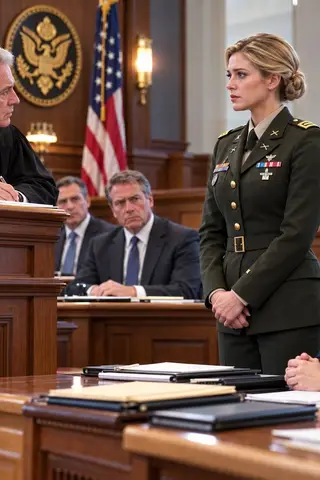
I sat motionless, my hands folded over my service cover, studying the grain of the wood on the defense table. It was pathetic, really. Robert was so blinded by his own entitlement that he didn't realize how transparent his manufactured narrative was. He thought age was a weakness, and he thought silence equaled submission.
Henderson rested his case-in-chief with a flourish, looking at Judge Whitfield as if expecting an immediate gavel slam in his favor.
Judge Whitfield didn't blink. He picked up his pen, tapped it twice against the blotter, and turned his gaze toward our table.
"Counsel for the defense," Judge Whitfield said evenly, looking at Clare. "You may proceed."
Clare stood up, smoothing her skirt. She didn't raise her voice or use theatrical gestures. She simply walked over to the witness stand and called our first witness: Arthur Pendelton, senior partner at Pendelton & Associates.
Arthur was eighty-two years old, walked with a polished cane, and had served as my grandmother's attorney since Richard Nixon was in the White House. When he took the stand, the entire courtroom dynamic shifted. This wasn't a bitter neighbor or a desperate uncle; this was institutional memory personified.
The End









