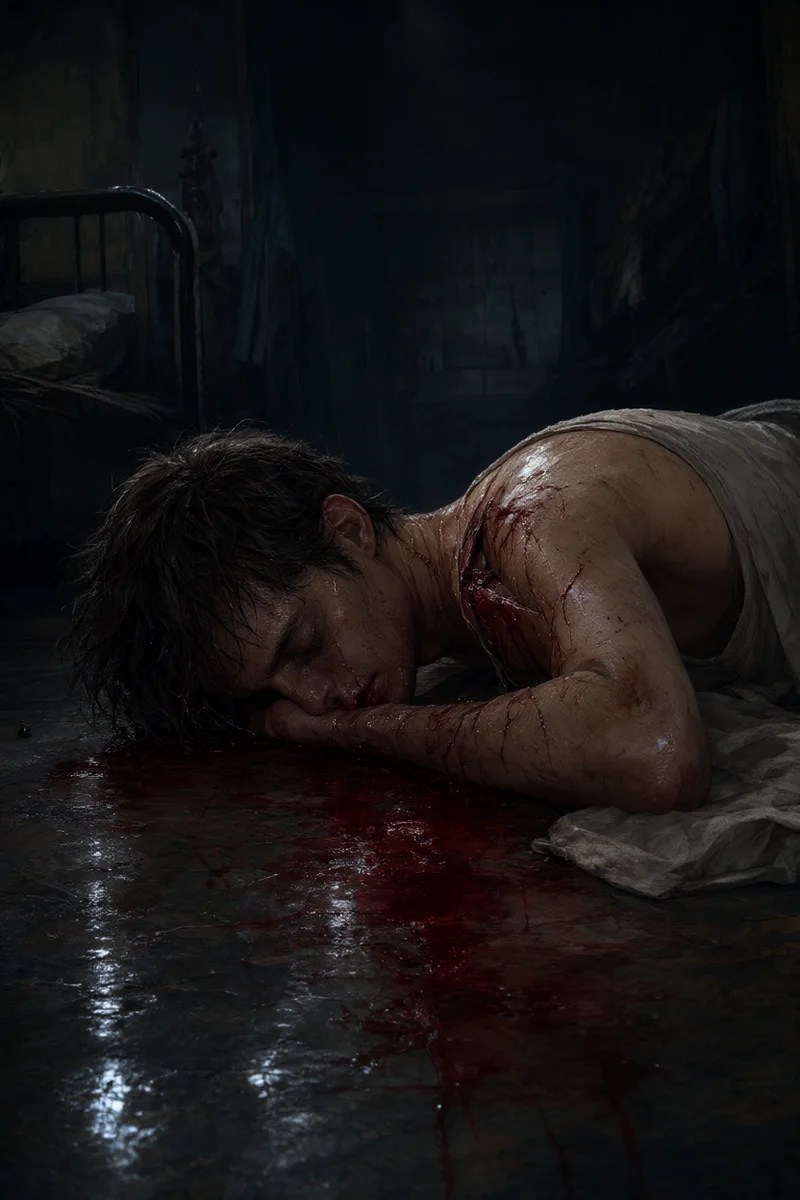
 She Sent 3 Letters After Her Stepbrother Pinned Her With a Screwdriver
Chapter 2
Echoes of a Broken Childhood
To understand why a team of military operatives had just blown the doors off a suburban Colorado mansion, you had to understand the house itself. From the outside, 742 Oakridge Lane looked like a postcard of American success. Neatly manicured lawns, a three-car garage housing a pair of European luxury sedans, and a gleaming white picket fence that bordered a neighborhood filled with corporate lawyers and local politicians.
Inside, it was a war zone.
My mother had died when I was four years old, leaving me with a father who viewed my existence as an inconvenient reminder of a life he wanted to forget. Two years later, Jonathan married Veronica, a woman whose social ambitions were matched only by her profound, venomous cruelty. When Veronica brought her son, Marcus, into the family, the hierarchy was instantly cemented. Marcus was the golden boy—brilliant, charming in public, and sadistic behind closed doors. I was the interloper, the scapegoat, the designated punching bag for every frustration that accumulated in their hollow, status-obsessed lives.
Growing up, birthdays came and went without a single cake or candle for me, while Marcus received cars, high-end electronics, and lavish parties. If I spoke up, I was gaslit. If I cried, I was mocked. If I fought back, my father locked me in the dark basement for hours, explaining with cold detachment that I needed to learn my place.
The psychological conditioning was absolute. By the time I turned eighteen, my self-worth had been beaten down to a fine powder. I walked around like a ghost in my own home, speaking only when spoken to, eating whatever scraps were left behind, and counting down the seconds until I could legally walk out that door.
The Army had been my salvation.
When the recruiter’s pen hit the dotted line on my eighteenth birthday, it felt like breathing fresh air for the first time in my life. Basic training at Fort Jackson was grueling, brutal, and physically punishing, but to me, it was paradise. Nobody screamed at me out of malice; they screamed to make me stronger. For the first time, my sweat, my pain, and my endurance mattered. I wasn't the unwanted stepdaughter anymore; I was Private Lily Carter, an infantry soldier destined for military intelligence support.
It was during a specialized joint-command exercise in my second year of service that I first crossed paths with Lieutenant Commander Alexander Harris.
Harris was a legend in certain classified circles—a man who had spent two decades tracking high-value targets across global hotspots before transitioning into high-level strategic intelligence oversight. He had a reputation for being ruthless, brilliant, and fiercely protective of the junior personnel under his command.
We met in a secured briefing room in Colorado Springs. I had dropped a stack of encrypted intelligence dossiers on his desk, my posture rigid, my eyes locked forward. Instead of dismissing me with a nod like most senior officers, Harris had paused, staring intently at the jagged, faded scars visible along the back of my left hand—scars I had tried to cover with foundation before formation.
“Where did you get those, Private?” he had asked quietly, dismissing the rest of the room with a wave of his hand.
“A training accident, sir,” I had lied automatically, the muscle memory of a lifetime of covering for my stepfamily kicking in instantly.
Harris had stood up, walked around his desk, and looked down at me with eyes that had seen too much human suffering to be fooled by a clumsy excuse.
“Soldiers lie when they’re protecting someone,” he had said softly. “And they lie when they’re terrified. You aren't terrified of the enemy, Carter. You’re terrified of your own history.”
That conversation cracked the armor I had spent my whole life building. Over the next year, Harris became more than a commanding officer; he became an anchor. He didn't offer pity—pity was useless. He offered absolute, unshakeable truth. He taught me how to recognize manipulation, how to stand tall when my knees were shaking, and most importantly, how to protect myself.
And when a severe rotator cuff tear during a live-fire exercise put me on mandatory six-month medical leave, Harris was the only person who tried to stop me from going home.
“Do not go back to that house, Lily,” he had warned me the night before my discharge papers were finalized. “Toxic environments don't heal just because you got stronger. They fester. Take this burner phone. If things go sideways—if you feel even a fraction of the danger you felt growing up—you hit those three letters. Don't call 911. Call me.”
I had thought he was being overly dramatic. I had convinced myself that I was older now, tougher, an Army veteran who could easily ignore whatever psychological games my family threw my way for six short months.
I had been dangerously, tragically wrong.
The End









