 She Refused to Pay His $7,000 Repair Bill and Threatened His Kids
Chapter 1
The Mechanic’s Trap
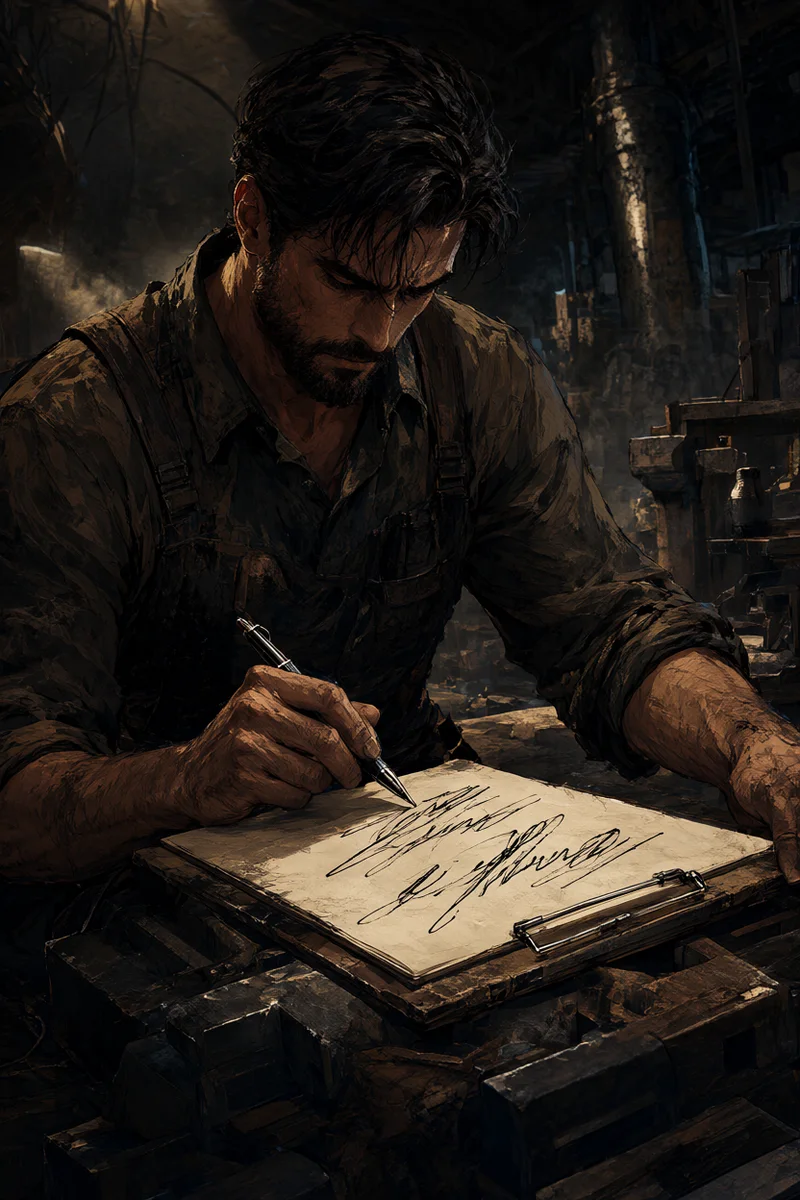
The ink of their signatures was barely dry on the clipboard, yet the psychological weight of what had just happened felt heavier than the engine blocks I hauled every single day. Brent and Laura sped out of my auto shop parking lot, their laughter echoing through the damp morning air, entirely oblivious to the ticking clock they had just volunteered to carry.
They thought they had won. They thought that by weaponizing my love for my two young boys, Rick and Noah, they could break my spirit and rob me of my hard-earned labor. For six consecutive days, my body had ached from head to toe. I had skipped meals, bled onto rusted fenders, and drained every line of credit I possessed to source imported parts for that luxury Mercedes. The final bill of $7,018 wasn't just a number; it represented weeks of survival, rent, and groceries.
When Brent wiped his greasy finger on my collar and dropped the paper onto the oil-stained concrete floor, something inside me didn't break—it solidified. The old Craig would have yelled, thrown a wrench, or begged. The new Craig, hardened by betrayal and forged in the fires of a failing business, simply smiled.
I knelt down, picked up the clipboard, and stared at the bold print just above their signatures. It wasn't an inspection sign-off for my insurance company. It was a formal, legally binding Mechanic’s Lien and Title Transfer Assignment Agreement, drafted by a sharp bankruptcy attorney friend of mine named Marcus, customized precisely for situations involving fraudulent abandonment of repaired property under state commercial codes.
By signing it without reading, Brent—who was legally listed as the registered co-owner of the vehicle for insurance purposes due to a recent transfer—had officially authorized me to file an immediate administrative lien foreclosure and possessory seizure if the bill remained unpaid past midnight. Since it was already past closing time and payment had been explicitly refused in writing, the grace period had expired the second their tires hit the public highway.
My phone buzzed against the workbench. It was Marcus.
"Did they sign?" he asked, his voice low and steady.
"Better than that, Marcus," I whispered back, looking out the window at the empty street. "They signed it with a smile."
"Good," Marcus replied. "The tow truck is already five minutes out. Let's legally repossess what's ours."
The End









