 She Expelled Me From The Family To Hide Her Golden Child's Crimes
Chapter 30
The Circle Completed
One year later, the late autumn sun cast a long, golden tapestry of light across our backyard patio, warming the stone terraces and illuminating the vibrant copper and crimson foliage of our surrounding garden.
Today was Eleanor’s first birthday.
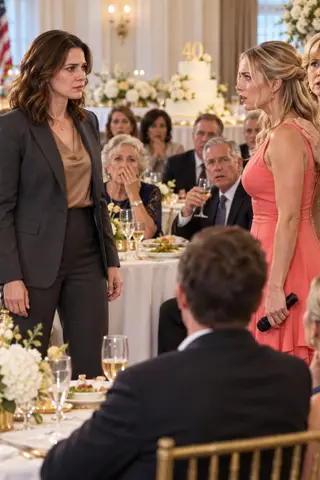
The patio was alive with the pure, resonant sound of authentic joy. Unlike the suffocating, orchestrated performance of my parents’ golden anniversary two years ago—where sixty-three uncomfortable guests had functioned as captive hostages to Martha’s manufactured perfection—this gathering consisted of exactly eight people who loved one another in spirit and in truth.
A long rustic wooden farm table was decorated with small ceramic vases of late-blooming marigolds, white pumpkins, and a homemade spice cake with a single beeswax candle resting in the center.
At the head of the table sat Aunt Ruth, laughing uproariously as she traded humorous corporate war stories with Marcus, who was expertly carving smoked brisket on a large wooden platter. Beside them sat my father, wearing a tailored brown tweed vest over a crisp linen shirt. His eyes were bright, his skin clear, and his posture relaxed. Over the past twelve months, the employee-owned foundry had reported its highest productivity quarter in two decades, while Arthur had completed his first commissioned line of hand-carved furniture for an architectural firm in the capital.
Across the lawn, Joselyn was sitting cross-legged on a soft wool blanket, patiently helping Eleanor stack colorful wooden blocks. Eleanor, wearing a soft cream-colored sweater and small leather moccasins, let out a joyful shriek of pure delight as the tower toppled over, collapsing into Joselyn’s lap with infectious giggles.
Joselyn scooped her niece up into her arms, kissing her chubby cheek with fierce, maternal tenderness, before looking across the grass toward me with a radiant, peaceful smile.
Joselyn had recently closed on her very first home—a bright, sun-drenched two-bedroom condominium overlooking the city park, purchased entirely with her own savings, her clean equity dividends, and her executive design salary. She had been dating a grounded, quiet landscape architect for six months, building a partnership founded on mutual honesty, clear boundaries, and zero performance.
I stood near the edge of the terrace beside the stone fountain, holding a cup of hot spiced cider, leaning back against the strong, comforting frame of my husband as Marcus slipped his arm around my waist.
“Look at them,” Marcus murmured softly into my hair. “That is what victory looks like, Tiff.”
I watched my father stand up from the table, walk over to the wool blanket, and kneel down on the grass beside his two daughters and his granddaughter. He pulled a small, hand-carved wooden rocking horse from a canvas sack, carved from the same aromatic red cedar as my grandfather’s antique chest, and presented it to Eleanor with two hands. Eleanor reached out, patting the smooth wooden head of the horse with both hands, letting out another musical chuckle that echoed across the lawn.
There was no tension in the air. There was no dread of a sudden outburst, no calculating look to see who was receiving more attention, and no phantom guilt about who was failing to absorb another person’s pain. The cycle that had poisoned three generations of women in our bloodline had been starved to death by the simple, unyielding application of truth.
Martha remained in her silent, suburban isolation on the opposite side of town, living off her divorce settlement, completely forgotten by the society circles that had once feared her tongue. We did not speak of her with bitterness. We did not speak of her with vengeance. She had become nothing more than a distant cautionary tale—a monument to the tragedy of a life spent demanding obedience instead of cultivating love.
My father looked up from the lawn, catching my gaze across the terrace. He raised a hand in a slow, reverent salute of profound, eternal gratitude. He knew, and I knew, that none of this peace would exist if I had stayed in that hallway two years ago and begged for his defense. My exile had been the scalpel that saved our entire lives.
Marcus tapped the side of his cider glass with a small silver spoon, the high-pitched chime echoing out into the clear afternoon air.
“Ladies and gentlemen,” Marcus announced with a broad, beaming grin. “It is time to sing to the bravest, happiest one-year-old girl on the face of the earth.”
The small circle gathered around the cake. Joselyn held Eleanor on her hip, while Arthur carefully struck a wooden match to light the single golden flame. Aunt Ruth leaned in close, her eyes sparkling with joyful pride, and we all lifted our voices together in a chorus of pure, uncomplicated love.
When the song ended, Eleanor blew a tiny puff of air that sent the golden flame dancing out into a wisp of sweet-smelling smoke. The patio erupted into genuine, roaring applause.
I closed my eyes for a single, sacred second, breathing in the crisp autumn air, the scent of cedar, and the sound of my family’s laughter.
The gray duffel bag was gone forever. The narrative had been reclaimed, redeemed, and sanctified. I was no longer the outcast of the house; I was the architect of our freedom—and the future ahead of us was boundless, beautiful, and completely our own.
The End









