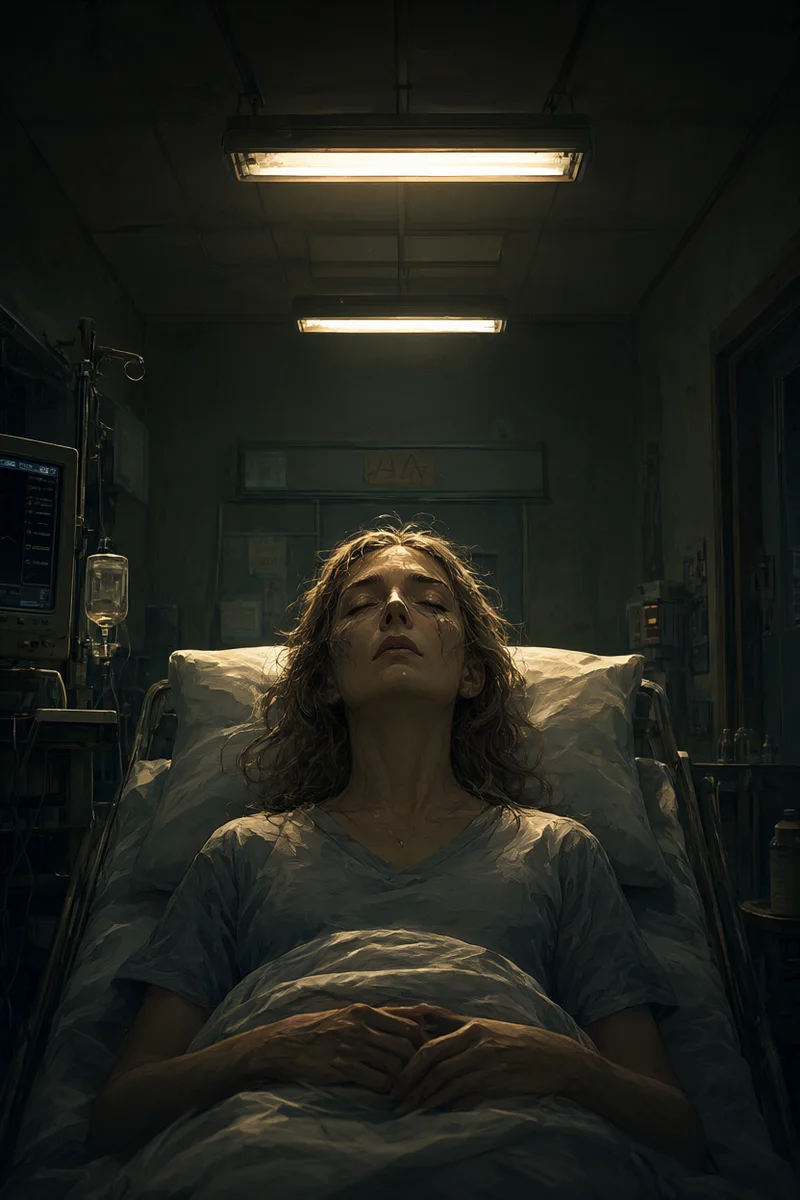
 She Built a Sanctuary with 14 Years of Double Shifts
Chapter 1
The Midnight Notification
The fluorescent lights of the cardiac unit buzzed with a low, metallic hum that seemed to vibrate directly behind my eyes. It was 3:07 in the morning, and the air smelled heavily of industrial bleach, stale corner-store coffee, and the faint, copper-like scent of anxiety that always lingered near the nurses' station. Down the hall, Room 12’s heart monitor clicked along in a steady, green rhythm, while a ventilator breathed with a mechanical, lung-like sigh. I stood buried under a mountain of patient charts, clutching a blue ballpoint pen so tightly my knuckles had turned translucent.
My name is Arden Voss. I was thirty-six years old, chronically exhausted, and a registered nurse of fourteen years. Most people looked at nurses and saw saints in scrubs, but after a decade and a half in high-stakes medicine, I knew the truth: we were professional shock absorbers. We absorbed grief, anger, panic, and physical deterioration, holding everything together while the world outside fell apart.
My phone buzzed softly against the laminated desktop, half-hidden beneath a stack of post-op evaluation forms. It wasn't the hospital pager, which shrieked with a shrill, panic-inducing chime whenever a patient crashed. It was a standard smartphone notification. I glanced down, expecting a text from the landlord of my tiny, drafty apartment in Charlotte, or perhaps a spam message from a delivery app.
Instead, it was the main family group chat.
The preview text popped up on the lock screen, sent by my father: “We’re using Arden’s lake house this weekend. Twenty guests. Friday through Tuesday. Everyone bring towels. Arden, get everything ready.”
I stared at the glowing rectangle. My brain, fried from eleven hours of a grueling double shift, tried to parse the words. Arden’s lake house. That was my property. A modest, three-bedroom house perched on the wooded shoreline of Lake Norman, about forty minutes north of the city. I hadn't bought it with a sudden inheritance, a lucky stock tip, or financial help from anyone. I bought it after nine years of relentless double shifts, packing my own lunch every single day, wearing discount scrubs that frayed at the seams, and driving a dented, silver 2011 Honda Civic that my entire extended family treated like a running joke.
Every single brick, every shingle, every mortgage payment, property tax assessment, and emergency plumbing repair had been funded entirely by my checking account. I bought it because I needed one place in the universe where nobody could walk through the front door, look at me with expectation in their eyes, and tell me what I owed them. It was my sanctuary, bought with my own blood, sweat, and missed holidays.
Before I could even process the audacity, a reply flashed beneath it from my mother: “Stock the fridge, sweetheart, and don’t make this difficult. Aunt Liora likes fresh flowers in the main bedroom.”
Within seconds, the group chat exploded. It was like dropping a match into a dry forest. Emojis cascaded down the screen—thumbs-up, laughing faces, red hearts, clapping hands. My cousin Hollis chimed in: “Finally! That place needs some real family energy. I'm bringing my jet ski.” My younger brother, Keaton, added: “About time you shared something, Arden. You never let us use it.”
Then came a message from an aunt whose name I barely recognized on holidays: “Is the Wi-Fi password still the same?”
That sentence hit me like a physical blow to the chest, making my blood run instantly cold. I stared at the screen, my breath catching in my throat. The Wi-Fi password.
I had never given any of them my Wi-Fi password. Not my parents, not my brother, not a single cousin or aunt.
The hospital around me was terrifyingly quiet. Not peaceful quiet, but the heavy, suspended silence of a battlefield between skirmishes. A patient in Room 9 coughed twice, a dry, rattling sound that echoed down the linoleum corridor. My charge nurse, Sarah, walked by carrying a small plastic tray of midnight medications and paused, noticing the pale, rigid set of my jaw.
“You okay, Arden?” she asked, her voice laced with genuine concern. “You look like you've seen a ghost.”
“Yes,” I lied, my voice remarkably steady. It was the first lie I told that morning, but it wouldn't be the last.
I turned my attention back to the glowing screen. Nurses are trained to look for anomalies, to hunt for what is missing in a chart: a skipped dose of medication, a sudden drop in blood pressure that nobody documented, a dark bruise hidden carelessly beneath a long sleeve. I opened the family chat and began to scroll backward. Slowly. Methodically.
I scrolled past months of mundane holiday invitations, passive-aggressive comments about my single status, and requests for financial loans. Then, buried deep in the message history from Memorial Day weekend earlier that year, I found it.
Mom’s message from May: “We’re at Arden’s lake place. She doesn’t know, so don’t post anything on public social media yet.”
A reply from Aunt Liora: “The back door lock is a bit sticky, but we made ourselves at home!”
Forty-three people had seen that message thread. Forty-three members of my own flesh and blood had known that my private, legally protected home was being treated like a timeshare behind my back. And not a single one of them had ever thought to tell me.
My hand went completely still against the desk. I didn't scream. I didn't cry. I didn't pick up my phone and hurl it against the hospital wall. Instead, an icy, clinical calm washed over me. I stood under the harsh blue lights of the nurses' station and understood the horrifying reality of my life: while I spent my days and nights saving the lives of strangers, my own family had been systematically violating my boundaries, treating me like an unpaid property manager who just happened to share their last name.
My thumb hovered over the keyboard. I didn't write a paragraph. I didn't beg, plead, or argue. I typed a single word into the chat:
“No.”
Less than thirty seconds later, my mother replied with a string of laughing-tear emojis. “You really think you can stop us, Arden? We are your parents. Don't be selfish.”
Dad immediately backed her up: “Do not start family drama at your age. Grow up.”
I stared at the screen for three seconds. Then, without a word, I picked up my phone and turned it face down on the desk. I still had patients to care for, and unlike my family, those people genuinely needed my help. For the next four hours, I worked with terrifying, robotic precision. I checked vital signs, adjusted intravenous drips, comforted a terrified husband whose wife was being rushed into an emergency procedure, and held the hand of an elderly man waiting for a cardiology consult.
I kept moving. Because in nursing, as in life, sometimes the only way to survive a devastating betrayal is to become completely, ruthlessly professional. But one core thought burned in the back of my mind through the remainder of my double shift: They genuinely believe I can't stop them.
The End









