 Room Twelve, Thursdays
Chapter 5
Whatever Is Best That Week
On Thursday he was at the shop door at half past six, in his depot jacket, with his hair still damp from the end of his shift.
She made two bouquets, and he held the string. When she reached into the bucket of freesias he said, “Can they both have those?” and she said they could.
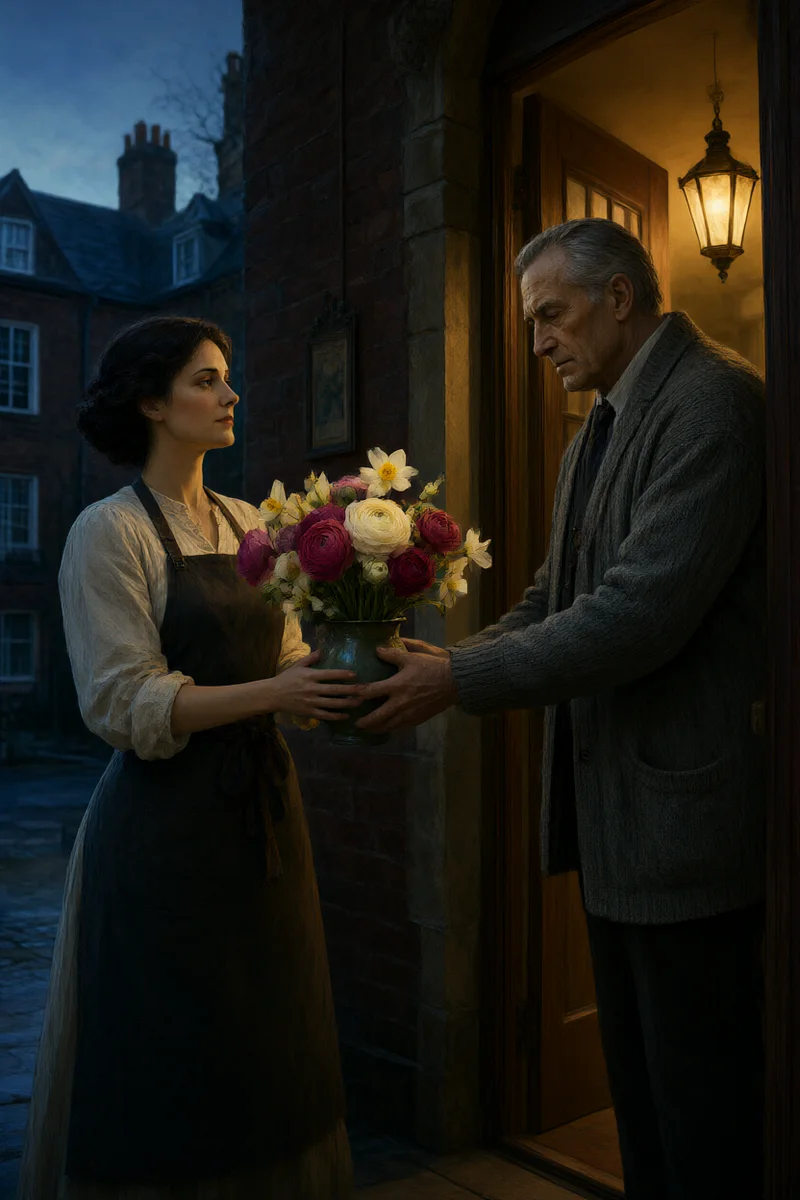
Marrow House had a buzzer now, and a camera that watched them wait. Mrs. Pym looked from the vase to the man carrying it. “So you've found him. Is there a card?”
“There's no need, Mrs. Pym. You know who they're from.”
“I have known for six weeks. I'd like it in writing.”
She held out the pen from her crossword. Gabriel took one of the shop's small white cards from Nora and stood over it a good while. Then he wrote, with a loop at the foot of each 2: Room 12, from Gabriel Marsh, who used to carry them up.
Mrs. Pym read it and propped it against the vase. “There,” she said. “Now it's evidence.”
Meadow House was across the river, low and modern, and smelled of toast. Winifred Coe was ninety-three, very small in a red cardigan, and had made the staff put her in the chair by the window.
“You're the girl,” she said to Nora. “My son told me some child at the flower shop had sent my flowers to the dying for a whole winter. I told him it was the only interesting thing he had ever done for me. Now. I have waited two years. Who got them?”
Gabriel told her. He told her about the freesias and the rent, and about saying you're welcome eleven times. He stood up to do it, as he might have for a magistrate.
Mrs. Coe heard him out with her head tilted toward her better ear. “No lilies,” she said. “I can't be in a room with them either. She and I would have got on.” She took the bouquet from Nora at last and looked into it. “Young man, I had fifty-eight years of flowers from a husband who never chose a single stem. His secretary telephoned. Your wife had eleven weeks from a man who'd have chosen every one, if he'd had the money. I know which of us was short-changed.”
She turned on Nora. “And you can stop wearing that face. They went to the right room.”
Nora had no answer ready. She had carried the other verdict for so long that it took her until the car park to set it down.
In the van he sat with his knees against the dashboard and the empty bucket between his feet. “About the hundred dollars,” he said.
“I need somebody on Thursdays. The van boy won't get up before eight. Half six till ten.” She kept her eyes on the bridge. “I can pay twenty-five a week.”
“That's what the flowers cost.”
“I know what they cost.”
He was quiet as far as the lights. “I'd be working for nothing, then.”
“You'd be working for Room 12. You've done it before.” The lights changed. “There's coffee in the back of the shop, after. You can sit down to it. I drank two years of yours standing up.”
He laughed properly that time, and she heard what Ruth must have heard when she was twenty-five.
On the first Monday of April something came through the letter slot of Whitlow & Daughter. It was not an envelope. It was one of her own cards from the rack by the till, in blue ballpoint: Thursday. I'll bring the coffee. Gabriel.
Nora read it on the mat. Then she stood it against the till, facing the door, where anyone who came in could see it.
The End









