 Parents Sued Their Decorated Navy Commander Daughter Over an Old Farmhouse
Chapter 1
The Cream-Colored Summons
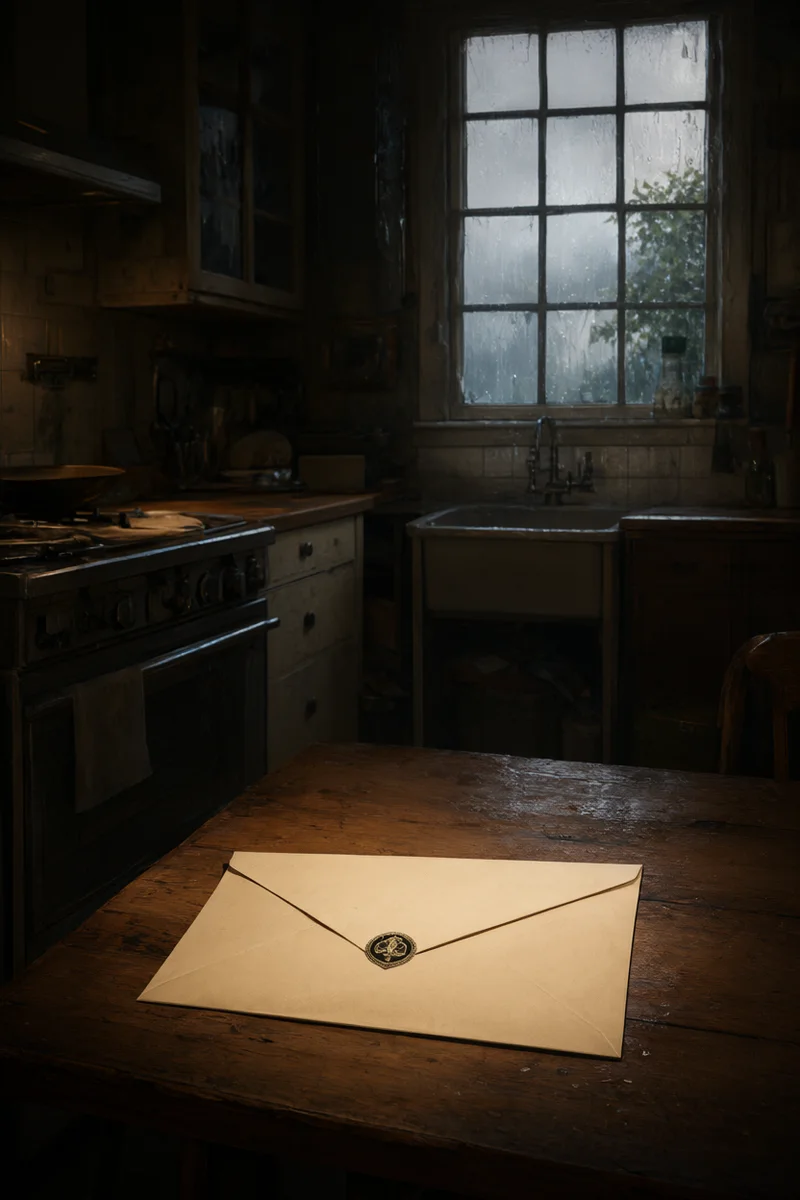
The cream-colored envelope sat on my modest kitchen table in Norfolk like an uninvited guest who refused to leave. Outside, the early morning Virginia humidity was already clinging to the air, making the azaleas droop against the fence line. I had just finished trimming them, my hands dusted with dirt and the familiar, dull throb pulsing inside my reconstructed right knee.
I picked up the envelope. The heavy cardstock felt expensive, cold, and deliberately official. In the top left corner, the embossed stamp read Portsmouth Family Court.
My thumb slipped under the flap, tearing it open with a sharp rip that sounded too loud in the quiet house. Knox, my four-year-old German Shepherd mix, lifted his heavy head from where he had been resting across my boots. His amber eyes watched me with quiet intuition, sensing the shift in my posture before I even read a single word.
Inside was Case 4238B.
Carter versus Carter.
Plaintiffs: Robert and Margaret Carter.
Defendant: Evelyn Carter.
My own flesh and blood were taking me to court.
I stared down at the names, feeling a cold weight settle deep in my chest. Twelve years. It had been twelve agonizing, silent years since I had last set foot inside my childhood home or spoken a word to the people who had brought me into this world. After I completed BUD/S—the grueling, brutal crucible that forged Navy SEALs—my father never came to visit me. He didn't call, didn't send a card, and certainly didn't show up for graduation. My mother had sent exactly one text message, a chilling digital executioner's blade that read: We raised a daughter, not a soldier.
I had read it once. Just once. Then I locked my phone, buried myself deeper into my training, and stopped waiting for an approval that was never coming.
I built a life they knew nothing about. I served quietly, rising through the ranks, taking responsibility for missions, logistics, and human lives whose survival sometimes depended on split-second decisions made in the dark corners of the world. Then, an IED ripped through our convoy overseas. The explosion tore through metal and flesh, stealing the life of my closest friend, Lewis, and leaving me with a shattered knee, a permanent limp, and invisible scars that still woke me up in cold sweats. The Navy granted me a medical retirement and a pension I almost never touched, preferring the quiet solitude of my modest house near Norfolk and the loyal companionship of Knox.
Before he passed away, my grandfather had left me his farmhouse—a modest, sprawling piece of land that had always been my sanctuary away from my parents' suffocating expectations. I had personally paid every single property tax bill on that land since 2013, setting up automatic bank transfers even when I was thousands of miles away on deployment in places without names or reliable internet.
Now, my parents were claiming I had abandoned the property.
Worse yet, their legal filing alleged they had personally covered all maintenance and expenses for years, attempting to strip me of the one thing my grandfather had left me.
I stared at the documents until my jaw began to ache from clenching it too tight. This wasn't a simple misunderstanding. It wasn't a clerical error. It was a calculated, malicious lie wrapped in legal jargon with a case number attached to it. They wanted to punish me. They wanted to strip away my inheritance, humiliate me, and prove to themselves that I was still the failure they had always claimed I was.
"Well," I murmured, reaching down to scratch behind Knox’s velvety ears. The dog leaned into my touch, letting out a soft, grounding sigh. "I guess they finally found another way to speak to me."
That evening, as the sun dipped below the horizon and painted the Virginia sky in bruised shades of purple and orange, I walked into my bedroom. At the foot of my bed sat an old, scuffed Navy trunk. The heavy brass latches were tarnished, but they still held firm.
When I lifted the lid, the distinct scent drifted up into the air—a heavy, nostalgic mix of old canvas, machine oil, and faint gun cleaning solvent. Beneath layers of carefully folded civilian clothes rested my Class A Navy service uniform, perfectly pressed, along with my ribbon rack, campaign medals, and the crisply folded American flag that had been presented to me at Lewis’s funeral.
Knox padded softly across the wooden floor and rested his chin on the edge of the trunk, his dark eyes reflecting the shadows of the room.
I reached out, my fingers gently brushing against the dark blue fabric of the service jacket.
"They want to see me?" I whispered into the quiet room.
I slowly traced the embroidered insignia on the sleeve, feeling the rigid threads beneath my fingertips.
"Then they're going to see exactly who I became."
The End









