 Page 112
Chapter 5
Accession
A hundred and forty people came to the dedication, which was more than the annex had chairs for. The new room smelled of paint and carpet glue. The brass letters over the door were covered with a bedsheet.
Nora had put a reserved card on two places at the back. At five to two Eddie Lund wheeled his mother in over the threshold. Marguerite Lund wore a green hat and looked straight ahead. At the circulation desk, Dot Haskell went as white as a date slip.
The mayor spoke for nine minutes. Then Nora stood up, said only that Miss Calloway had asked for the floor, and sat down again.
Ines came to the lectern on a walking frame and would not be helped. She had The Beekeeper's Year under one arm.
“I'm going to read you something from the collection,” she said. “Page 112.” She opened the book. “Eddie Lund did not start the fire.”
The room made a sound like a page turning.
“That is correct. I did. I kept a hot plate in the history room against the marshal's instructions, and on the third of March, 1996, I left it switched on beside a stack of newspapers and went home. A boy of sixteen told the truth about it that week. I told the marshal I didn't recollect. I have recollected it every day since.”
Harlan Stroud, who chaired the board, half rose from the front row. “Ines, this isn't the time—”
“Sit down, Harlan. I was late with this by thirty years. I won't be made any later.”
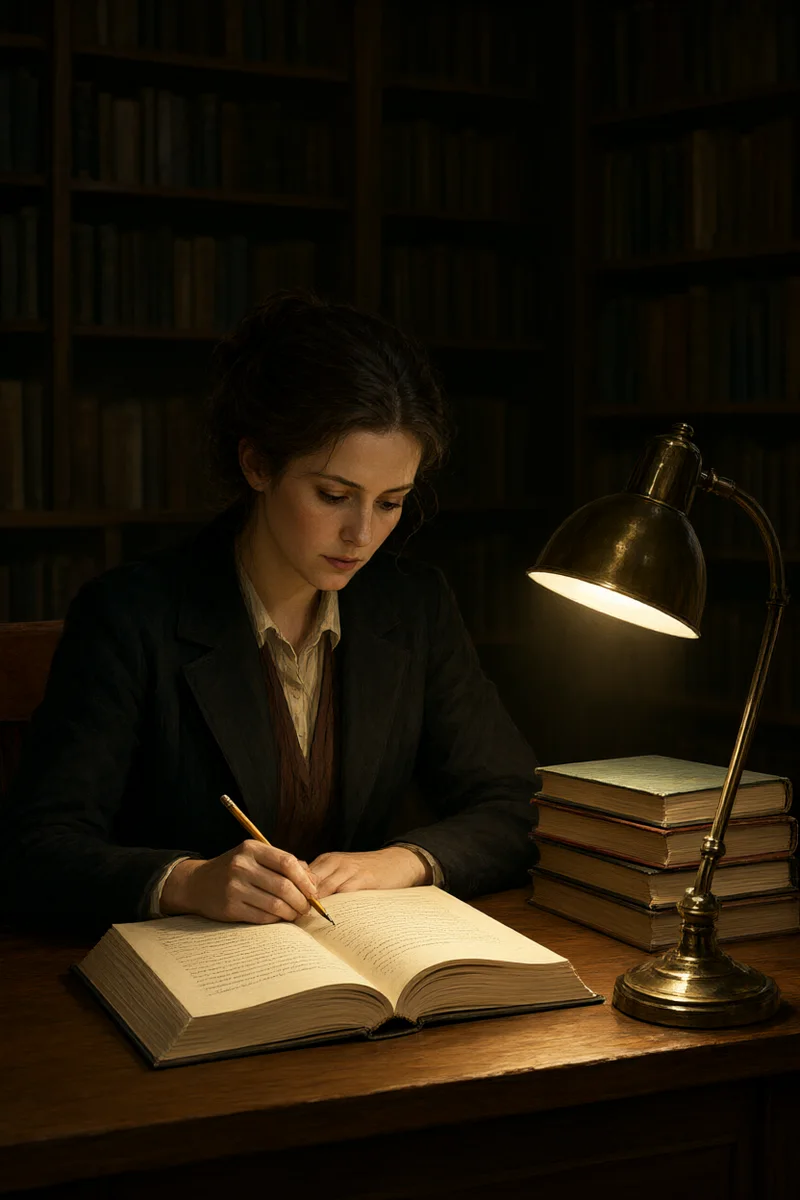
She told them about the green dots. She told them how many. Then she took a pencil from her cardigan pocket.
“In fifty-one years I have never written in a library book,” she said, and bent over the page. It took her some time. When she straightened up she read it out. “He did not. I did. Ines Calloway.” She closed the book. “You'll take my name off that door. Paint is cheap. I saw the invoice.”
Nobody clapped. A hundred and forty people turned round in their chairs to look at the back row.
Eddie Lund had his hand on the grip of his mother's wheelchair. He did not get up and he did not make a speech. He looked at the old woman at the lectern for a while.
“You could have rubbed them out,” he said. He did not raise his voice, and it carried anyway.
“I'm a librarian, Mr. Lund,” Ines said. “I don't destroy records. It turned out to be the only decent thing I knew how to do.”
Marguerite Lund spoke then for the first time. “Thirty years I've had my books brought round in a bag.” She took off the brake herself. “Edwin, I'd like to see the fiction.”
People got out of her way. Dot was the first to move a chair.
The bedsheet stayed up over the door until the following Thursday, when a man came with a screwdriver. The brass letters that were left said Local History Room.
The first thing Nora catalogued into it was a set of thirty books, among them a spreadsheet manual and a microwave cookbook. She gave them a single record and wrote the note herself: marginalia, 1997 to 2026, with one reply. Not to be withdrawn.
Eddie came by that afternoon to return a book on his mother's card. There was a carton of new arrivals open on the desk, and beside it the purple ink pad.
Nora slid the stamp across to him without saying anything.
He picked up the top book and opened it to page 112 without counting. He still knew to rock the stamp from left to right, so the ink would take.
The End









