 Two Folios for Room 214
Chapter 3
The North Stairs
The Bellwood had two staircases. The main one rose from the lobby, in full view of the wing chair. The other was at the north end of the second floor, a concrete fire stair that came down behind the laundry and let out through a steel door onto the staff lot by the dumpsters.
The steel door said EMERGENCY EXIT ONLY, ALARM WILL SOUND. It would, unless someone had turned the alarm off from the panel behind the front desk. Benedek turned it off every night at nine so he could smoke without getting written up. Pilar turned it back on at five. She checked the panel. Green light. Off.
She stood, picked up the clipboard she used for the audit, and said, “Dryer's buzzing. Back in two minutes.”
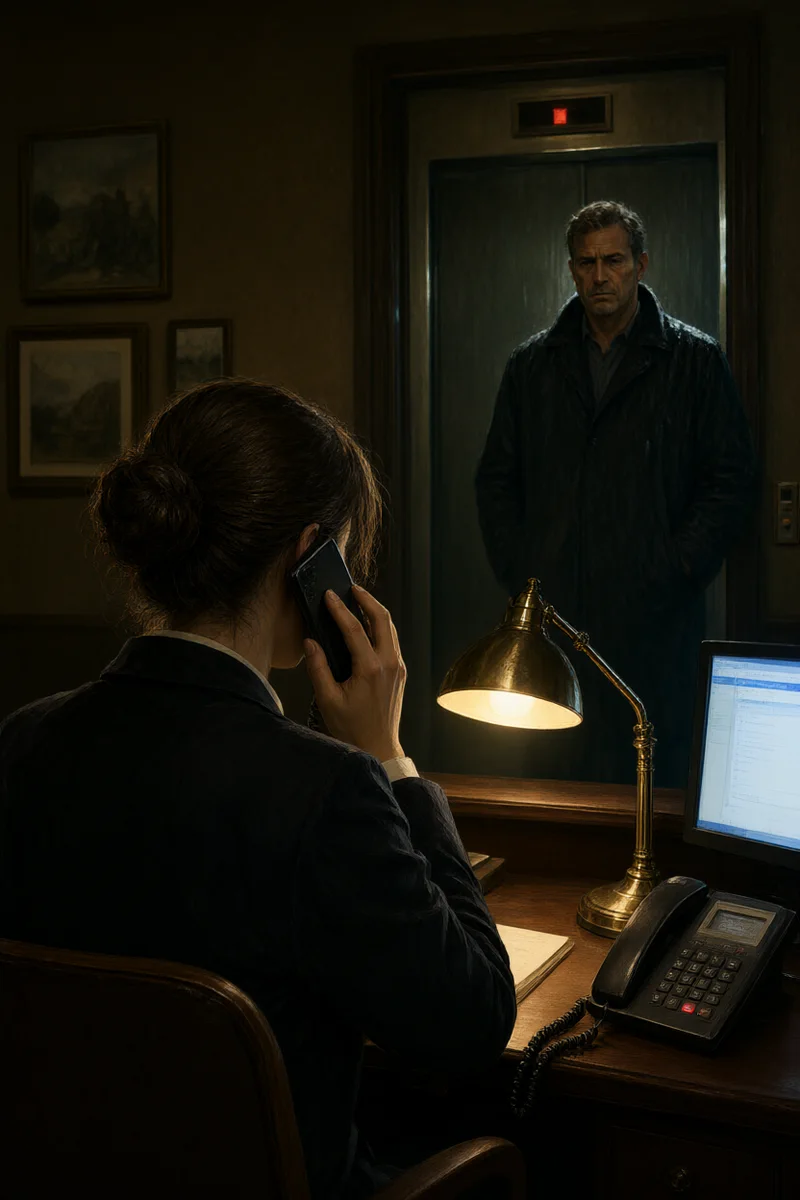
Glenn Ashdown raised a hand from the arm of his chair. He did not look at her. He was looking at the elevator.
The laundry room was hot and loud, two industrial dryers turning over a load of pillowcases. Pilar took the housekeeping cordless from its cradle and dialed 214.
Glenys answered on the first ring.
“He's in the lobby,” Pilar said. “He called the county for a welfare check. He says you're off your meds and might hurt yourself. They'll be here in about fifteen minutes, and they'll want me to open your door.”
A silence. Then, very tiredly: “Of course he did. He's worked in the county clerk's office for nineteen years. He knows exactly which form makes people open doors.”
“Is any of it true?”
“I take a pill for my thyroid. I'd be happy to show anyone.” A small, dry sound, not quite a laugh. “I'm not going to hurt myself. I'm going to my sister's in Merrow, and I'd like to get there without him.”
“Where's your car?”
“Out front, by the sign. He'll have seen it. He put a tracker in the wheel well in March. He said it was for the insurance.”
Pilar looked through the laundry room's narrow window at her own car under the security light: a green hatchback, eleven years old, the passenger door creased from a parking-lot pole. Nobody on earth would look for anyone in it.
“North stairs, end of your hall. They come down to the laundry. Bring everything. Don't use the elevator.”
Glenys arrived four minutes later with a backpack and a plastic grocery bag, her cardigan on inside out, the label showing at the neck. She was smaller than in the lake photo, and the reading glasses were still on their beaded cord.
Pilar pressed her keys into her hand. “Green hatchback. Tank's half full. There's a state police barracks eleven miles north on Route 9. The lobby is open all night and has a bench and a vending machine. Sit there till it's light. Then go to your sister's.”
Glenys looked at the keys and then at her. “He'll know you helped. He finds things. It's his whole job.”
“Then he can find me at work,” Pilar said. “I'm here every night.”
Glenys wrote a phone number on the back of the audit clipboard in neat, upright figures, squeezed Pilar's wrist once, and went out the steel door into the rain. Pilar watched the taillights turn onto Route 9 and disappear north.
She had been away from the desk nine minutes. She smoothed her hair, took the clipboard, and walked back through the office to the front desk.
The wing chair was empty. His coat was still folded across its arm.
Above the elevator, the little brass arrow pointed up, and the number beside it read 2.
The End









