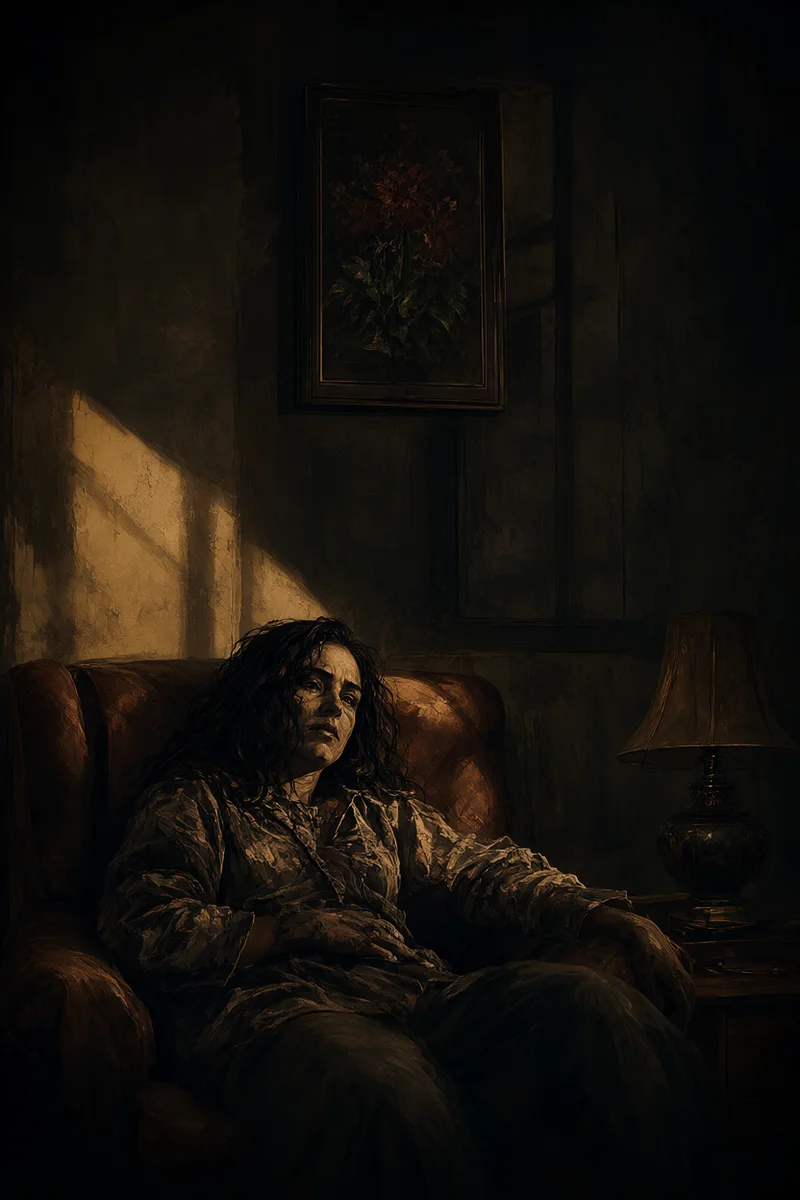
 My Son Left Me Frozen Soup for Thanksgiving and Fled to Hawaii
Chapter 1
The Cold Thanksgiving
The silence in the house in San Pedro Garza García, Nuevo León, was heavy enough to press against my eardrums. It wasn't the peaceful quiet of a quiet morning; it was the hollow, echoing void left by a family that had packed up and vanished like smoke in the wind.
Thanksgiving morning had always been a sacred ritual in this house. Even though Thanksgiving wasn't an ancient Mexican tradition, my son, Daniel, had adopted it fiercely after working for years with an American tech firm. Over time, it had become the kids' absolute favorite holiday. The air would normally be thick with the rich, comforting scents of cinnamon, freshly brewed coffee, and melting butter. Nine-year-old Emily would sprint down the hallway still wearing her flannel pajamas, and seven-year-old Jack would pop up in the kitchen doorway, bright-eyed and impatient, asking when he could finally taste the garlic mashed potatoes.
This morning, there was nothing. No footsteps. No laughter. No smell of roasting turkey.
"Emily?" I called out softly from the bottom of the grand staircase, wrapping my blue fleece robe a little tighter around my shoulders.
Silence answered me.
"Jack?"
I walked up the stairs slowly, my joints aching with the familiar morning stiffness of a seventy-three-year-old woman. I pushed open my grandchildren’s bedroom doors. Their beds were neatly made, looking as though they hadn’t been slept in for days. The clutter of sneakers, discarded school backpacks, and bright winter coats that usually carpeted the floor was completely gone.
A cold spike of dread pricked at the base of my neck. I hurried down the hall to Daniel and Rebecca’s master suite. Their walk-in closet doors were wide open, exposing rows of empty hangers. Their heavy luggage was gone.
Panic rising in my chest, I rushed back downstairs, pushed open the heavy wooden door leading to the indoor garage, and felt the air rush out of my lungs. Daniel’s midnight-blue SUV was gone. Rebecca’s crossover was gone, too. The garage was cavernous and empty, save for a few stray gardening tools.
And then, stuck to the front of the stainless-steel refrigerator right beneath a crooked magnetic turkey that Jack had painted in school art class, I saw it. A neon-pink sticky note, covered in Daniel’s hurried, looping handwriting.
“Mom, we decided to spend Thanksgiving in Hawaii this year. We didn't tell you because we knew you'd insist on coming with us. The flight is too long, and lately, you get tired so easily. We'll be back in a week. There is turkey soup in the freezer.”
I stared at the paper. I read the words once. Then I read them a second time, letting each syllable burn itself into my memory.
My hands didn’t tremble. Not a single finger shook.
And that realization—that I was entirely calm, completely detached, and profoundly cold—hurt worse than any tearful breakdown ever could.
I was seventy-three years old, not seven. I had lived a full, rich life. I had raised Daniel after his father passed away, managed a successful career as a high school literature teacher for thirty years, and traveled across half the globe. Daniel had no right—legal, moral, or human—to unilaterally decide whether I was allowed to board an airplane, walk through an airport terminal, or sit on a warm sandy beach watching my grandchildren build sandcastles. Much less did he have the right to treat me like an inconvenient piece of luggage left behind in storage while the "real family" went on a tropical vacation.
As I stood there in the quiet kitchen, the memories of the past four years began to replay in my mind like a fast-forwarded tragedy.
It all started four years ago, right after my beloved husband, Arthur, passed away from a sudden heart attack. Arthur and I had built a peaceful, comfortable life in our modest but charming apartment in Coyoacán, Ciudad de México. We had friends, neighborhood routines, and a deep sense of autonomy. But the grief had shaken me, and Daniel had swooped in like a knight in shining armor.
I remember every single word of the conversation we had in my old living room as we packed up Arthur’s books.
“Mom, I refuse to let you live here all by yourself,” Daniel had pleaded, his voice thick with manufactured emotion. “The kids miss their abuela terribly. Rebecca and I worry about you day and night. We need you with us in Monterrey. Our home is your home.”
At the time, I had looked into his eyes and seen the little boy I used to kiss goodnight. I trusted him. I believed him.
So, I sold the Coyoacán apartment—the place where Arthur and I had shared thirty-five years of quiet coffee mornings and shared laughter. I packed up my life, liquidated a portion of my retirement savings, and moved north to the booming, expensive suburb of San Pedro Garza García.
When I arrived, I didn't just move in; I invested. I handed over a hefty check to help Daniel and Rebecca cover a massive chunk of the down payment for their sprawling, ultra-modern house. When the moving boxes were finally unpacked, I realized the house was practically unfurnished in certain rooms. So, using the remainder of the cash from my apartment sale, I bought the very refrigerator that now held Daniel’s insulting sticky note. I bought the plush sectional sofa in the living room, the formal dining table where we were supposed to eat Thanksgiving dinner, the high-end washer and dryer set, custom window drapes, designer lamps, and even Rebecca’s prized Italian espresso machine that she loved showing off to her wealthy country club friends.
In the beginning, I was treated like royalty. Rebecca would introduce me at neighborhood gatherings as "our household's greatest blessing."
But blessings, it seemed, had an expiration date.
Slowly, almost imperceptibly, the shift happened. First, it was small favors. “Mom, could you pick up Jack from soccer practice since you’re already walking that way?” Then it expanded into full-time domestic labor. “Mom, can you stay home and wait for the cable guy?” “Mom, make sure the chicken is defrosted by four.” Within a year, I had transformed from a cherished matriarch into an unpaid, 24/7 live-in nanny and housekeeper, complete with my own laundry basket of resentment.
If I dared to schedule lunch with an old friend I’d met at the local cultural center, Rebecca would cross her arms, tap her designer watch, and sigh, “Oh, are you going out? But who is going to supervise the kids’ homework this afternoon?”
If I complained about a flare-up of arthritis in my lower back after standing for three hours scrubbing the kitchen floor, Daniel would roll his eyes, shake his head, and mutter, “Come on, Mom, making dinner for four people isn't that much physical work. You’re just letting your mind get sluggish.”
The final, fatal crack in the illusion occurred six months prior to this fateful Thanksgiving morning. I had been walking out to the back terrace to water the potted orchids Arthur had loved when I heard Rebecca’s voice drifting through the sliding glass door. She was on her phone, speaking to her sister in Guadalajara.
“We can’t possibly ask her to leave,” Rebecca hissed into the phone, her tone dripping with venom. “She watches the kids, she buys the expensive organic groceries with her own pension, and she paid for half the major appliances. Honestly, it’s not even her company we need anymore. It’s her money and her free labor. As long as she’s useful, she stays.”
I had frozen in the shadows of the doorway, clutching my watering can so tightly my knuckles turned chalk-white. I didn’t storm out. I didn't scream or throw a vase. Instead, I quietly retreated to my bedroom, locked the door, and swallowed the bitter pill of betrayal. For six long months, I stored those words in my heart, playing the part of the doting, oblivious grandmother while quietly observing every single selfish calculation my son and his wife made.
And now, on Thanksgiving morning, they had finally crossed the ultimate line. They had locked me out of their lives, discarded me like an old piece of furniture, and left me a bowl of frozen soup.
They thought I was trapped. They thought my age and my dependence made me toothless.
They were profoundly mistaken.
I walked purposefully back into the kitchen, picked up my mug of coffee, and walked up the stairs to my bedroom. I went straight to my heavy wooden bedside table, pulled out the bottom drawer, and reached all the way to the back. My fingers brushed against a thick, dark-blue leather folder.
I pulled it out and laid it on the bed.
Arthur used to tease me endlessly about my organizational habits. “Maggie,” he’d say with that warm, rumpled grin of his, “you’re so meticulous you’d probably save the receipt for a single loaf of bread if you thought it mattered.”
As I sat down on the edge of the mattress and flipped open the blue folder, exposing neat stacks of paperclips, purchase orders, bank transfers, wire receipts, and invoices dating back years, a fierce, triumphant smile touched my lips.
"Thank you, old man," I whispered to the empty room, feeling Arthur’s spirit standing right beside me. "You were right, as always."
I grabbed a fresh notepad and a black gel pen. At the top of the blank page, in clear, bold letters, I wrote the title that would change everything:
"Cosas que son mías (Things That Belong to Me)."
Underneath, I began compiling the inventory.
Refrigerator: Paid in full, Receipt #4892.
Washer and Dryer: Paid in full, Receipt #5104.
Living Room Sofa Set: Paid in full, Store Invoice #7881.
Dining Room Table and Chairs: Paid in full, Store Invoice #7882.
Guest Bedroom Mattresses and Frames: Paid in full.
Custom Window Drapes throughout the house: Paid in full.
Designer Lamps and Lighting Fixtures: Paid in full.
Fine Porcelain China and Silverware: Paid in full.
Terrace Patio Furniture: Paid in full.
The Italian Espresso Machine: Paid in full, credit card statement attached.
With every single item I wrote down, a physical weight lifted off my shoulders. I wasn’t just listing objects; I was reclaiming my dignity, my independence, and my power. Every piece of comfort Daniel and Rebecca enjoyed in this house had been funded by my hard work, my savings, and the inheritance my late husband had left to protect me—not to subsidize ungrateful ungrateful children who treated me like an inconvenience.
I looked at the clock on the wall. It was nearly ten in the morning.
I picked up my smartphone and searched my contacts for the moving company card I had tucked away weeks ago after a neighbor recommended them. Without hesitation, I dialed the number.
The phone rang twice before a gruff, tired male voice answered. "Mudanzas del Norte. Good morning."
"Hello," I said, my voice steady, crisp, and commanding. "I need to book a complete residential moving service."
There was a brief pause on the other end of the line. "Ma'am, today is a major holiday weekend," the man warned, sounding exhausted. "There’s a steep holiday surcharge for weekend moves, and crews are extremely limited."
"I don't care about the surcharge. I will pay whatever your standard holiday rate is, plus a fifty percent cash tip if we can get this done immediately."
That caught his attention. His tone shifted from dismissive to professionally alert. "Alright, ma'am. When do you need the service performed?"
I turned my head and looked through the open bedroom door toward the refrigerator downstairs, where Daniel’s mocking sticky note was still plastered.
"Tomorrow morning," I replied without a single second of hesitation. "Promptly at eight o'clock."
The End









