 My Pilot Husband Didn't Know We Were on His Plane
Chapter 26
The Architecture of Autonomy
By the spring of Mason’s seventeenth year, the garage of our coastal home had been thoroughly transformed into a professional-grade precision workshop. The scent of ozone, clean oil, and cedar shavings was permanently woven into the rafters. On the large steel workbench where Tyler had once kept locked tackle boxes full of fraudulent offshore banking records, Mason now kept dual digital oscilloscopes, CNC-milled titanium joints, and high-frequency sensor arrays.
Mason wasn't merely building model planes or hobbyist drones; he had spent the last eight months developing an autonomous low-altitude collision-avoidance and emergency descent failsafe designed specifically for short-haul commercial aircraft. The inspiration had come not from fear, but from a profound understanding of technical vulnerability. He wanted to design a system that eliminated the dangerous vanity of pilot error—a computerized safeguard that would automatically seize command and guide a passenger aircraft to the nearest safe runway if the cockpit crew became incapacitated, disoriented, or erratic.
When the National Transportation Safety and Technology Collegiate Symposium announced its finalists, Mason’s project—dubbed Aegis-Flight—took first place in the national youth division. The award came with a fifty-thousand-dollar engineering development grant and an invitation to present his white paper before the Federal Aviation Administration review panel in Washington, D.C.
I stood in the back of the auditorium at the federal complex, wearing a tailored cream blazer, my notebook open on my lap. On the stage under the recessed lighting, Mason stood before an audience of veteran aerospace engineers, commercial safety auditors, and transport officials. He wore a crisp dark suit, his posture straight, his voice carrying through the lecture hall with calm authority. He didn't speak with the performative showmanship his father had once used to charm passengers over cabin speakers. Mason spoke with data, redundant systems, and deep moral clarity.
"A machine carries human lives," Mason explained, clicking forward to an architectural blueprint of his software architecture. "It should never be subject to the pride, distraction, or emotional instability of the person holding the controls. A captain's duty is not to be a hero; it is to ensure every soul on board touches the ground in peace."
When the presentation concluded, the room rose in spontaneous, vigorous applause. Two senior directors from Boeing and the FAA walked up to the podium, vigorously shaking his hand and handing him their business cards.
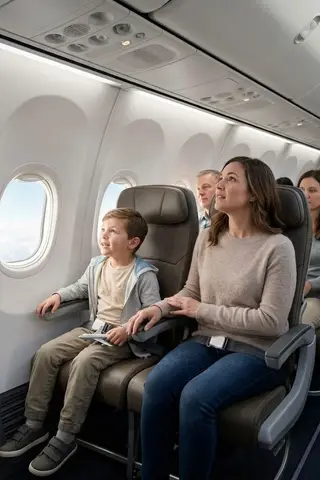
From across the room, Mason caught my eye. He stepped away from the corporate directors for just a moment, walked straight past the cameras, and gave me a long, tight hug that reminded me of the boy who used to grip my hand in row twenty-seven.
"You did that, Mason," I whispered into his ear.
"We did it, Mom," he answered softly, his smile radiant and grounded. "We built something that keeps people safe."
The End









